
Vehicle Width Guide for New Zealand Drivers
Learn how vehicle width affects parking, garage fit and rural driving in NZ, with practical size ranges for cars, SUVs and utes before you buy.
Vehicle width sounds simple, but it has a big effect on how easy a car is to live with. It shapes how relaxed you feel on narrow urban streets, how easily you fit into parking buildings and home garages, and how much cabin shoulder room you get for passengers.
In New Zealand, width matters more than many buyers expect. Our roads range from tight inner-city lanes in Wellington and Auckland to narrow rural bridges, gravel back roads and older suburban driveways, so a few extra millimetres can make the difference between “easy” and “annoying every day”.
What the Numbers Mean
Vehicle width is the measurement across the car from one side to the other, usually excluding mirrors unless the brochure says otherwise. In listings, it is normally shown in millimetres as the body width, so a car listed at 1,800mm is 1.8 metres wide.
That figure tells you two practical things straight away. First, wider vehicles usually give you more shoulder room inside, which helps if you regularly carry adults across the back seat or need to fit child seats without everyone rubbing elbows. Second, wider vehicles take up more road and parking space, which can make tight manoeuvres harder.
The number on paper can also be deceptive. A change from 1,780mm to 1,860mm sounds minor, but 80mm is noticeable when you are squeezing into a parking building, edging past a concrete pillar, or meeting a truck on a narrow country road. Width also combines with vehicle height and bluff sides, so a wide SUV can feel much larger than a similarly wide low hatchback.
It is also worth checking whether the quoted width excludes mirrors. Most manufacturer specs do, but mirrors are what you actually need to clear garage walls and car park columns. That is why a car that looks fine on the spec sheet can still feel awkward in a narrow space.
Typical Ranges
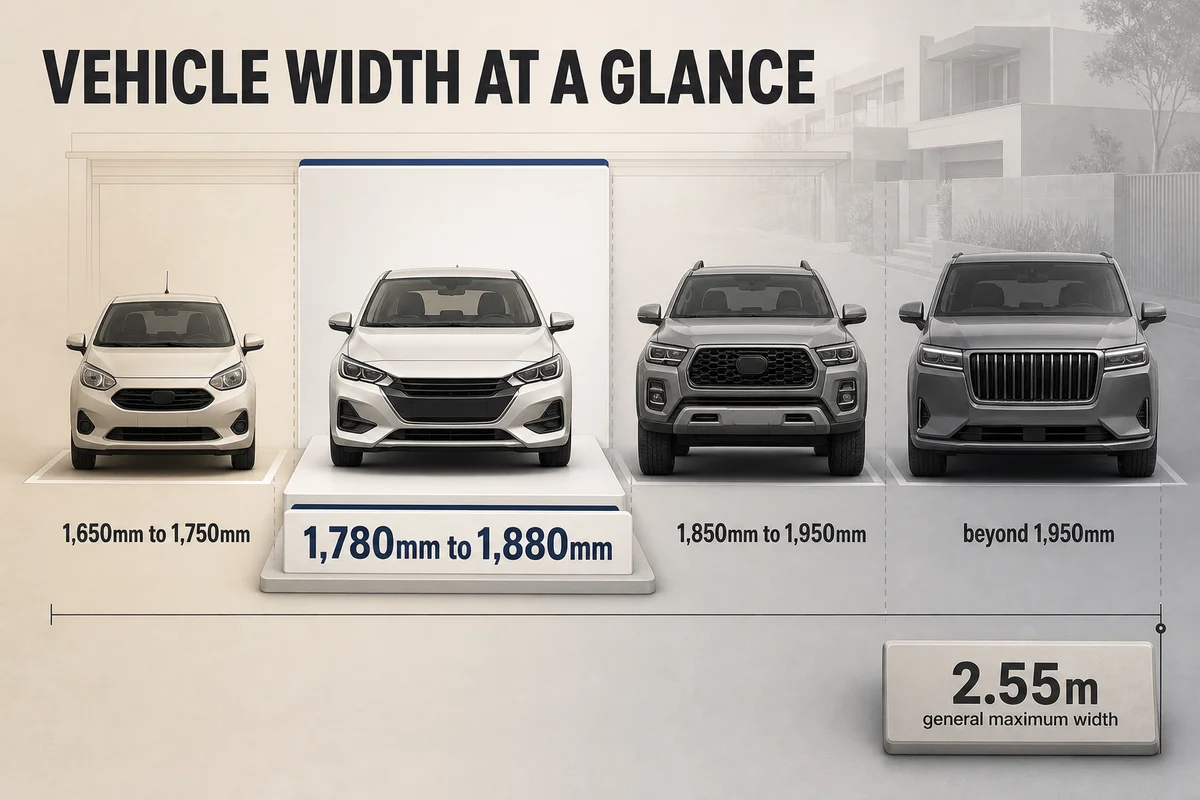
For small city cars, width is often around 1,650mm to 1,750mm. Think of compact hatchbacks designed for urban use, where easy parking and a small road footprint matter more than maximum cabin space. These are usually the least stressful cars to place in older parking buildings and tight supermarket bays.
Mainstream small and medium cars tend to sit around 1,750mm to 1,850mm. That covers a huge part of the market, including many family hatchbacks, sedans and compact SUVs. For many New Zealand buyers, this is the sweet spot because it balances usable interior space with manageable size.
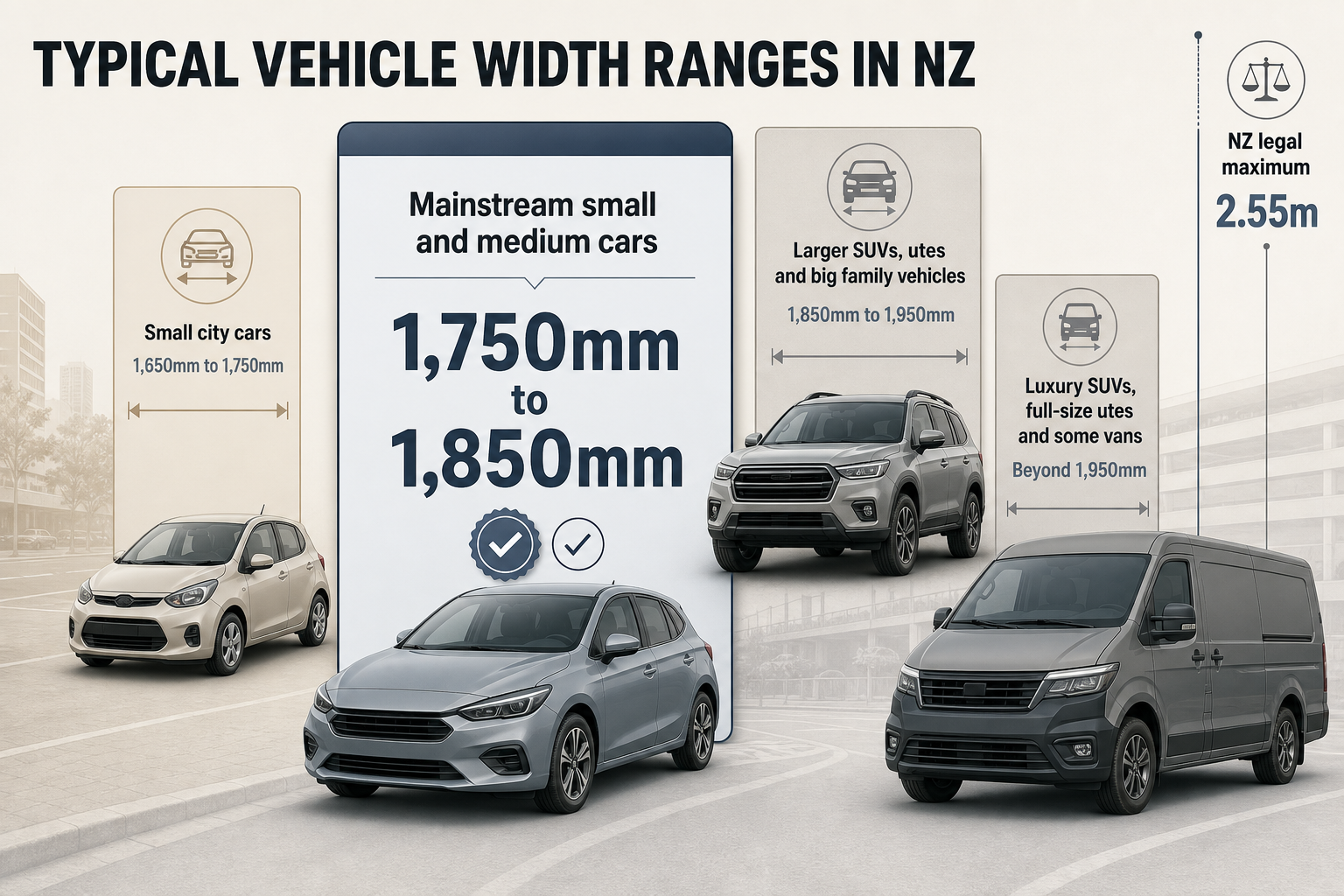
Larger SUVs, utes and big family vehicles often run from about 1,850mm to 1,950mm, and some are wider again. Once you move into this bracket, the vehicle often feels more substantial on the road, but it also starts to demand more attention in car parks, older garages and narrow streets.
Luxury SUVs, full-size utes and some vans can push beyond 1,950mm. These can offer excellent cabin width and towing stability, but they are the vehicles most likely to make you think twice before entering a cramped parking building or threading through a narrow beach-town street in summer.
For legal road use, New Zealand’s general maximum width for most standard vehicles is 2.55m. That is far beyond normal passenger-car widths, but it shows that road-law limits are not the same as day-to-day practicality. A vehicle can be perfectly legal and still be a pain in your driveway. [1]
Use-Case Guidance
If your driving is mostly urban, especially in Auckland, Wellington or Christchurch, a width of roughly 1,700mm to 1,820mm is usually easy to live with. That range works well for parallel parking, older multi-storey car parks and narrow suburban streets lined with parked cars. If you regularly park in apartment buildings or at work in tight spaces, staying toward the lower end of that range will make life easier.
For general family use, around 1,780mm to 1,880mm is often the practical middle ground. This is where many medium cars and compact SUVs sit. You get enough cabin width for child seats, school bags and adults in the back without making every car park entry feel like a judgement test.
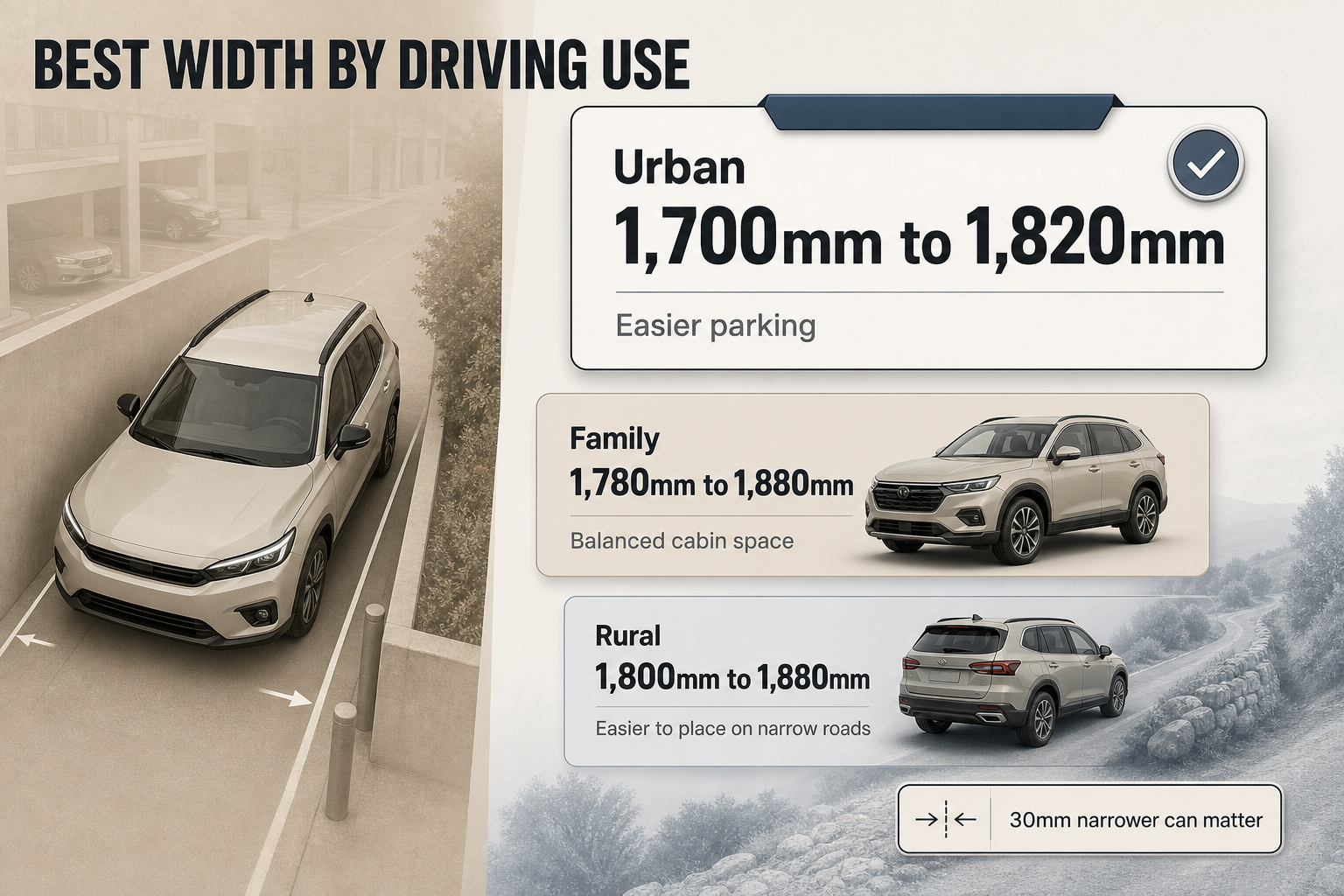
If you spend a lot of time on rural roads, width needs a bit more thought. A wider vehicle can feel planted and stable on open roads, especially in crosswinds, but it can also be less relaxing on narrow bridges, unsealed roads and lanes with little shoulder. In places with hedge-lined roads, farm traffic or tight passing spots, something around 1,800mm to 1,880mm is often easier to place than a very wide SUV or ute.
For towing, width can help with stability, especially in heavier SUVs and utes. But the tow vehicle still needs to fit your daily life when the trailer is not attached. If you tow a boat to the bach a few times a year but spend the rest of your time in town, do not assume you need the widest vehicle available. Often, the better question is whether the vehicle has the right tow rating, wheelbase and payload, rather than just extra body width.
For commercial use, wider vans and utes can make sense if you need cabin room, tray width or load space. But tradespeople working in dense urban areas should think about access before buying. A wide work vehicle is less useful if it is awkward in basement parking, tight service lanes or residential driveways.
NZ-Specific Factors
New Zealand road conditions make width more relevant than overseas brochure writers sometimes suggest. Many local roads are narrower and less forgiving than modern highways overseas, especially in rural areas. Add in chipseal surfaces, road edge drop-offs, one-lane bridges and tourist traffic, and a very wide vehicle can become tiring to drive even if it feels impressive on a test drive.
Parking is another local issue. Older city parking buildings and suburban garages were not designed around today’s larger SUVs and utes. The legal maximum road width for standard vehicles is generous, but that does not help if your mirrors are close to the wall at home or you cannot open the doors wide enough to get children out comfortably. [1]
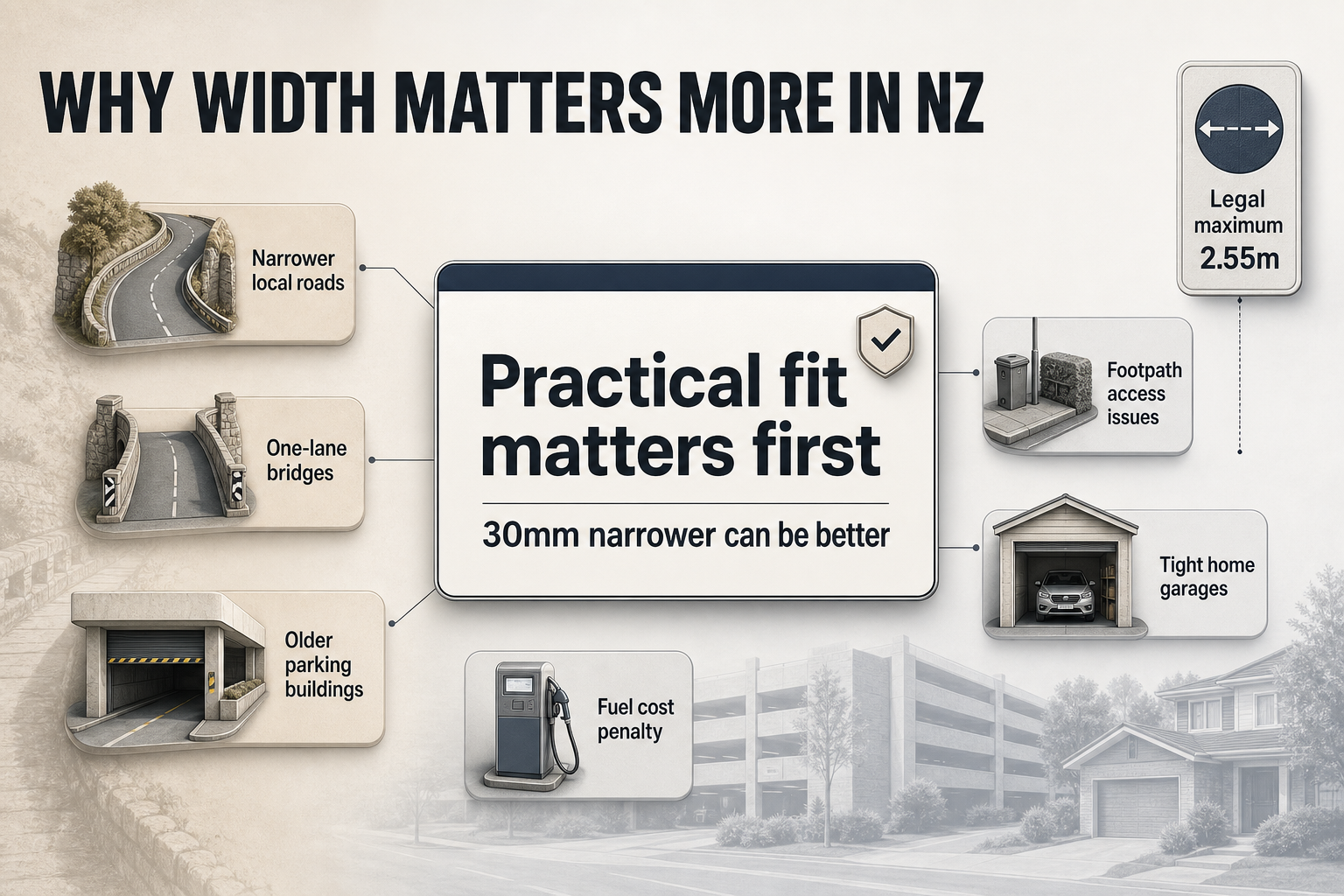
Fuel costs matter too. Width itself does not directly determine fuel use, but wider vehicles are often larger, heavier and less aerodynamic. MBIE’s fuel price monitoring and energy price data show that petrol and diesel remain a meaningful running cost in New Zealand, so moving up to a much wider and heavier vehicle can bring an ongoing fuel penalty as well as a parking penalty. [2][3]
There is also a simple social side to width. Oversized vehicles are more likely to overhang parking spaces or tempt drivers onto berms and footpaths, which creates problems for pedestrians, prams and wheelchairs. The AA has highlighted the impact that badly parked vehicles can have on footpath access, which is worth keeping in mind if you are considering a very wide SUV or ute for mainly urban use. [4]
The smartest way to judge width is not by the brochure alone. Measure your garage opening, your usual parking space, and the gap you need to open the doors. Then compare that with the car’s body width and, if available, mirror-to-mirror width. A vehicle that is 30mm narrower than a rival may not sound different on paper, but in a narrow New Zealand driveway it can be the better buy every single day.
You may also be interested in these independent articles
Sources
© 2026 pyfoi. All rights reserved.