
Climate Control Ratings Explained for NZ Buyers
Climate control ratings affect comfort, demisting and EV range. See what 1 to 5 stars really mean for NZ car buyers before you choose.
Climate control sounds like a comfort feature, but it affects how fresh, alert and relaxed you feel every day behind the wheel. In New Zealand, where one trip can mean a frosty Central Otago morning, a wet Wellington commute and strong summer sun through a big windscreen, a good climate control system is more useful than many buyers think.
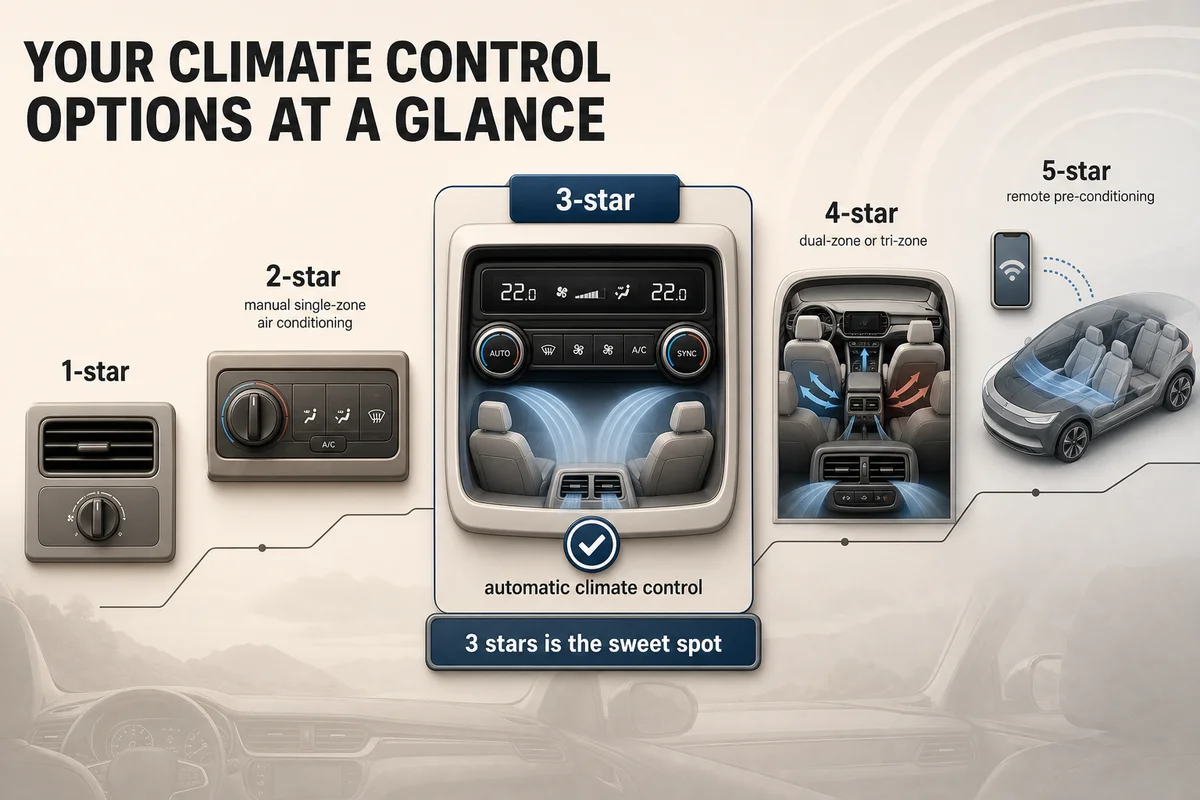
A 1 to 5 star climate control rating is a simple way to judge how well a vehicle manages cabin temperature and air quality. The difference between a low-rated system and a high-rated one is not just whether the car has air conditioning, but how precisely it can hold temperature, how well it looks after front and rear passengers, and whether it adds features such as heated seats, ventilation, air filtration and remote pre-conditioning in EVs.
What Goes Into the Rating
At the bottom end, a 1-star system usually means no air conditioning at all, or only the most basic setup. In older budget cars and some stripped-out commercial vehicles, you may get simple fan-speed and temperature knobs with limited ability to keep the cabin stable as outside conditions change.
A 2-star system is usually manual single-zone air conditioning. That means you set the fan and temperature yourself, and the car does not automatically maintain your chosen cabin temperature. It can still be perfectly usable, but it needs more fiddling as the day warms up, the sun moves, or more passengers get in.
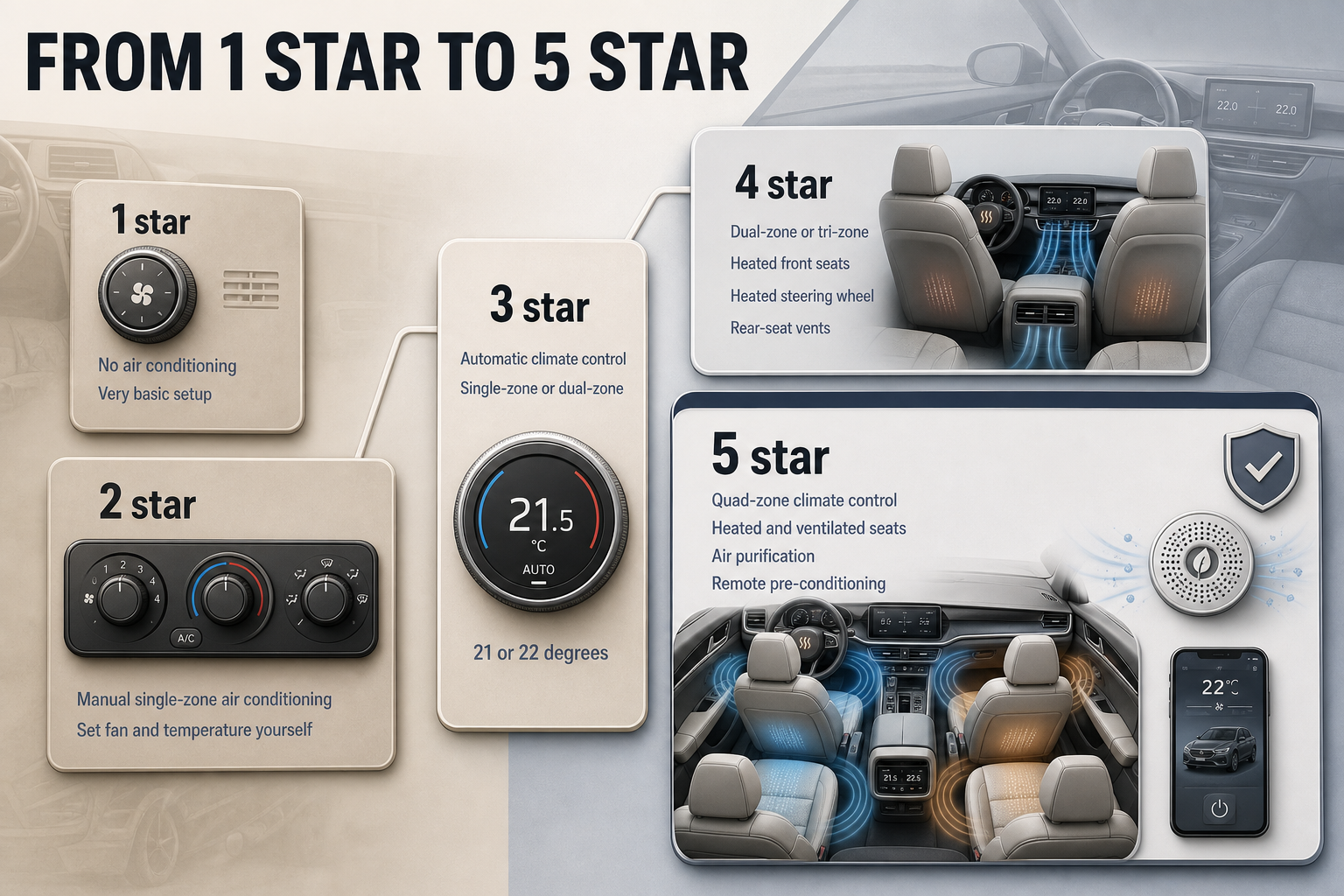
A 3-star system normally means automatic climate control, either single-zone or dual-zone. Automatic climate control uses sensors and electronics to maintain a set temperature, so you choose 21 or 22 degrees and the car adjusts fan speed, air mix and vent output for you. Dual-zone adds separate temperature settings for driver and front passenger, which is a real quality-of-life upgrade on longer trips.
A 4-star system goes further with dual-zone or tri-zone automatic climate control plus comfort extras such as heated front seats or a heated steering wheel. Rear-seat vents or separate rear controls often appear at this level too. For family buyers, this is the point where climate control starts to feel genuinely premium rather than simply adequate.
A 5-star system is the full package. Think quad-zone climate control, heated and ventilated seats, a heated steering wheel, strong cabin filtration or air purification, and remote pre-conditioning so the cabin can be cooled or warmed before you get in. That last feature is especially valuable in EVs, where pre-conditioning can warm the cabin while the car is still plugged in, reducing the hit on driving range. Guidance from EECA’s Gen Less programme notes that heating and cooling can affect EV range, so smart pre-heating or pre-cooling can make winter and summer driving more efficient. (consumerprotection.govt.nz)
What to Look For
The first thing to check is whether the system is manual or automatic. Dealers often advertise “air conditioning” as though that alone settles the matter, but there is a big real-world difference between basic manual AC and proper automatic climate control. If you do lots of commuting in Auckland, Hamilton or Christchurch traffic, automatic climate control is easier to live with because it keeps the cabin steady without constant adjustment.
Next, look at zones. If you mostly drive alone or with one passenger, single-zone may be enough. If you regularly travel with family, especially on school runs, holiday trips or drives between islands of weather like Canterbury plains to alpine roads, dual-zone or tri-zone systems are worth having. Rear vents matter more than many buyers expect, especially in SUVs and seven-seaters where the back rows can heat up or cool down slowly.
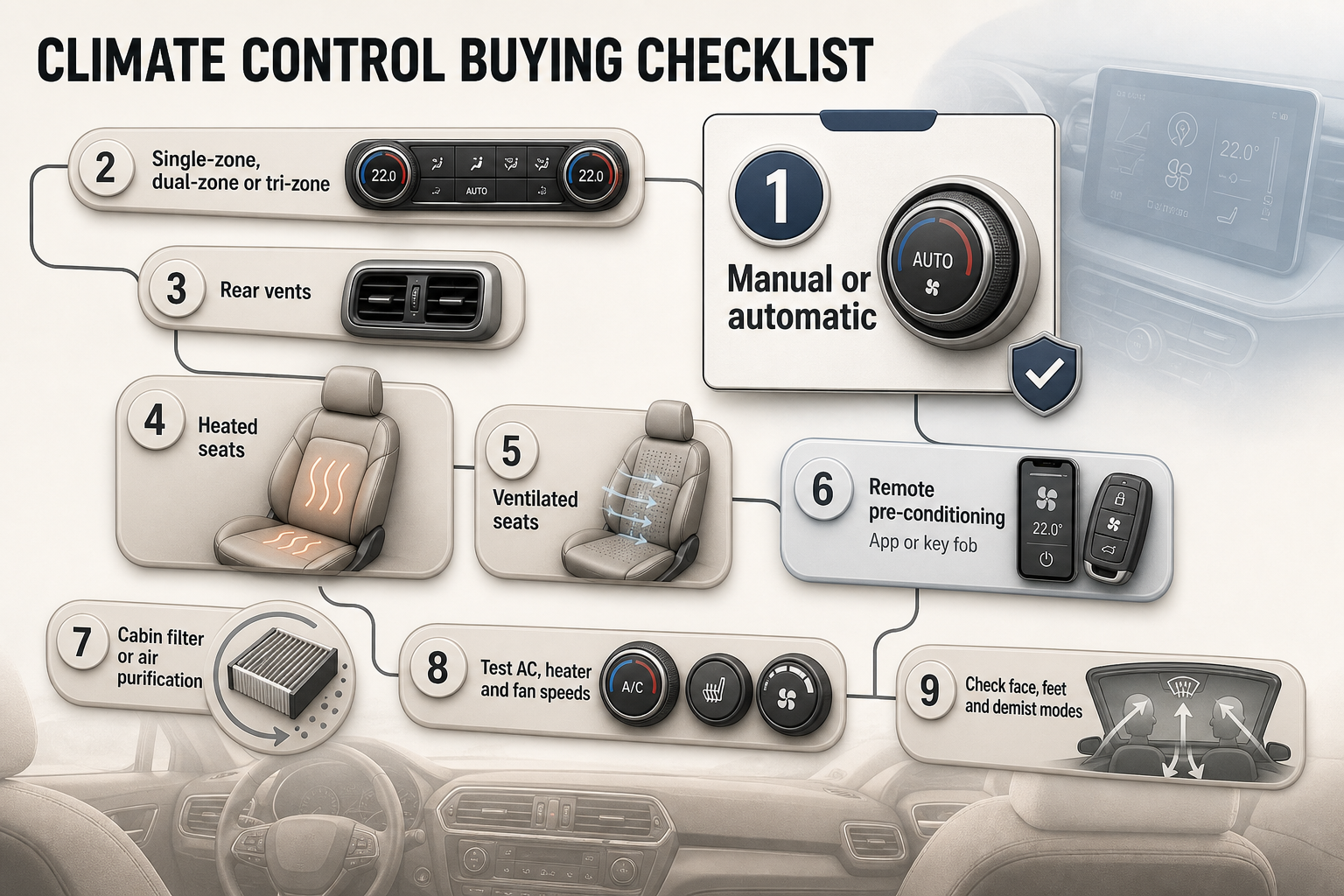
Seat and steering wheel heating deserve a closer look in New Zealand than they often get. Heated seats are not just a luxury for ski-field runs to Mt Hutt, Ruapehu or Cardrona. They also let you feel warm quickly on cold mornings without blasting the whole cabin with hot air. In an EV, that can help conserve range because heating your body directly through the seat can use less energy than heating all the air in the cabin.
Ventilated seats matter less for most NZ buyers than heated ones, but they are still useful in places with hot summers and strong sun, such as Hawke’s Bay, Northland and inland Canterbury. If you often park outside, especially in a dark-coloured SUV with black leather trim, ventilated seats can make a big difference in the first 20 minutes of a trip.
If you are shopping for an EV or plug-in hybrid, check for remote pre-conditioning and whether it works through an app or a key fob. This feature lets you cool or heat the cabin before departure, and in some cars it can also warm the battery for better charging or efficiency in cold weather. That matters in southern regions where winter starts can be hard on comfort and range.
Air quality features are another detail worth checking. A cabin filter is standard in most modern cars, but better systems add finer filtration, humidity control or air purification. These features are especially helpful if you drive in heavy traffic, on dusty rural roads, or if someone in your household has allergies or asthma.
For used cars, test every part of the system before you buy. Make sure the AC gets properly cold, the heater gets hot, all fan speeds work, the vents switch correctly between face, feet and demist modes, and any heated seats or rear controls actually function. Climate control faults can be expensive, and if you buy from a dealer in New Zealand, the Consumer Guarantees Act says the vehicle must be of acceptable quality, fit for purpose and as described. Your rights under the CGA apply to dealer sales of both new and used vehicles, and they sit alongside any manufacturer warranty. (consumerprotection.govt.nz)
NZ Context
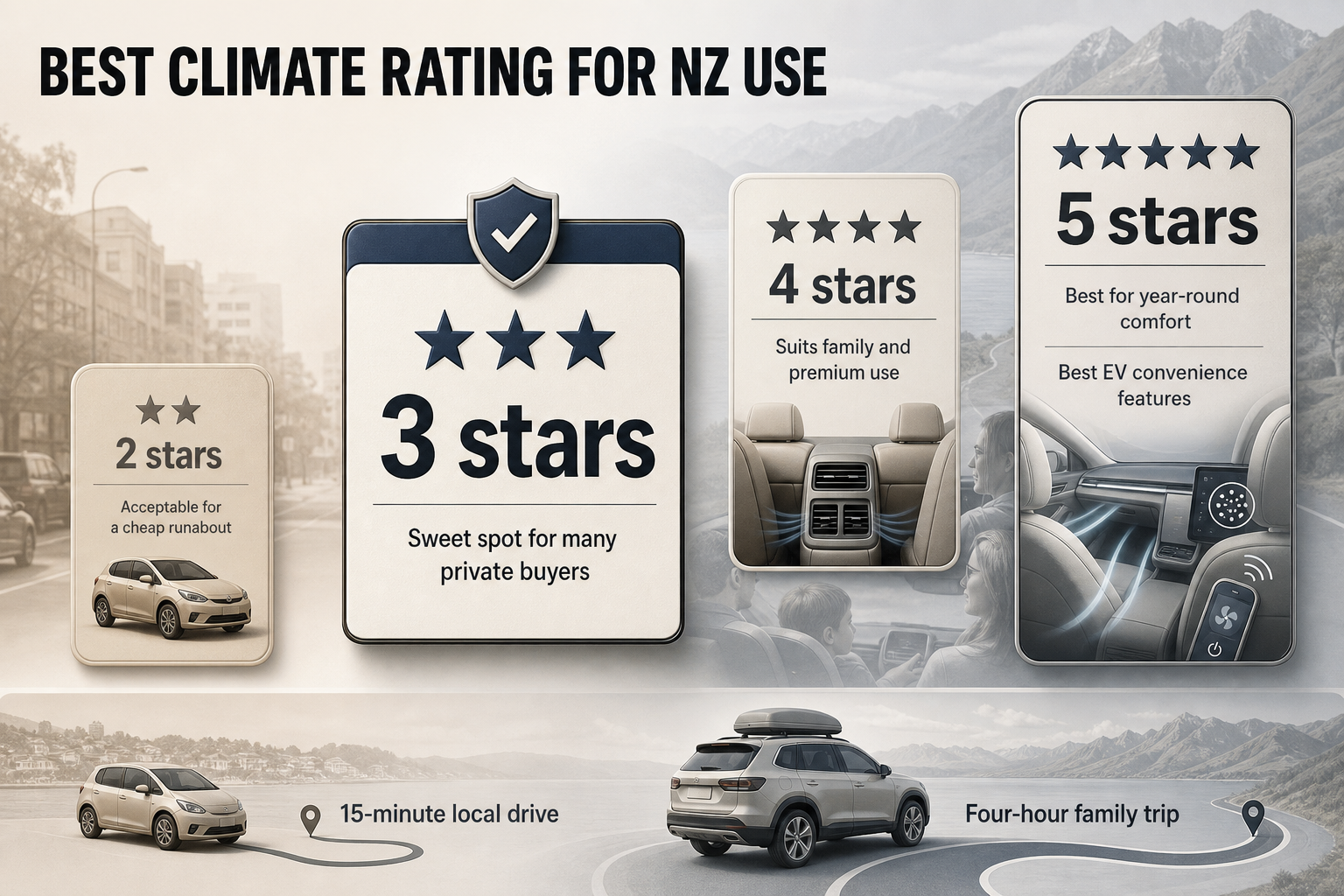
New Zealand’s climate makes climate control more important than buyers in milder, more uniform markets might assume. Our weather changes quickly, our UV levels are high, and many people combine short urban trips with longer open-road runs. A basic system can feel fine on a 15-minute local drive, but much less impressive on a four-hour family trip with changing temperatures and a fully loaded cabin.
Demisting performance is a big NZ issue. In wet regions and during cold shoulder seasons, a good climate control system helps clear the windscreen quickly and keep it clear. That is partly a comfort issue and partly a safety one, because visibility matters every time you head out on a damp morning or drive home in winter rain.
For buyers of used imports, specification can vary more than expected. Two cars with the same badge may have different climate-control features depending on trim level and original market. One may have dual-zone climate control and heated seats, while another has only manual AC. It pays to check the actual car rather than assuming from the model name.
There is also a legal and ownership angle. If a dealer advertises dual-zone climate control, heated seats or working air conditioning, those features should be present and functioning as described. Consumer Protection says dealer-sold vehicles must match their description, and if a fault appears after purchase you may be entitled to a repair, replacement or refund depending on the seriousness of the problem. (consumerprotection.govt.nz)
A useful way to think about the stars is this: 2 stars is acceptable for a cheap runabout, 3 stars is the sweet spot for many private buyers, 4 stars suits family and premium use, and 5 stars is for buyers who care strongly about year-round comfort or want the best EV convenience features. You probably do not need quad-zone climate control for an Auckland city commute, but you may well appreciate dual-zone auto climate, rear vents and heated seats far more often than you expect.
You may also be interested in these independent articles
Sources
© 2026 pyfoi. All rights reserved.