
What Wheel Size Means for Your Car in NZ
Choosing the right wheel size in New Zealand affects comfort, handling, tyre cost and damage risk. See which sizes suit NZ roads best.
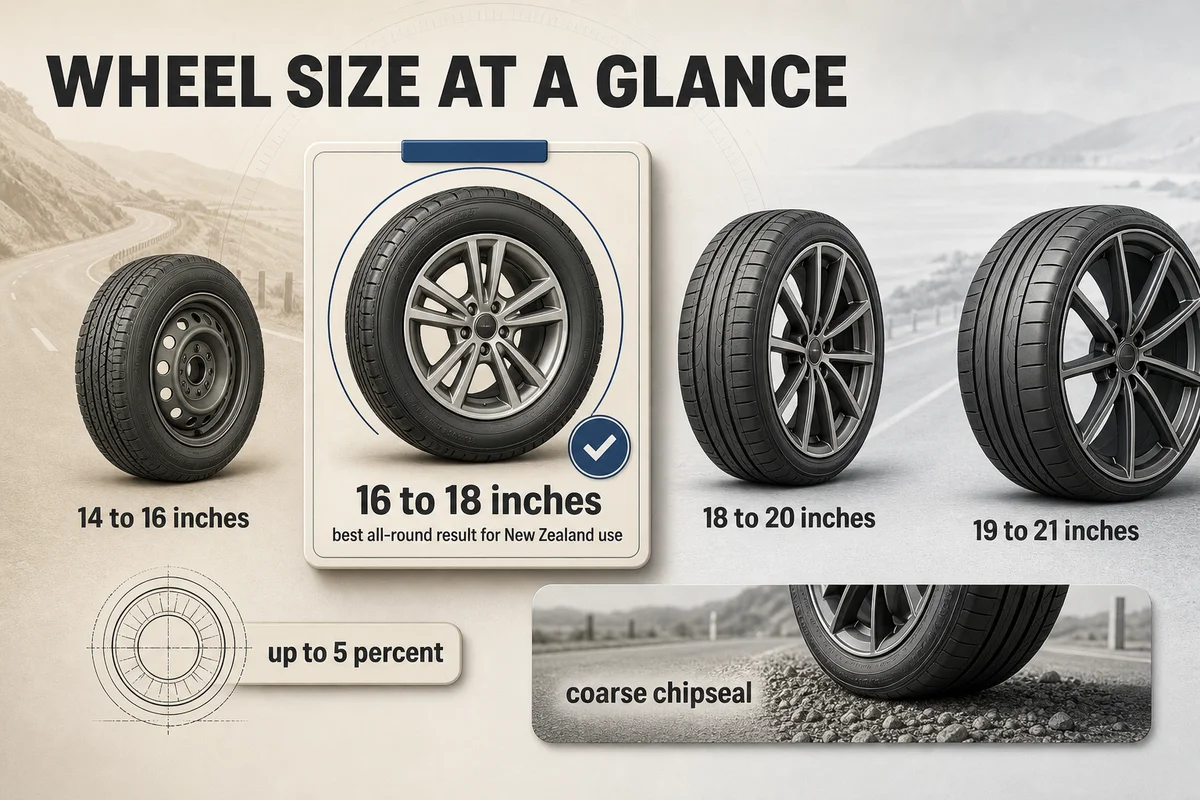
Wheel size is the diameter of the wheel rim, measured in inches. You will usually see it in a tyre code such as 225/45 R17, where the “17” means the car is running 17-inch wheels. Wheel size matters because it affects ride comfort, handling, tyre cost, damage risk, and sometimes fuel use, all of which are very relevant on New Zealand’s mix of urban streets, coarse chipseal highways, and patchy rural roads. (consumer.org.nz)
What the Numbers Mean
A bigger wheel does not mean the whole tyre is bigger overall. In many cases, when manufacturers fit a larger wheel, they pair it with a lower-profile tyre so the total rolling diameter stays close to standard. That is why a car may be offered with 16-inch, 17-inch, or 18-inch wheels across different trims without sitting dramatically higher off the ground. (consumer.org.nz)
In practical terms, wheel size changes the balance between the metal wheel and the rubber sidewall. Smaller wheels usually come with taller tyre sidewalls, which give the tyre more cushioning over potholes, expansion joints, and rough chipseal. Larger wheels usually come with shorter sidewalls, which sharpen steering response and can improve cornering feel, but they also make the ride firmer and leave less rubber to absorb impacts. (consumer.org.nz)
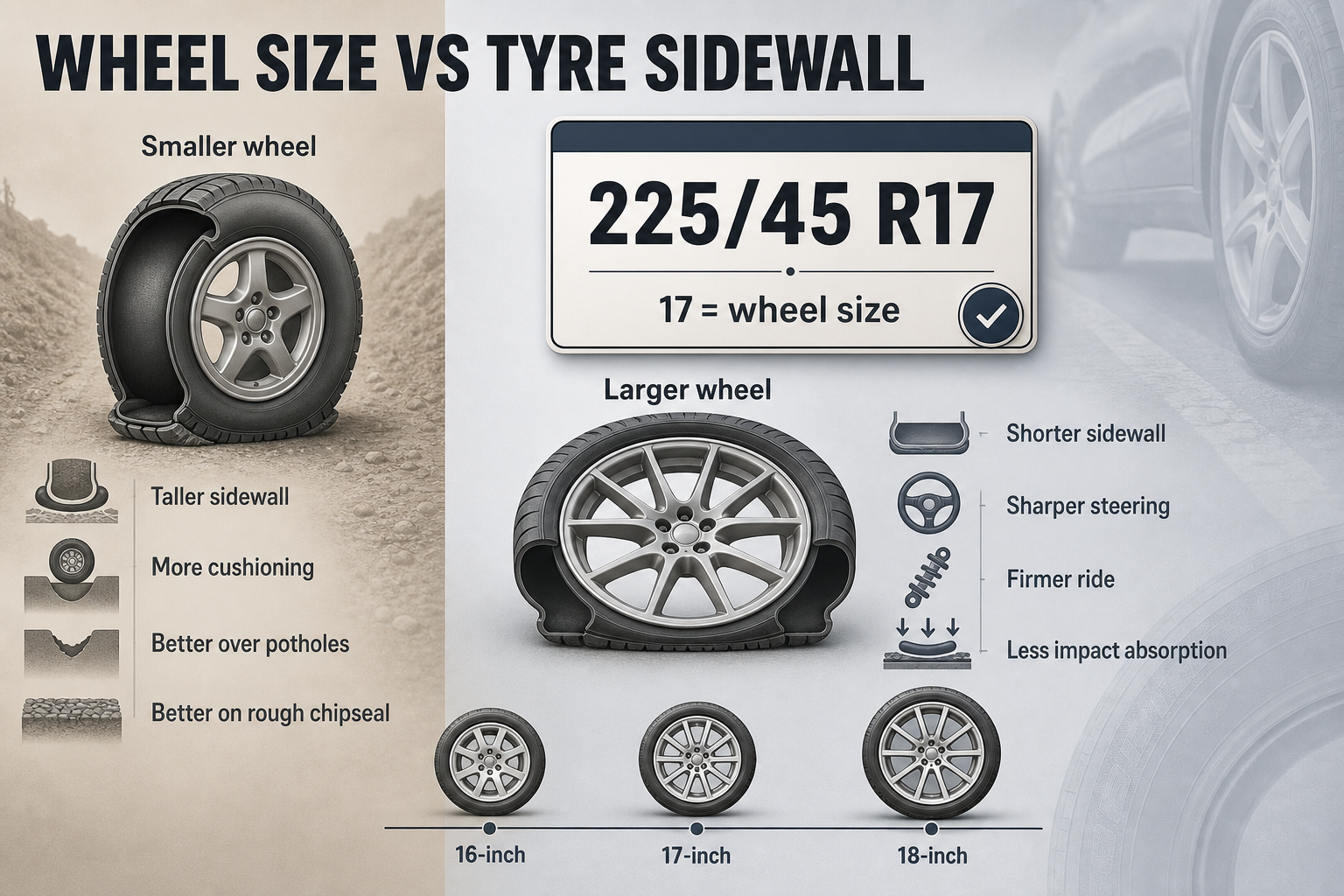
That matters in New Zealand because many of our roads are rougher than the smooth motorway surfaces often used in overseas marketing material. Consumer NZ notes that lower-profile tyres reduce the tyre’s ability to cushion bumps, and that rough roads increase the chance of impact damage to tyres, wheels, and related components. (consumer.org.nz)
Typical Ranges
For a small hatchback or city car, wheel sizes are commonly around 14 to 16 inches. This is a sweet spot for comfort, lower tyre replacement costs, and decent protection against kerb strikes. If you mainly drive around Wellington, Christchurch, or suburban Auckland, a car in this range will often feel more forgiving over broken surfaces and speed humps.
For a medium car, small SUV, or family wagon, 16 to 18 inches is the most common range. A 16-inch or 17-inch setup often gives the best all-round result for New Zealand use, with enough steering precision for open-road driving but still enough sidewall height for comfort on long trips. An 18-inch setup can look sharper and feel more planted, though you may notice more road noise and a firmer ride on coarse surfaces. (consumer.org.nz)
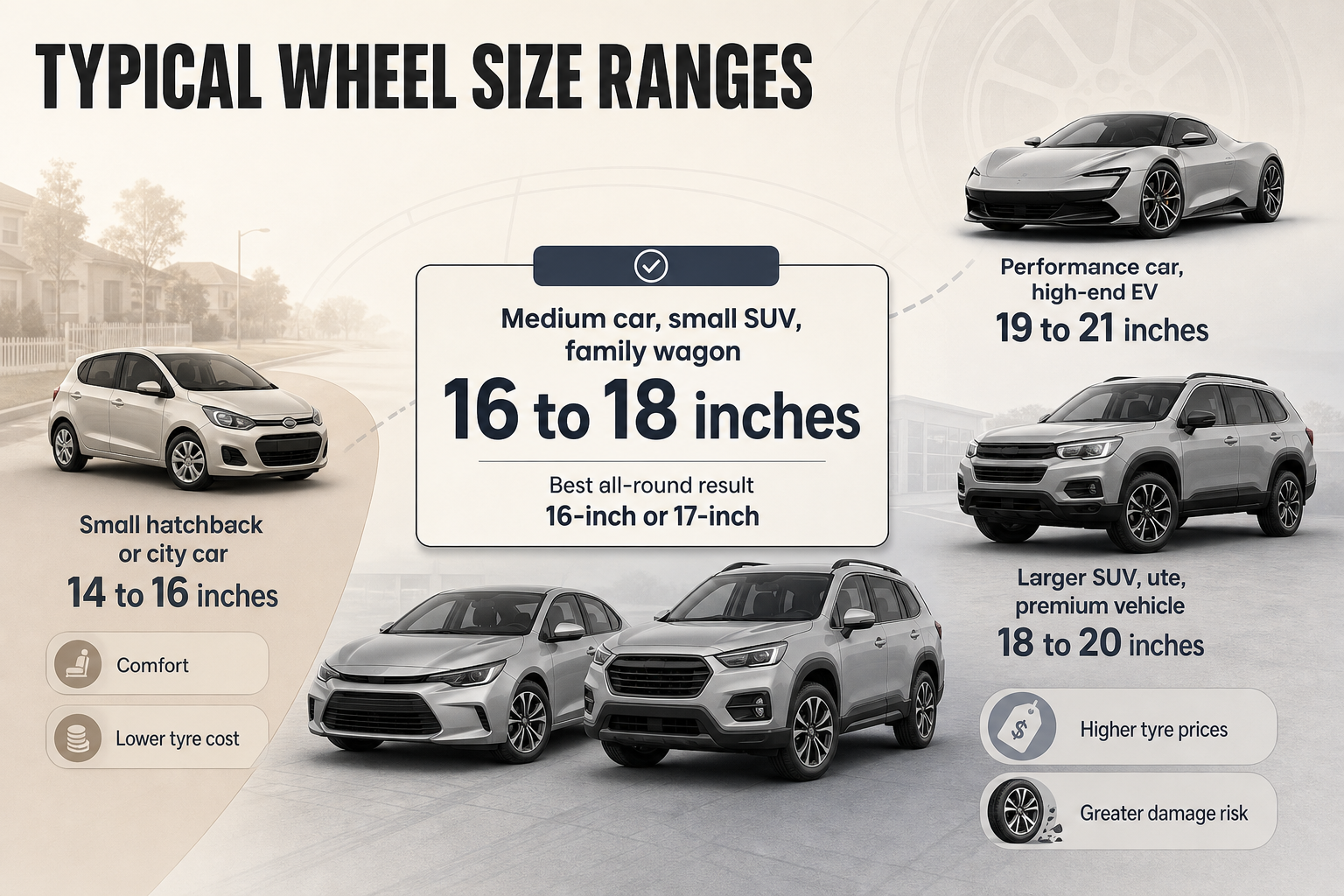
For larger SUVs, utes, and premium vehicles, 18 to 20 inches is common. These vehicles can carry bigger wheels more comfortably because the suspension and tyre widths are usually designed around them. Even so, a 20-inch wheel on a family SUV can still be less comfortable and more expensive to re-tyre than an 18-inch version of the same model.
Performance cars and high-end EVs often run 19 to 21 inches, and sometimes larger. These sizes can improve turn-in and visual presence, but they usually bring higher tyre prices and a greater risk of damage from potholes. On some models, staggered setups are used, with wider rear tyres and sometimes a different rear wheel size, though for buyers the bigger issue is usually replacement cost and reduced ability to rotate tyres front to rear.
Use-Case Guidance
If your priority is comfort, stick to the smaller end of the size range available for the car. On the same model, a 16-inch wheel will usually ride better than an 18-inch wheel because the tyre sidewall is taller and can absorb more of the road surface. That is a real advantage on long intercity drives, school runs over patched suburban roads, and rural routes where potholes appear after heavy rain. (consumer.org.nz)
If you want a balanced everyday setup, aim for the middle option. For many New Zealand buyers, that means 16 or 17 inches on a hatch or sedan, and 17 or 18 inches on an SUV. You get tidy handling without making the car feel brittle, and tyre choices are often broader and cheaper than the largest factory option.
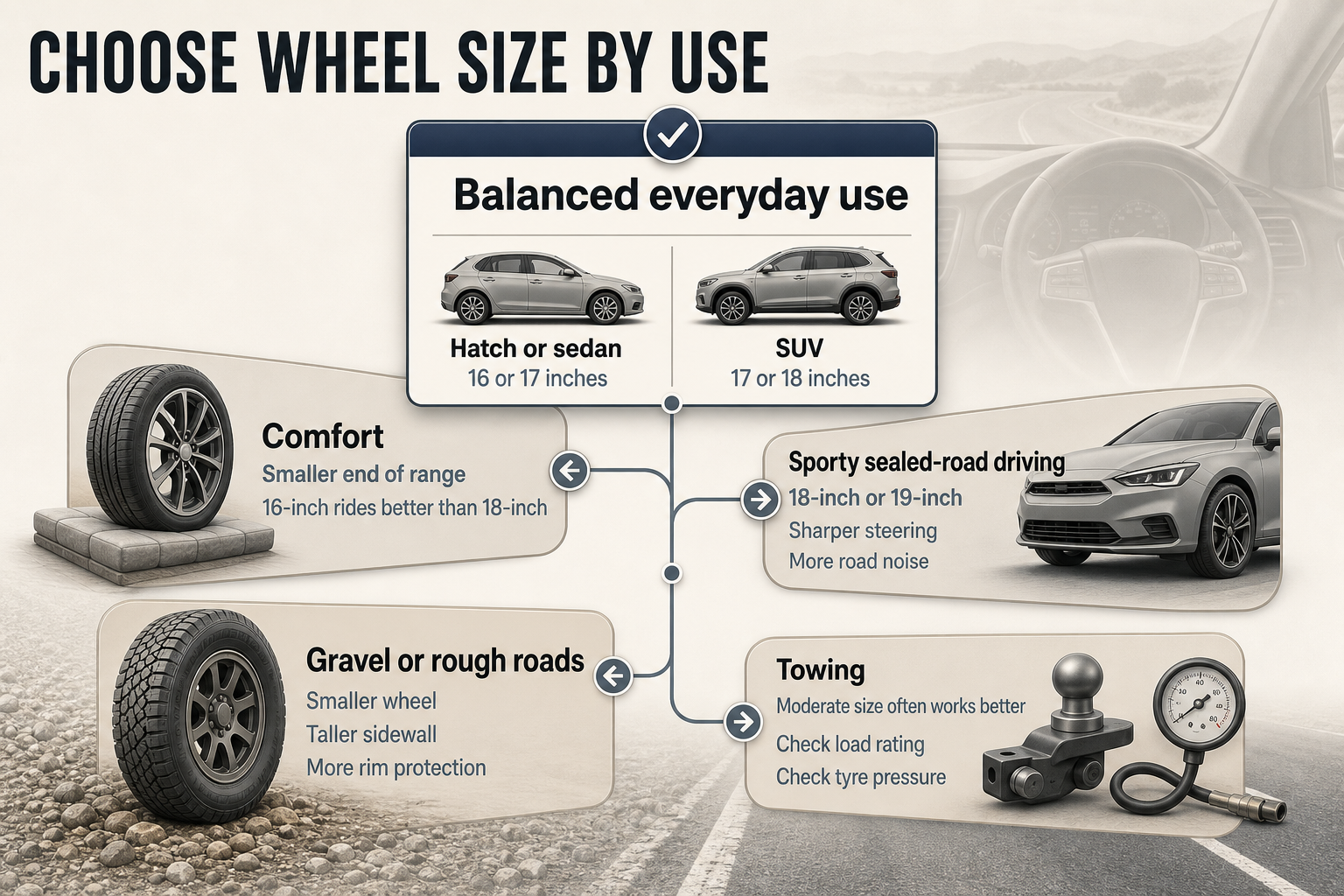
If you enjoy driving and spend a lot of time on sealed open roads, a larger wheel can make sense. A 18-inch or 19-inch setup can improve steering response because the shorter sidewall flexes less in corners. The trade-off is that you will feel more of the road, and on chipseal the cabin may be noisier. (consumer.org.nz)
If you regularly drive on gravel, forestry roads, farm tracks, or poorly maintained back roads, avoid chasing the biggest wheel option. A smaller wheel with a taller tyre sidewall is usually the smarter choice because it gives more compliance and more protection against rim damage. For many buyers heading to ski fields, beaches, campgrounds, or remote holiday spots, that matters more than sporty looks.
If you tow, wheel size is only one part of the picture, but it still affects stability and running costs. A larger wheel with a lower-profile tyre can feel firmer and more controlled on smooth roads, yet a more moderate size often works better in the real world because it copes better with mixed surfaces and heavy loads. You should focus first on tyre load rating, the vehicle’s towing rating, and correct tyre pressures rather than assuming bigger wheels automatically mean better towing.
NZ-Specific Factors
New Zealand rules make it important to be careful if you change wheel or tyre size after purchase. Waka Kotahi says fitting tyres with a different diameter from the originals can affect speedometer and odometer accuracy, and manufacturers generally recommend staying with the original tyre type and size specification. (nzta.govt.nz)
Consumer NZ advises that WOF rules allow tyres up to 5 percent larger or smaller in overall diameter, but larger changes in diameter or width may require certification. It also notes that if tyres are wider, the tread must not extend outside the bodywork and the vehicle’s track change is limited before certification is needed. If you are looking at aftermarket wheels, especially on utes, SUVs, or modified imports, this is worth checking before you buy. (consumer.org.nz)
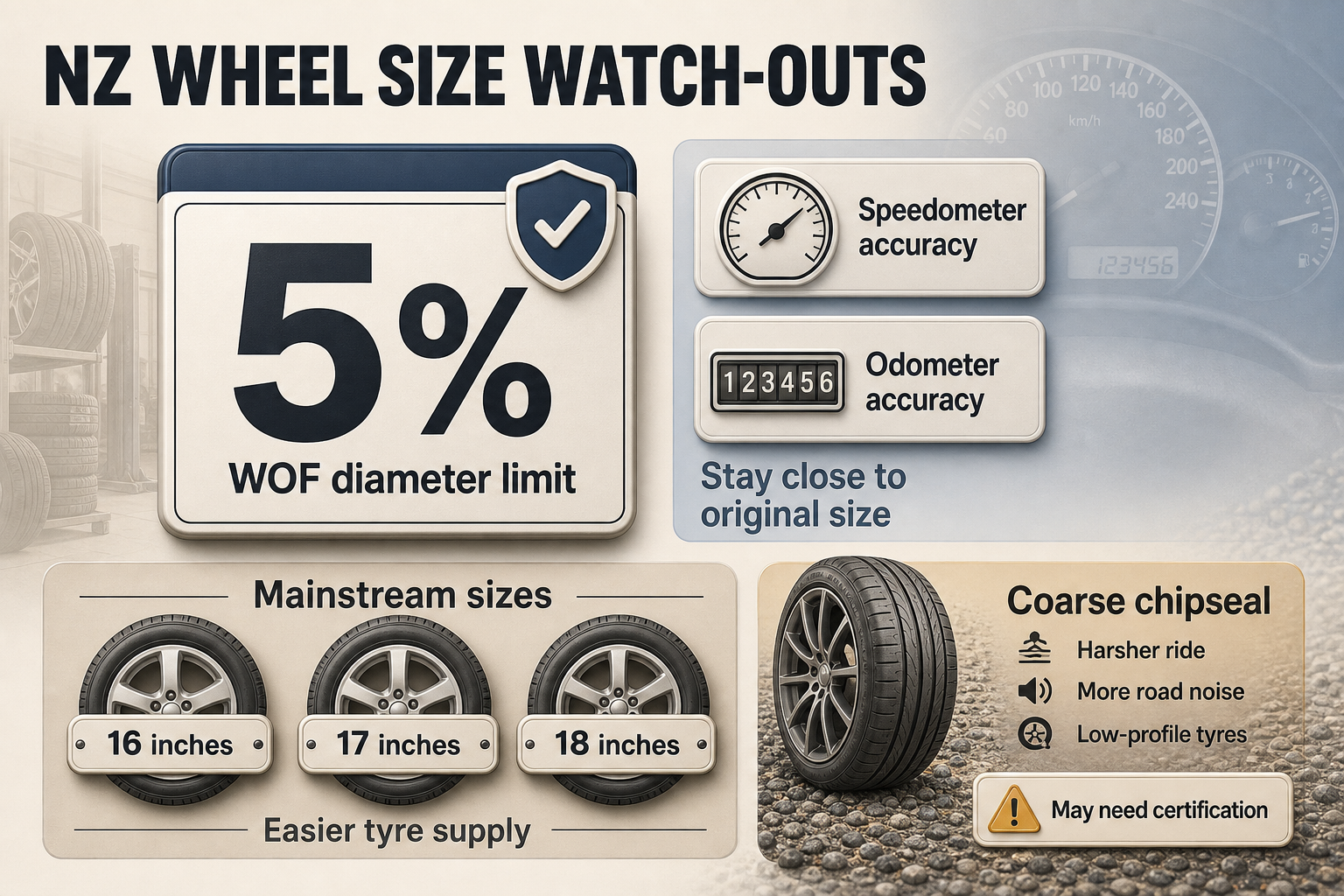
Tyre replacement cost is another NZ-specific reality. Large-diameter, low-profile tyres are usually more expensive than smaller, more common sizes, and they can be harder to source quickly in some regional areas. If you live outside the main centres or do frequent South Island road trips, a mainstream size such as 16, 17, or 18 inches can make life easier.
Road surface matters too. New Zealand’s coarse chipseal can make low-profile tyres feel harsher and noisier than they might overseas, and it can increase wear and impact risk. That is why the biggest wheel option in the brochure is not always the best option for your daily use here. (consumer.org.nz)
The smart way to judge wheel size is to compare it within the same model, not across all vehicles. A 19-inch wheel may be perfectly reasonable on a large premium SUV, but unnecessarily harsh on a small hatch. If a car offers multiple factory sizes, the middle option is often the best buy for New Zealand conditions because it blends appearance, comfort, handling, and tyre cost without pushing too far in either direction. (consumer.org.nz)
You may also be interested in these independent articles
Sources
© 2026 pyfoi. All rights reserved.