
Cargo Space Ratings Explained for NZ Buyers
Learn how cargo space ratings, boot volume and load shape affect family cars, SUVs and utes in NZ, and why bigger numbers can still mislead.
Cargo space sounds simple, but a boot rating only makes sense when you look at the type of vehicle it belongs to. A 350-litre hatchback can be perfectly usable, while the same figure in a seven-seat SUV may feel tight. For New Zealand buyers, cargo space matters because it affects school runs, airport trips, weekend sports gear, prams, dogs, tradie kit, and long holiday drives where you may be packing for four or five people.
What Goes Into the Rating
A cargo space rating usually rolls several things into one score. The headline number is boot volume in litres, but that is only the start. The real usefulness also depends on the shape of the load area, the width between the wheel arches, the height under the parcel shelf, the size of the tailgate opening, and whether the rear seats fold flat.
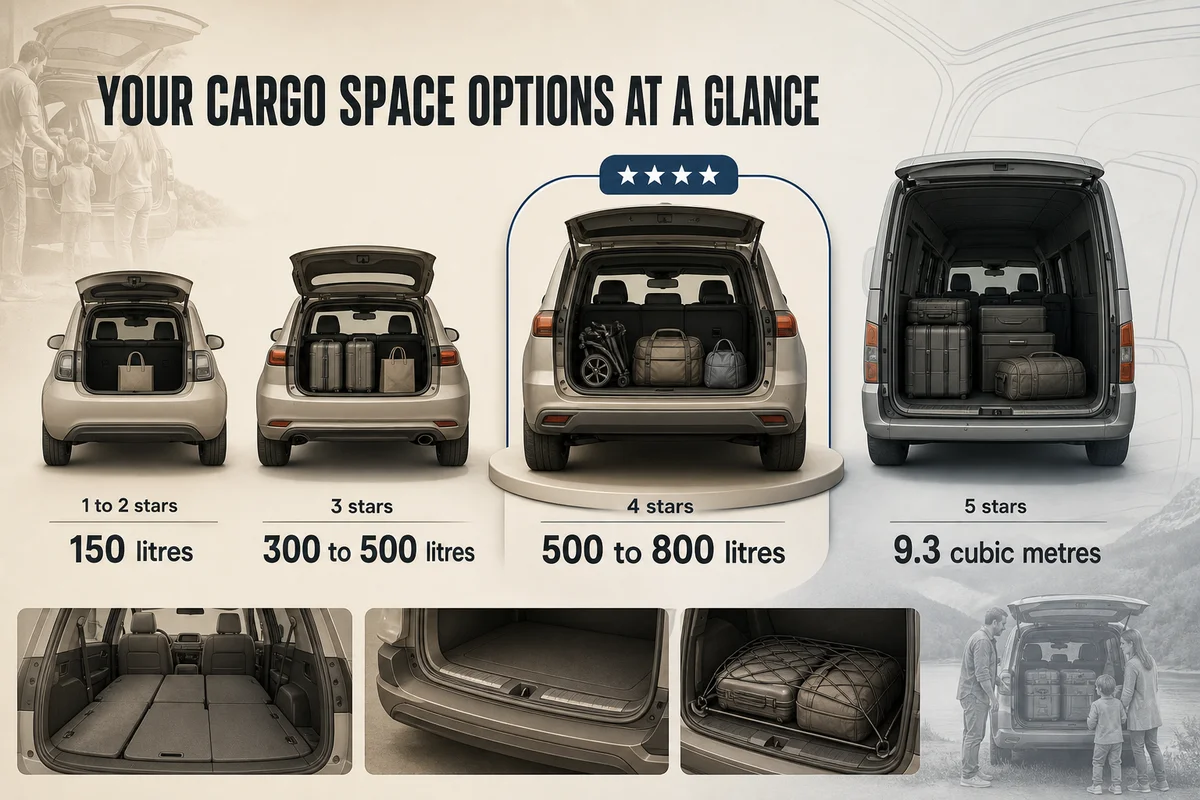
That is why a five-star cargo score is not just about one big number. A van or large SUV may offer more than 800 litres, and some commercial vans go much further again. Toyota New Zealand’s Hiace ZR Cargo Van, for example, is listed with 9.3 cubic metres of cargo capacity, which shows how far commercial vehicles sit above passenger cars for outright carrying ability. (toyota.co.nz)
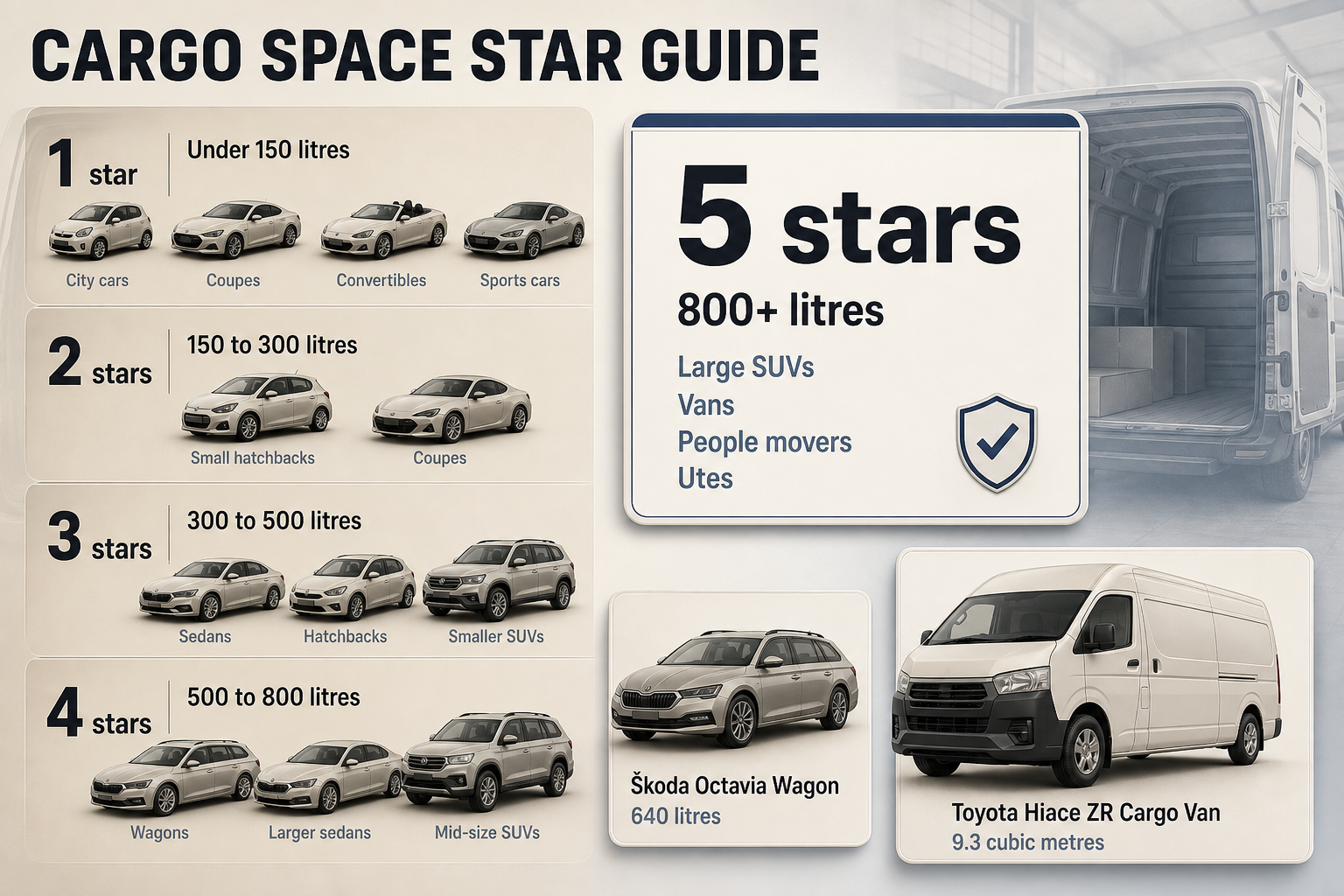
At the other end, a one-star rating suits vehicles where luggage space is clearly secondary to style, size, or performance. Think tiny city cars, coupes, convertibles, and sports cars with boots under about 150 litres. Two stars usually covers small hatchbacks and coupes with around 150 to 300 litres. These can handle groceries and a couple of soft bags, but they are not ideal for a family airport run.
Three stars is the broad middle ground. Around 300 to 500 litres is common for standard sedans, hatchbacks, and smaller SUVs. This is enough for everyday family life if you pack sensibly. Four stars usually means 500 to 800 litres, which is where wagons, larger sedans, and many mid-size SUVs start to feel genuinely roomy. Škoda New Zealand says the Octavia Wagon offers 640 litres with the rear seats up, which is a good example of a strong four-star family load area. (skoda.co.nz)
Five stars is reserved for vehicles that are exceptional for their class or simply huge. That includes large SUVs, vans, people movers with seats removed or folded, and utes with a useful tray. Even then, the rating should reflect how practical that space is. A ute tray is excellent for bikes, muddy gear, or building supplies, but it is open to weather and less secure than an enclosed boot unless you add a canopy or hard lid.
What to Look For
When you compare cargo space, start by ignoring the star rating for a moment and think about what you actually carry each week. A parent with a pram, school bags, and supermarket shopping has a different need from a skier driving from Christchurch to Mt Hutt, or a tradie carrying power tools around Hamilton. The right rating is the one that fits your real life, not the one that sounds most impressive on paper.
The litres figure is useful, but it can mislead you if the boot is oddly shaped. A square, flat 410-litre boot can be easier to use than a taller but narrower 450-litre one. Ford New Zealand lists the Puma with 410 to 456 litres of load space, and up to 1,170 to 1,216 litres with the rear seats folded, which shows how seats-down capacity can change the picture for a small SUV. (ford.co.nz)
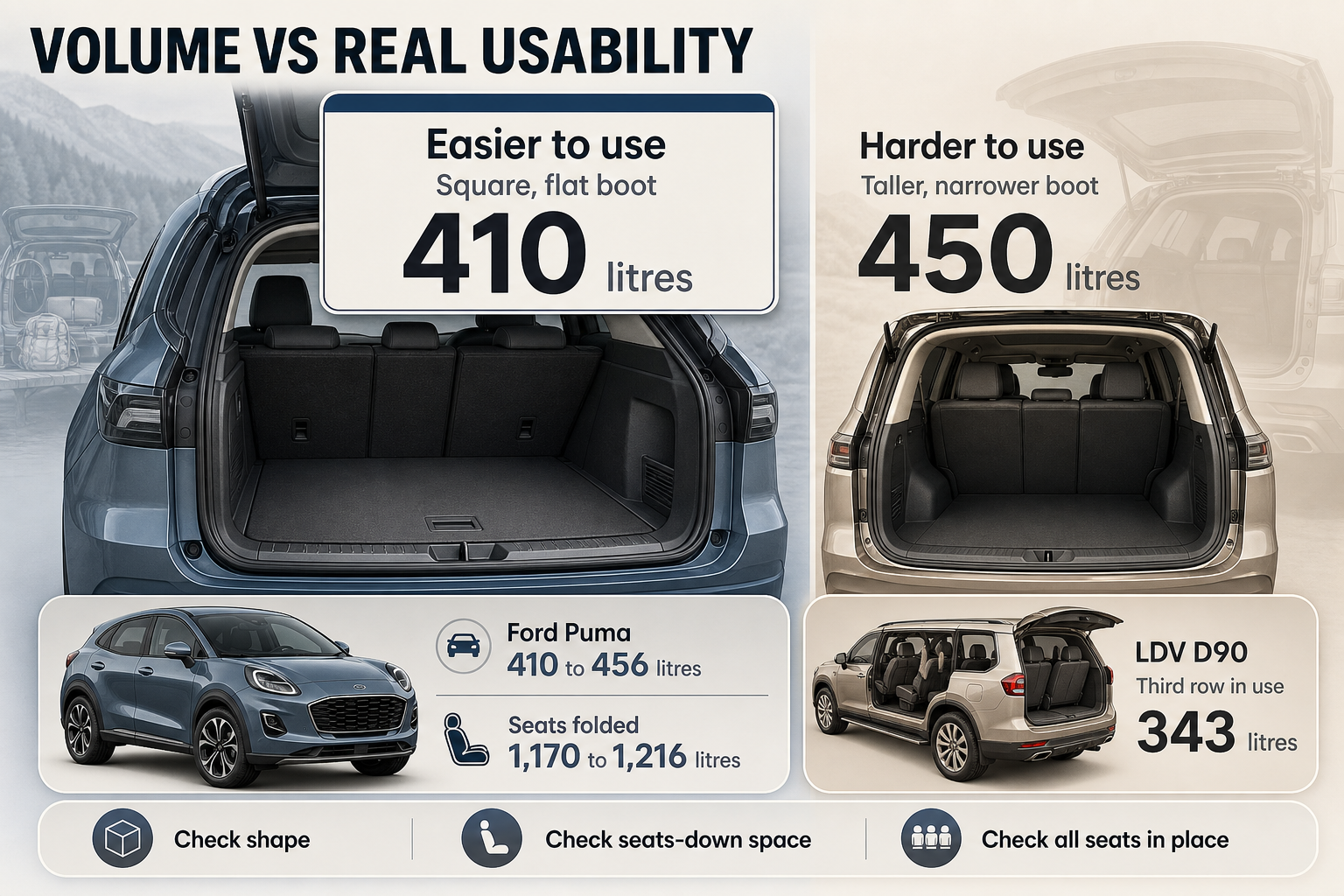
You should also check whether the measurement is to the window line or roof, and whether it applies with all seats in place. This matters a lot in seven-seat SUVs. LDV New Zealand says the D90 has 343 litres with the third row in use, which may sound acceptable until you realise that seven-seat mode often leaves only modest room for luggage behind the back seats. (ldv.co.nz)
If you are shopping for a family car, test the boot with the gear you actually use. Bring the pram, the buggy, the dog crate, or the golf clubs. Consumer NZ says its vehicle testing includes a specific boot assessment alongside cabin space checks, which reflects how important practical loading is in real ownership rather than just brochure numbers. (consumer.org.nz)
Look closely at the details too. A low boot lip makes heavy items easier to lift in. A 40:20:40 split rear seat is handy if you carry skis or fishing rods. Tie-down points, cargo nets, under-floor storage, and a power tailgate all improve day-to-day use. Wagons often score well not just because they are large, but because they are easy to load and their roofline gives them a long, usable cargo bay.
NZ Context
New Zealand conditions make cargo space more important than many buyers expect. We tend to do longer road trips than urban drivers in larger overseas cities, and those trips often involve bulky gear. A weekend away from Auckland to Taupō, or from Dunedin to Queenstown, can mean several suitcases, chilly bins, sports gear, and coats all in one load. A cramped boot gets old very quickly on that kind of drive.
Safety matters as much as size. NZ Transport Agency guidance says loads inside a vehicle should be placed so they will not injure anyone or distract the driver, and heavier items should be kept low and arranged carefully. It also notes that cargo barriers can be used, including barriers built to the AS/NZS 4034 standard. In plain English, that means loose gear in an overfilled cabin is not just annoying, it can be dangerous in a sudden stop. (nzta.govt.nz)
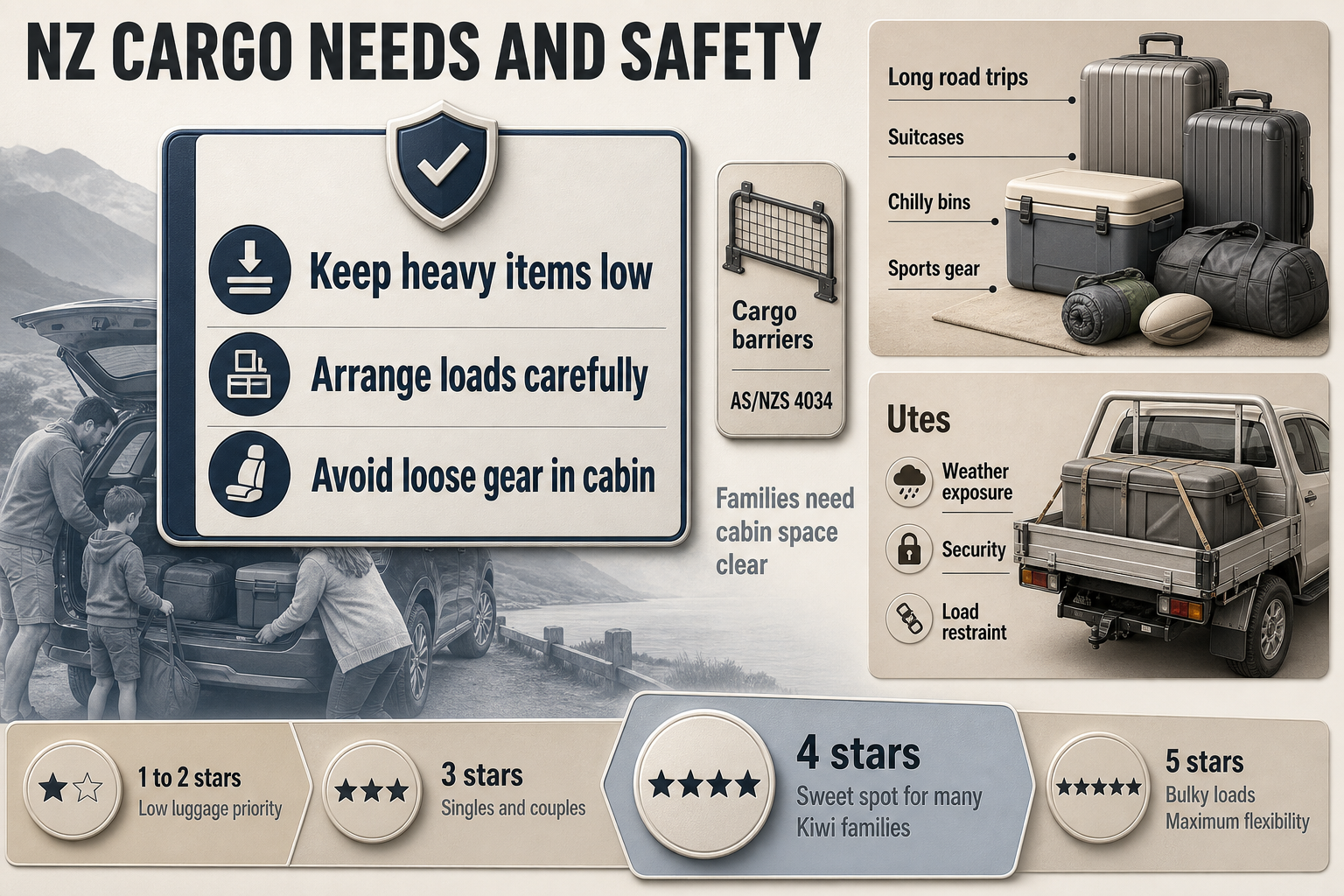
That is especially relevant if you have children. NZTA requires approved child restraints for younger children and stresses correct restraint use, so families need enough boot space to avoid piling bags around child seats or into passenger footwells. A car with a merely average boot can still work well if it leaves the cabin free for passengers, but once luggage starts competing with people, the vehicle is too small for the job. (nzta.govt.nz)
Utes deserve a special mention in NZ because they are common in rural areas and among tradies. Their trays often justify at least a four-star score for sheer carrying ability, but you should think about weather exposure, security, and load restraint. NZTA’s safe loading guidance applies here too, and if you regularly carry tools or sports gear, a canopy or proper tie-down setup may matter more than the raw size of the tray. (nzta.govt.nz)
The best way to read a cargo space rating is this: one or two stars is fine if luggage is a low priority, three stars suits many singles and couples, four stars is the sweet spot for many Kiwi families, and five stars is for buyers who regularly carry bulky loads or want maximum flexibility. Just remember that the best boot is not always the biggest one. It is the one that fits your gear safely, without forcing you to fold seats, leave bags at home, or stack loose items where your passengers should be.
You may also be interested in these independent articles
Sources
- [1]NZ Transport Agency Waka Kotahi - Guide Safe Loading Towing
- [2]NZ Transport Agency Waka Kotahi - Child restraints factsheet
- [3]NZ Transport Agency Waka Kotahi - PSV baggage and freight restraints
- [4]Consumer NZ - How we test electric and hybrid cars
- [5]Škoda New Zealand - Octavia Wagon
- [6]Ford New Zealand - Puma performance and load space
- [7]LDV New Zealand - D90 7-Seater SUV
- [8]Toyota New Zealand - Hiace brochure
© 2026 pyfoi. All rights reserved.