
Best Car Interior Colour for NZ Drivers
Choosing a car interior colour affects heat, cleaning and resale in NZ. See which trims suit strong sun, family use and used car buyers.
Your car’s interior colour sounds cosmetic, but it affects comfort, upkeep, and even how easy the car is to sell later. In New Zealand, where summer UV is fierce and many cars spend time parked outside, the colour and trim you choose can make a noticeable difference to heat, glare, and how quickly the cabin shows wear. (niwa.co.nz)
The Options
Black
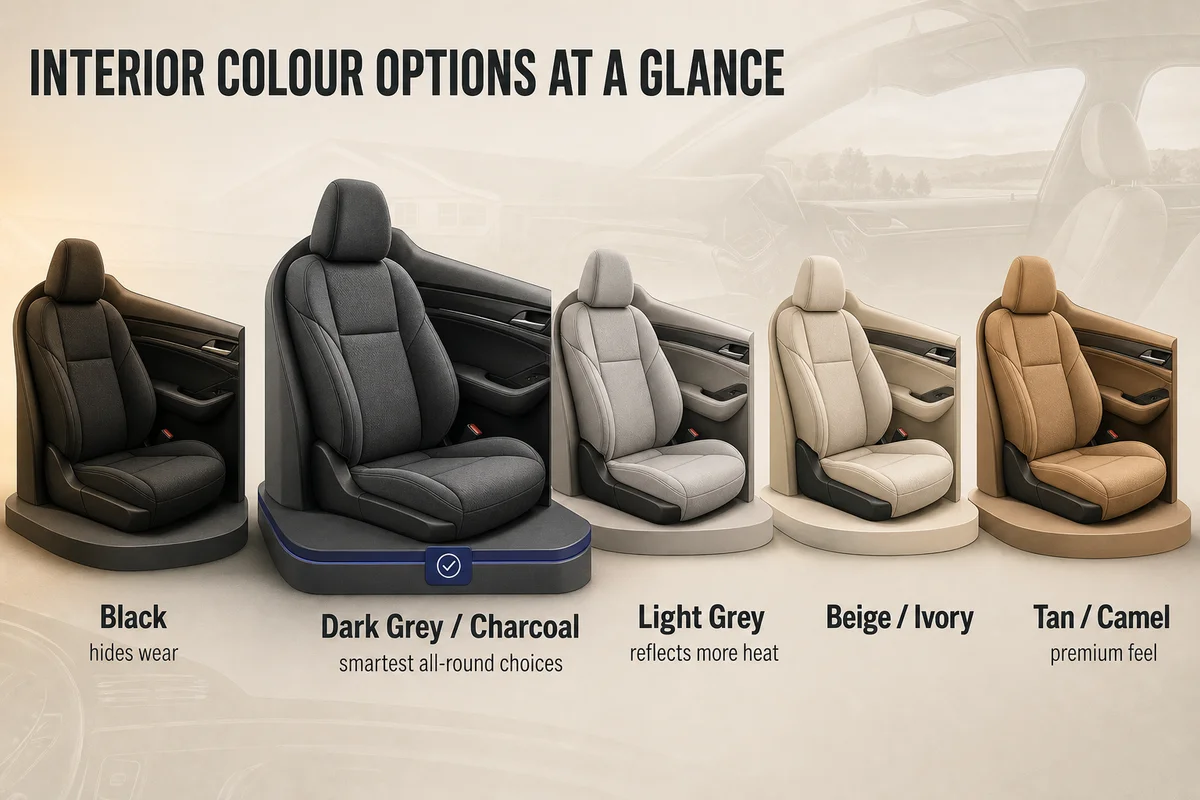
Black is the default choice in a huge part of the market, especially in Japanese imports, fleet cars, SUVs and performance models. It usually means black cloth, black leather, or a mostly black dashboard and seat trim. If a cabin is described as ebony, onyx, charcoal black or carbon black, it is usually aiming for the same look: dark, tidy, and easy to match with almost any exterior paint.
The biggest advantage is practicality. Black hides scuffs, denim marks, shoe rub on lower trim, and the everyday grime that comes with kids, dogs, work gear and winter sports. If you are buying a family SUV in Christchurch, a ute for rural Waikato, or a hatch that will see muddy football boots in Wellington, black is easy to live with. It also tends to age well visually, which helps when you trade or sell.
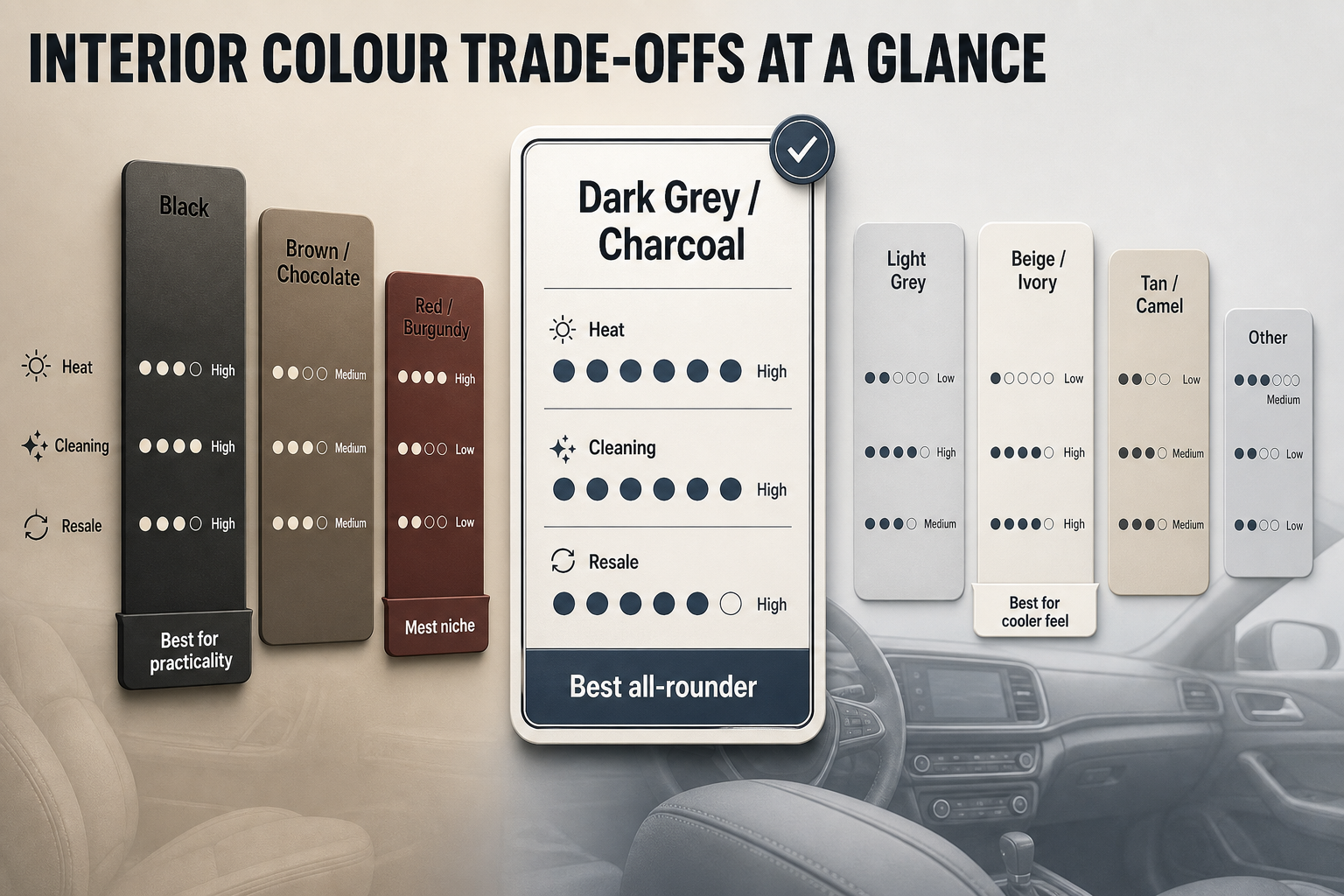
The downside is heat. Dark seats and dashboards absorb more sun, and that matters in New Zealand because UV levels are often very high. A black leather cabin left in an open carpark can feel brutally hot when you get back in, and hot seat surfaces, buckles and trim can be uncomfortable or even risky for children. The AA warns never to leave children or pets in parked cars on hot days, and Plunket notes that hot car seats, harnesses and belts can burn. (aa.co.nz)
Black suits buyers who want the safest resale bet and do not want to fuss over marks. It makes sense for rideshare use, family wagons, work vehicles and anyone parking on the street. If you choose black, features like tinted rear glass, a sunshade, ventilated seats or remote cabin cooling are more than nice extras in NZ conditions.
Light Grey
Light grey interiors sit between black and beige in both looks and practicality. They often appear in hybrids, mainstream sedans, and older Japanese imports, and can make a cabin feel brighter and more spacious without going fully light-coloured.
The appeal is balance. Light grey reflects more heat than black, so it can feel a bit less harsh after the car has been parked in the sun. It also keeps the cabin airy, which is helpful in smaller cars such as a Toyota Aqua, Honda Fit or Nissan Note. If you spend most of your time commuting in Auckland or Hamilton, that lighter feel can make a compact cabin seem less closed-in.
The trade-off is that light grey shows dirt faster than darker trims. Seat bolsters, armrests and door cards can pick up stains, especially if the car has pale cloth. Grey can also yellow or discolour over time if it has had years of sun exposure. On a used car, check for uneven shading between the front and rear seats, which can hint at wear or previous cleaning attempts.
Light grey works well for urban commuters, retirees, and buyers who want a cabin that feels open without being as hard to keep clean as beige. It is a sensible middle ground if black feels too harsh and beige feels too risky.
Beige / Ivory
Beige and ivory interiors are common in luxury cars, older executive sedans, some people movers and a few SUVs. Think parchment, almond, oyster or linen. These cabins are designed to feel warm, upmarket and relaxed rather than sporty.
Their main strength is comfort in sunlight. Lighter colours reflect more heat, so beige seats and trim can be noticeably easier to get into after the car has been parked outside. For New Zealand buyers in sunny regions such as Hawke’s Bay, Nelson or Canterbury, that can be a real day-to-day benefit. A beige cabin also makes a car feel bigger, which helps in wagons and seven-seaters.
The weakness is maintenance. Beige shows blue-jean dye, coffee drips, child-seat marks, sunscreen residue and muddy footprints very quickly. If you have young children, carry tools, or regularly head to the beach, ski field or bach, pale trim can look tired fast unless you are diligent. Leather or synthetic leather in beige is easier to wipe down than beige cloth, but it still needs regular care.
Beige suits buyers who value cabin ambience and are prepared to clean it. It is a good fit for an executive sedan, a weekend cruiser, or a well-kept family car where comfort matters more than hiding abuse. On used imports, inspect pale interiors carefully because staining can be expensive or impossible to reverse fully.
Tan / Camel
Tan and camel interiors sit between beige and brown. They are often found in premium SUVs, European wagons, and higher-spec utes. Names like saddle tan, teak, maple sugar or desert sand are all versions of this warmer, richer look.
Tan gives you much of the airy feel of beige, but with a bit more forgiveness for dirt and wear. It can look particularly good in SUVs and wagons used for touring, towing or long-distance driving, because it gives the cabin a more premium feel without the starkness of ivory. If you are shopping for something to take from Tauranga to Taupō, or for South Island road trips, tan can make the interior feel special over long hours.
Its downside is that it is more taste-specific. Not every buyer wants tan, so resale can depend on the vehicle. In a Land Rover, BMW, Mazda CX-60 or Ford Ranger Wildtrak-style vehicle, tan may be a plus. In a budget hatch, it may look out of place. It still shows scuffs more than black, especially on the outer seat bolsters.
Tan suits buyers who want a premium look and are not choosing purely for easiest resale. It is especially appealing in higher-end SUVs, tourers and tow vehicles where interior atmosphere matters.
Brown / Chocolate
Brown and chocolate interiors are the darker, richer cousin to tan. They are mostly seen in premium vehicles and tend to be paired with leather or leather-look upholstery. Espresso, coffee and walnut are typical marketing names.
Brown is good at hiding dirt while still feeling warmer and more distinctive than black. It can be excellent in a used luxury SUV or wagon because it conceals wear better than beige but avoids the plain look of all-black trim. It also tends to age gracefully if the leather has been cared for.
The catch is market appeal. Brown is less common, so some buyers love it and others will walk away. It can also make a small cabin feel darker if the headlining and dash are also dark. In cheaper cars, brown trim can date the cabin quickly, but in premium models it often adds character.
Brown works best for buyers who want something a bit different without going flashy. It suits tourers, luxury SUVs and executive cars more than basic commuter hatchbacks.
Dark Grey / Charcoal
Dark grey and charcoal are the practical compromise option. They are similar to black in function, but usually look a bit softer and hide dust better. Graphite, anthracite and gunmetal all sit in this space.
Charcoal interiors are easy to live with. They disguise everyday wear well, do not show lint and fingerprints as badly as pure black, and usually feel less severe. In New Zealand’s used market, they are a safe choice because they appeal to a broad range of buyers without the heat and starkness penalty of a fully black cabin.
They are not perfect. In terms of temperature, charcoal is still a dark interior, so it will warm up more than beige or light grey. Visually, it can also feel dull if the car has a lot of hard plastic and little contrast trim. But for many buyers, especially those shopping mainstream used cars, charcoal is one of the smartest all-round choices.
Charcoal suits almost any use case: school runs, open-road commuting, rural driving, company cars and family SUVs. If you want low fuss without the full black look, this is the sensible pick.
Red / Burgundy
Red and burgundy interiors are the statement choice. They are usually found in sports cars, performance SUVs and some luxury models rather than everyday transport. Cockpit red, garnet and wine red are all variations on the same theme.
The appeal is obvious. A red cabin feels special every time you open the door, and in the right car it can lift the whole ownership experience. If you are buying something emotional rather than purely rational, interior colour is part of the point.
The downside is resale and wear. Red leather can show creasing, dye transfer and fading, especially if the car has spent years in strong sun. It also narrows your future buyer pool. A red interior in a Porsche or Alfa Romeo may help the car stand out. In a mainstream SUV, many buyers will prefer something less bold.
Red suits enthusiasts who are buying with their heart as much as their head. If you are looking for easiest ownership and broadest resale appeal, it is not the safe option.
Other
“Other” covers unusual colours and finishes that do not fit the main groups, including blue, white, green, mixed colours or strong two-tone designs. These are rare and usually tied to niche trims, EVs, luxury brands or special editions.
The benefit is individuality. The risk is that unusual interiors can date quickly and may be harder to repair or match if trim pieces are damaged. If you are considering one, look beyond the novelty and think about how you will feel about it in three years, not just on the test drive.
How to Choose
The best interior colour is the one that matches how you actually use the car. If your vehicle will carry kids, pets, sports gear or work equipment, dark grey, charcoal and black make the most sense. They hide abuse, ask less of you, and are easiest to resell.
If your car will often sit outside in the sun, especially in places with strong summer heat and UV, lighter interiors deserve more attention than many buyers give them. Beige, ivory and light grey can be more comfortable on hot days, particularly if the seats are leather or vinyl rather than cloth. New Zealand’s UV conditions are strong enough that cabin heat and surface temperature are not minor issues. (niwa.co.nz)
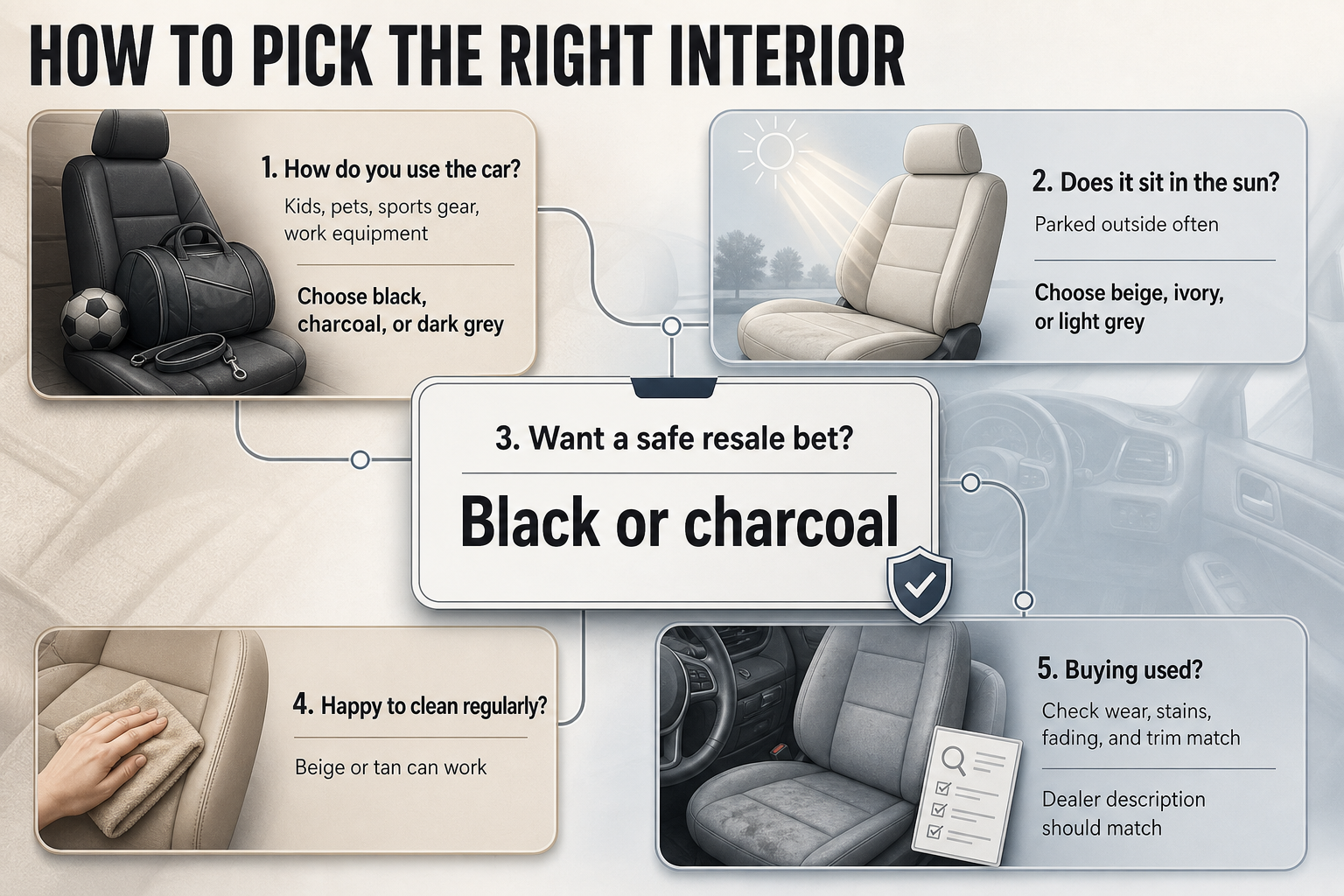
You probably do not need to chase black just because it is the “safe” choice. Charcoal often gives you nearly the same resale friendliness with a slightly softer look. Likewise, you do not need to avoid beige if the car is mainly for adult passengers and you are happy to clean it regularly.
When comparing used cars, focus less on the colour name and more on condition. A tidy beige interior is better than a worn black one. Check seat bolsters, steering wheel wear, staining around cupholders, fading on the parcel shelf, and whether the trim colour matches the dealer’s listing. If you buy from a dealer in New Zealand, the vehicle should match its description, and dealer sales are covered by the Consumer Guarantees Act and Fair Trading Act protections. (consumerprotection.govt.nz)
NZ Context
New Zealand buyers should think about interior colour in the same practical way they think about tyres or fuel type. Our strong sun makes dark cabins hotter, and that matters whether you are loading children into a car in Napier, returning to your ute after work in Bay of Plenty, or parking all day at an Auckland train station. The AA warns against leaving children or pets in parked cars on hot days, and NZ child safety advice also stresses checking seat and belt temperatures before putting a child in. (aa.co.nz)
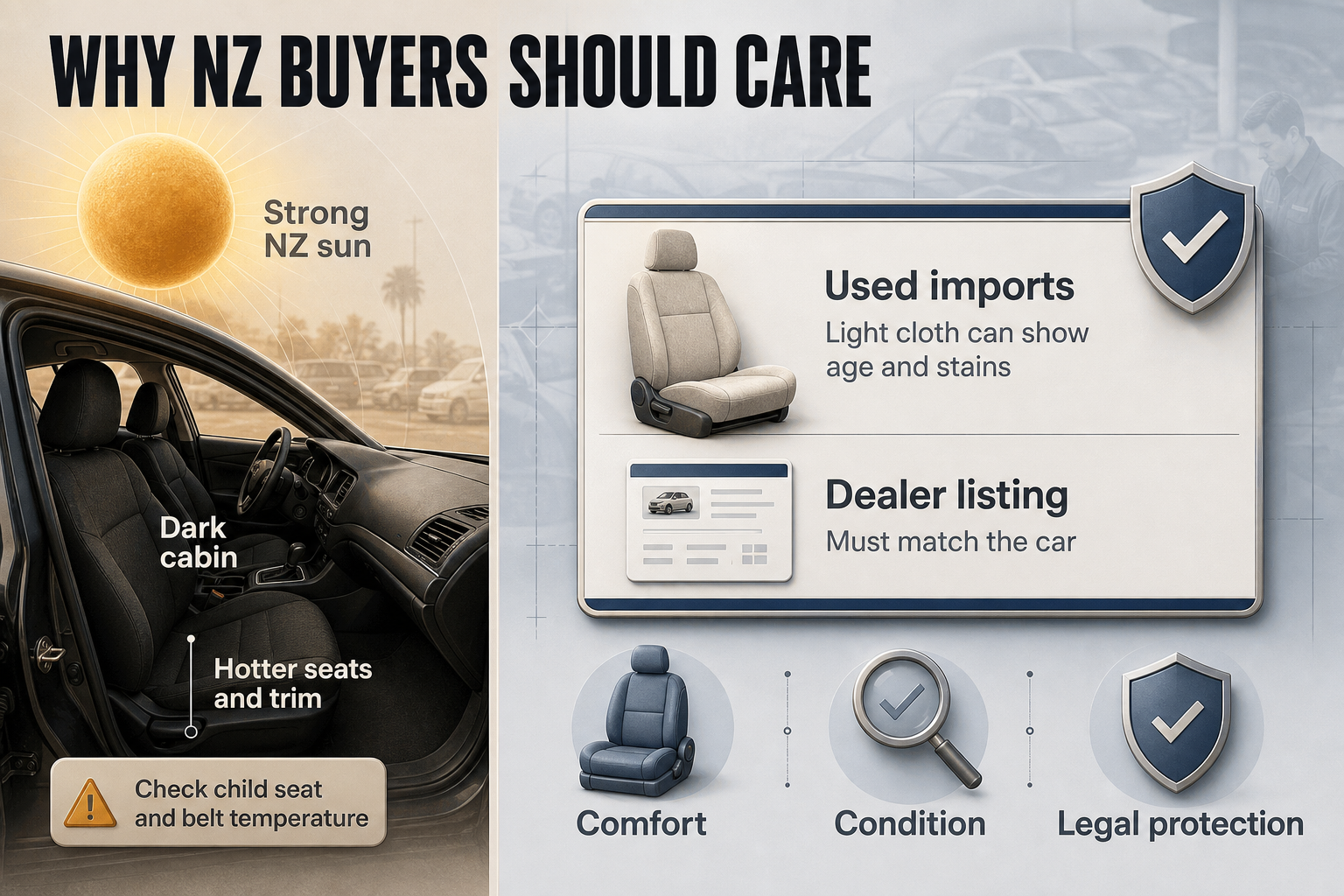
Used imports add another wrinkle. Many arrive with light cloth interiors that can show age, smoke residue or old staining more than darker NZ-new fleet-style cabins. Because New Zealand’s used market leans heavily on imports, you will see more variation in interior colours than in some countries. That makes condition and cleaning history more important than the brochure colour itself.
Finally, remember that interior colour is part of the advertised specification. If a dealer lists leather, ivory trim, or a specific cabin finish and the car does not match, that is not just annoying, it can matter legally. Consumer Protection says dealer-sold vehicles must match their description, and dealers must not mislead buyers. (consumerprotection.govt.nz)
You may also be interested in these independent articles
Sources
- [1]Consumer Protection NZ - Buying a car from a dealer
- [2]Consumer Protection NZ - Researching cars and sellers
- [3]Earth Sciences New Zealand (NIWA) - UV Index Information
- [4]Earth Sciences New Zealand (NIWA) - UV and Ozone
- [5]AA New Zealand - Tips for summer driving
- [6]Plunket - High temperatures prompt need for extra precaution this summer
- [7]NZ Transport Agency Waka Kotahi - Child restraints
- [8]Consumer NZ - What are my rights after buying a faulty car?
© 2026 pyfoi. All rights reserved.