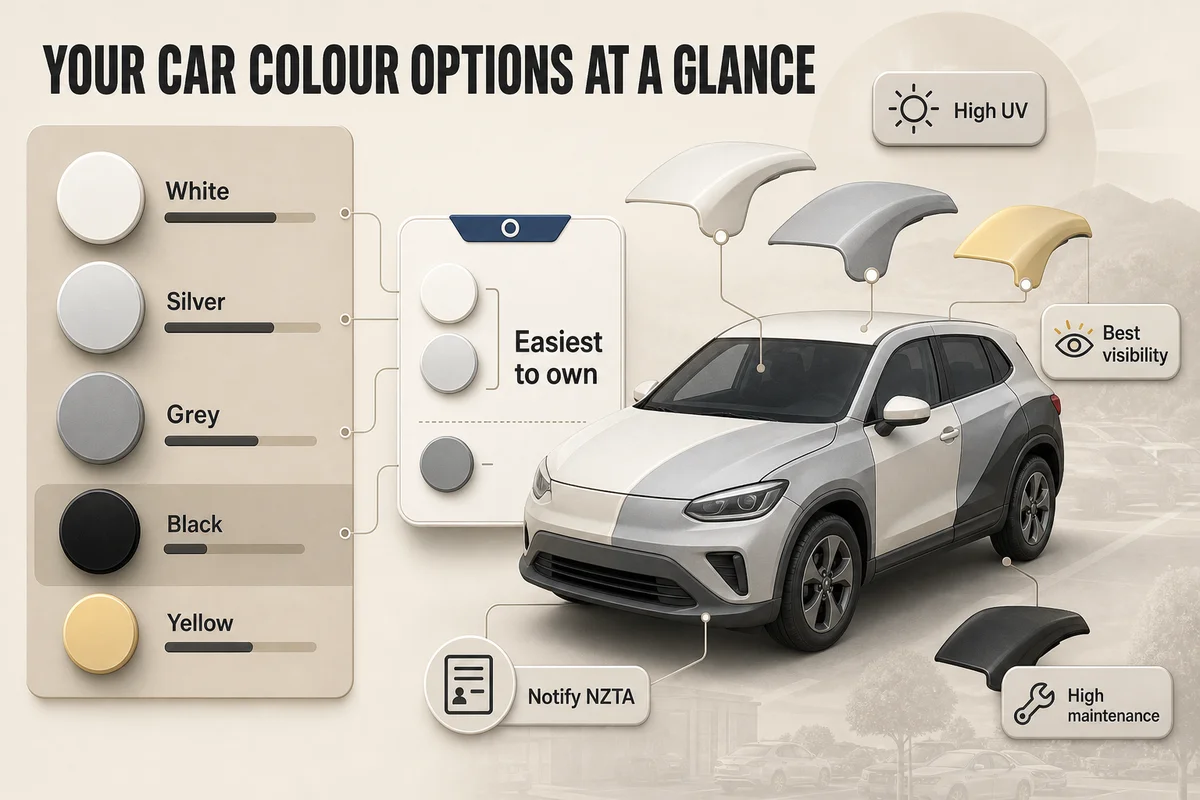

Best Car Colours for NZ Drivers in 2026
Choosing the best car colour in NZ affects paint wear, visibility, heat and resale. See which colours suit Kiwi driving before you buy.
Exterior colour sounds cosmetic, but it can affect how your car looks after a few summers, how often it needs washing, how easy it is to spot in bad weather, and even how simple it is to resell later. For New Zealand buyers, colour matters more than many people think because our UV levels are high, our weather changes quickly, and many cars spend a lot of time parked outside. (niwa.co.nz)
The Options
Grey
Grey has become one of the default modern car colours. It covers everything from light cement tones to dark graphite and machine grey, and it usually gives a car a tidy, contemporary look without drawing much attention.
The main advantage of grey is that it hides dust, road film, and light swirl marks better than black or very dark blue. That suits Kiwi owners who do motorway kilometres, park outside at work, or regularly drive on chipseal and gravel roads where a clean car does not stay clean for long. The downside is visibility. In heavy rain, fog, dawn light, or on wet roads, some grey shades can blend into the background more than white, yellow, or brighter colours. That is worth thinking about if you do lots of winter driving over the Desert Road, the Kaimais, or South Island alpine routes.
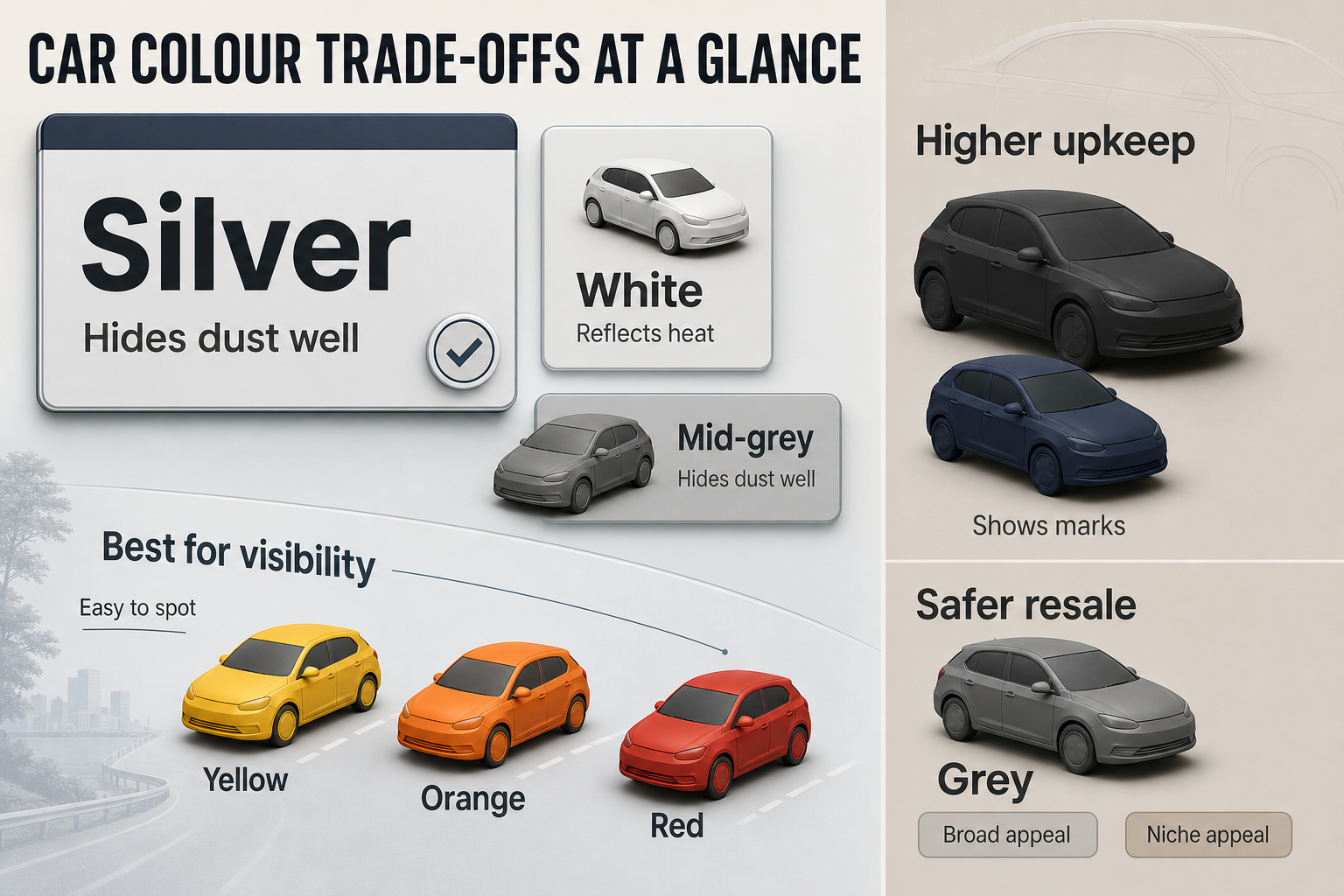
Grey also tends to be an easy resale colour because it is neutral. If you want a safe middle ground between style and practicality, grey is often it.
Brown
Brown is less common now than it was a decade ago, but it still appears on SUVs, utes, and some premium cars. It can range from bronze and copper-brown to dark mocha.
Brown’s strength is individuality without being as bold as orange or bright green. It can also suit rural use well because it hides light dust and mud splashes better than black or white. The drawback is buyer appeal. Because it is a niche choice, resale can be a bit narrower. If you love the exact shade, that may not matter, but if you change cars often, a more mainstream colour is usually easier to move on.
For NZ buyers, brown often works best on larger vehicles used for towing, camping, or family road trips where a rugged look suits the vehicle’s purpose.
Black
Black gives almost any car a sharper, more expensive look. On a sports sedan, SUV, or luxury wagon, it can look excellent when clean.
The catch is upkeep. Black shows dust, water spots, pollen, swirl marks, and fine scratches more than almost any other colour. In New Zealand, where strong sun, coastal salt air, and outdoor parking can be hard on paint, black can demand more regular washing and paint care to keep looking its best. NZ’s UV levels are high, and local car-care businesses and products specifically market UV protection for paint and trim because sun exposure is a real issue here. (niwa.co.nz)
Black also absorbs more heat, so a car parked in summer sun in places like Hawke’s Bay, Nelson, or Canterbury can feel noticeably hotter inside than a white or silver one. If you have covered parking and you enjoy detailing, black can be rewarding. If your car lives outside and doubles as a family workhorse, it may become high maintenance.
Yellow
Yellow is one of the most visible colours on the road. It stands out in traffic, in rain, and in low light, which is part of why high-visibility safety gear often uses yellow or orange tones. NZTA visibility research on safety garments also supports the basic idea that bright colours improve conspicuity. (nzta.govt.nz)
The upside is obvious: yellow is easy to see and full of personality. It suits performance cars, small hatchbacks, and buyers who want something cheerful and distinctive. The downside is resale. Yellow appeals strongly to some people and not at all to others, so your pool of future buyers may be smaller.
For New Zealand, yellow can make sense if you spend a lot of time on open roads or simply want a car that is harder to lose in a crowded ski-field car park. Just be aware that bright colours can date faster stylistically than neutral ones.
Blue
Blue covers a wide range, from pale metallic shades to navy and deep pearl blues. Lighter blues can be practical and easy to live with, while darker blues often have some of black’s premium look without being quite as unforgiving.
The pros depend on the shade. Mid-blue and lighter metallic blue usually hide dust reasonably well and look distinctive without being risky. Very dark blue can look superb, but like black it tends to show marks and can disappear visually in poor weather. If you like blue, a medium tone is often the sweet spot for daily use.
Blue works well for buyers who want something more interesting than silver or white but still want broad resale appeal. It suits everything from city hatchbacks to family SUVs.
Orange
Orange is bold, sporty, and uncommon. It is often used on performance models, adventurous crossovers, and lifestyle utes.
Its biggest advantage is character. It is easy to spot, easy to remember, and can make a fairly ordinary car feel more special. Like yellow, it is also more visible than darker neutral colours in many conditions. The downside is that orange is a taste-led choice. If you are buying with your head rather than your heart, it is not the safest resale bet.
In NZ, orange often suits buyers with a second car, an enthusiast car, or a ute used for recreation where standing out is part of the appeal.
Silver
Silver has long been one of the most practical car colours. It hides dust, light scratches, and water spotting well, and it tends to stay looking acceptable even when it has not been washed for a while.
That makes silver a strong match for real New Zealand use. If you commute daily, park outdoors, do school runs, and spend weekends on state highways or gravel access roads, silver is easy to live with. It also reflects heat better than darker colours, which helps in summer. Because silver is so widely accepted, resale is usually straightforward as well. Common colours such as silver, white, and black are also simply more prevalent in the NZ fleet. (moneyhub.co.nz)
The only real downside is that silver can feel a bit anonymous. If you want your car to feel special, it may not excite you. If you want low fuss, it is hard to argue against.
Red
Red has emotional pull. It can make a hatchback look lively, a sports car look right, and an SUV look less anonymous.
The upside is style and visibility. Red generally stands out better than grey, silver, or black. The downside is that some red paints can show fading more obviously over time if neglected, particularly on older vehicles or lower-quality finishes. In a high-UV country like New Zealand, regular washing, waxing, ceramic protection, or garaging can make a real difference to how well strong colours hold up. (niwa.co.nz)
Red suits buyers who want a bit of flair without going as far as yellow or orange. It is often a good compromise between personality and mainstream appeal.
Gold
Gold is now relatively rare, though champagne-gold and soft metallic gold were once very common. On some cars it still looks classy, especially on older Japanese sedans and premium SUVs.
Gold can hide dust reasonably well and tends to be practical in day-to-day use. The issue is fashion. It is not a popular new-car colour in 2026, so it can make a vehicle feel older even when the car itself is not. That does not matter if you are buying for value and keeping the car long term, but it can affect how modern the car feels.
For NZ buyers shopping used imports, gold can sometimes be a smart buy because it may be slightly less in demand than white, black, or silver.
Other
This is the catch-all category for colours that do not fit the main groups, such as purple, pink, beige, multi-tone finishes, wraps, or unusual factory colours.
The benefit is uniqueness. The risk is that unusual colours can complicate resale, repair matching, or insurance discussions if the finish is non-standard or wrapped rather than painted. If a car has been wrapped, ask whether the colour change has been recorded properly and whether the original paint underneath is in good condition.
This matters in New Zealand because if you repaint your car a different colour, NZTA says you need to let them know so the registration details stay correct. (nzta.govt.nz)
White
White is one of the safest all-round choices. It stays cooler than dark colours in the sun, it is easy to see, and it usually has broad appeal at resale time.
White also works well in NZ conditions because it reflects heat and tends to show fewer swirl marks than black. It does show road grime around the lower body and rear hatch area, especially on SUVs and wagons in winter, but it still usually looks cleaner than black after a week of normal driving. White is particularly sensible if your car sits outside all day or you regularly travel in mixed weather.
Pearl white can look more premium than flat white, but if you ever need paint repair, pearl finishes can be trickier and sometimes costlier to match.
Green
Green ranges from muted olive and dark forest shades to bright lime. Dark green can look classy and traditional, especially on SUVs, 4WDs, and wagons, while brighter greens are more playful.
The practical pros and cons depend on the shade. Mid and darker greens can hide dust fairly well, but very dark greens can be less visible in shade, rain, or against roadside vegetation. Bright green stands out well, but resale becomes more taste-dependent.
Green makes sense for buyers who want something different without going full orange or yellow. It often suits outdoors-focused vehicles used for tramping trips, beach runs, and back-road exploring.
How to Choose
The best colour is usually the one that fits how you actually use your car, not the one that looks best under dealership lights. If your car lives outside, does daily commuting, and rarely gets hand-washed, silver, white, and mid-grey are the easiest colours to own. They hide the mess of normal life and stay presentable with less effort.
If you care about style and do not mind regular cleaning, black, dark blue, and red can be rewarding. They have more visual impact, but they are less forgiving. If visibility matters to you because you drive a lot in rain, fog, or on rural roads, brighter colours like white, yellow, orange, and many reds have an edge over dark grey, black, or deep green.
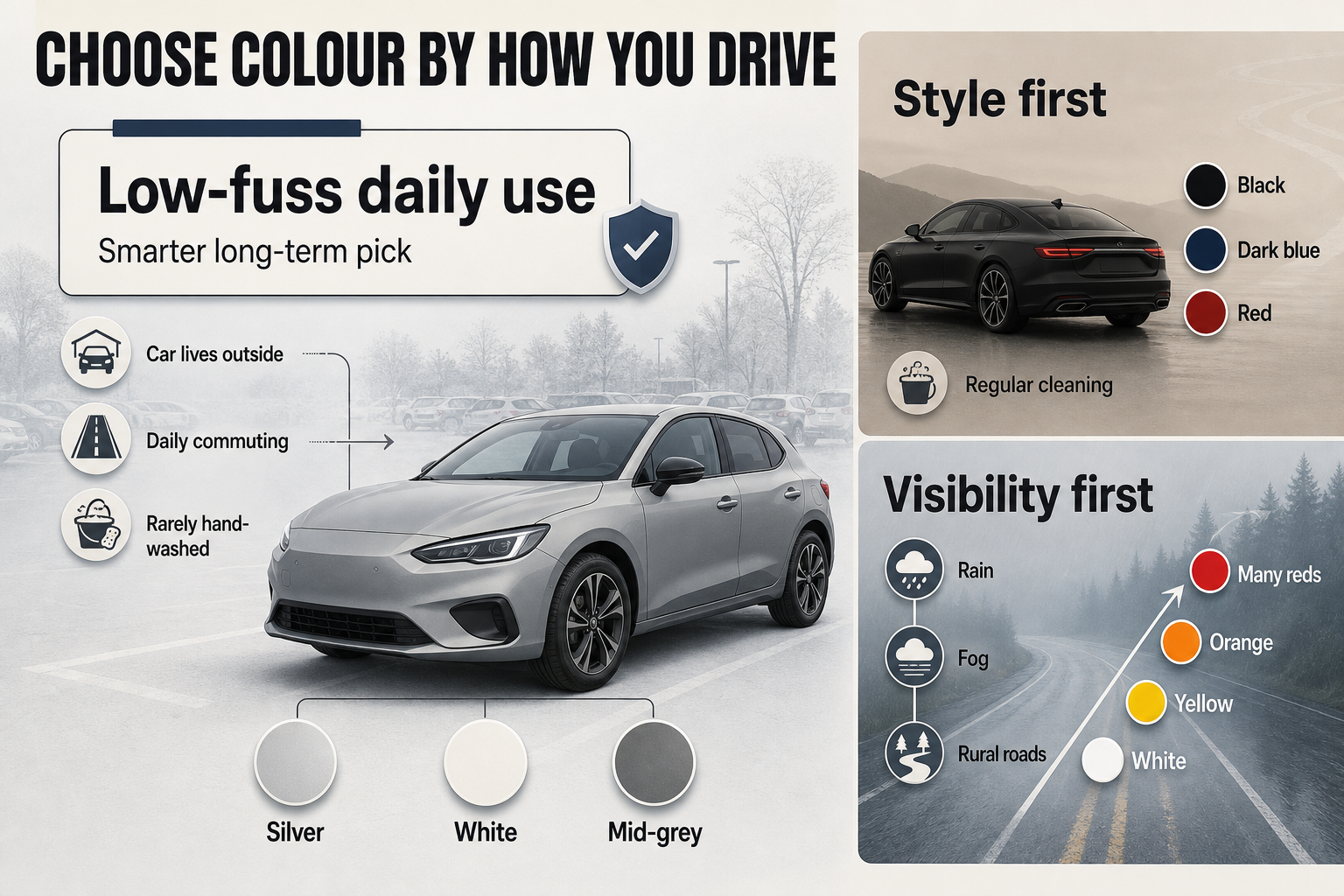
You probably do not need to choose a dark prestige colour just because it looks expensive in photos. For many Auckland, Hamilton, or Christchurch commuters, a light neutral colour is the smarter long-term pick. On the other hand, if you are buying a fun second car, colour is one of the cheapest ways to make it feel special every time you walk up to it.
NZ Context
New Zealand’s high UV environment is a real factor for paint and trim longevity, especially for vehicles parked outside year-round. That does not mean you should avoid strong colours, but it does mean paint care matters more here than in many markets. A garage, carport, regular washing, and some form of UV-focused paint protection can help preserve any colour. (niwa.co.nz)
There is also a legal admin point many buyers miss. If you repaint your vehicle a different colour, NZTA requires you to notify them so the registration record is updated. That is relevant if you buy a wrapped car, a project car, or anything that has had a full colour change. (nzta.govt.nz)
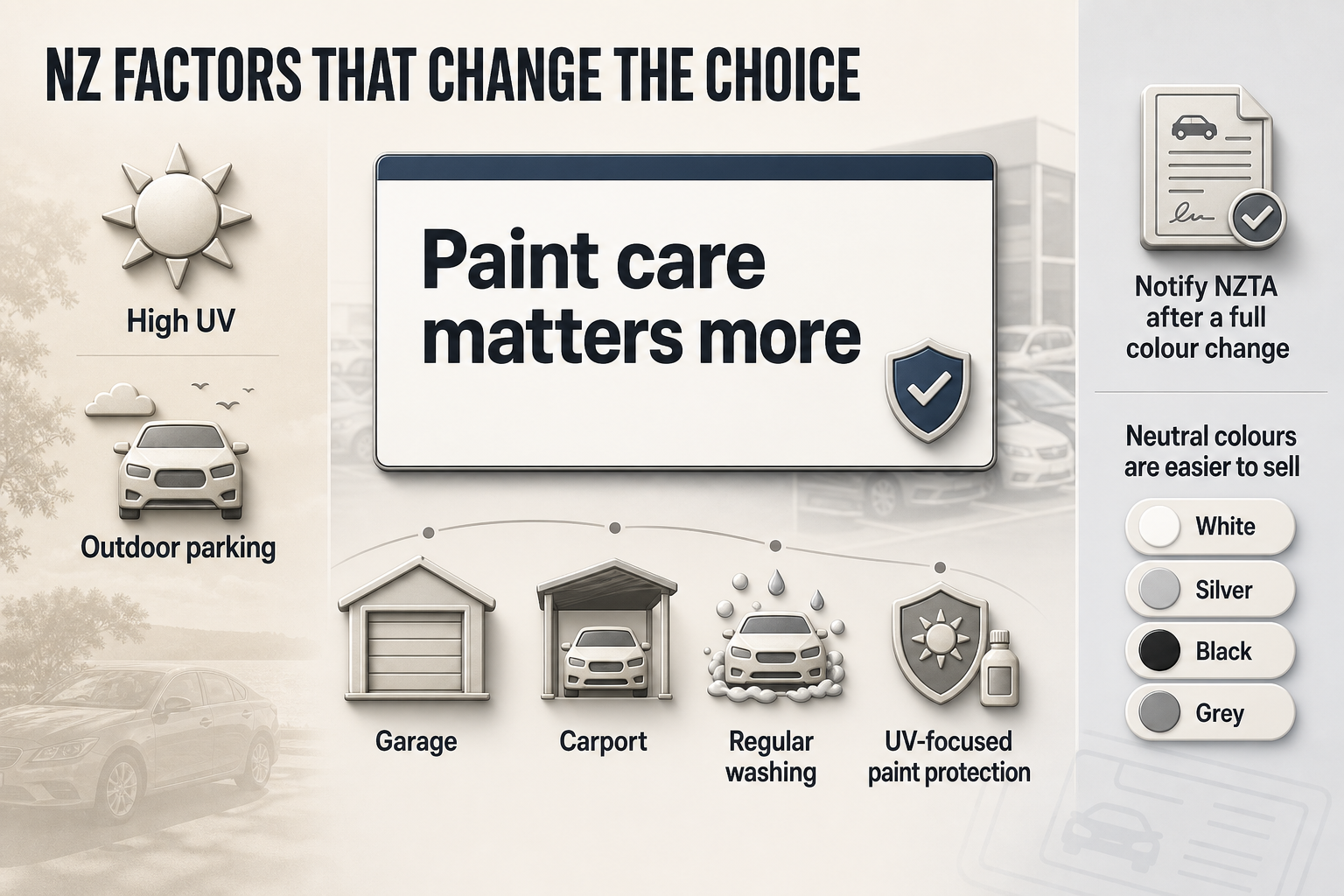
Resale in New Zealand still leans heavily toward neutral colours. White, silver, black, and grey are common because they are easy to sell and easy to live with. If you are buying mainly with future value in mind, staying close to those colours is the conservative move. If you are buying for yourself and plan to keep the car for years, choose the colour you will still enjoy on a wet Tuesday morning, not just the one that looked good in the listing photos.
You may also be interested in these independent articles
Sources
- [1]NZ Transport Agency Waka Kotahi - Registering your vehicle
- [2]NZ Transport Agency Waka Kotahi - Vehicle registration factsheet
- [3]NIWA - UV Index Information
- [4]NZ Transport Agency Waka Kotahi - Research Report 069 Testing the relative conspicuity of road workers' safety garments
- [5]AA Shop NZ - UV Resistant Vehicle Protectant
- [6]GAC New Zealand - Protect Your Paint from Day One
- [7]Glossworks NZ - New Car Protection: First 6 Months Matter
© 2026 pyfoi. All rights reserved.