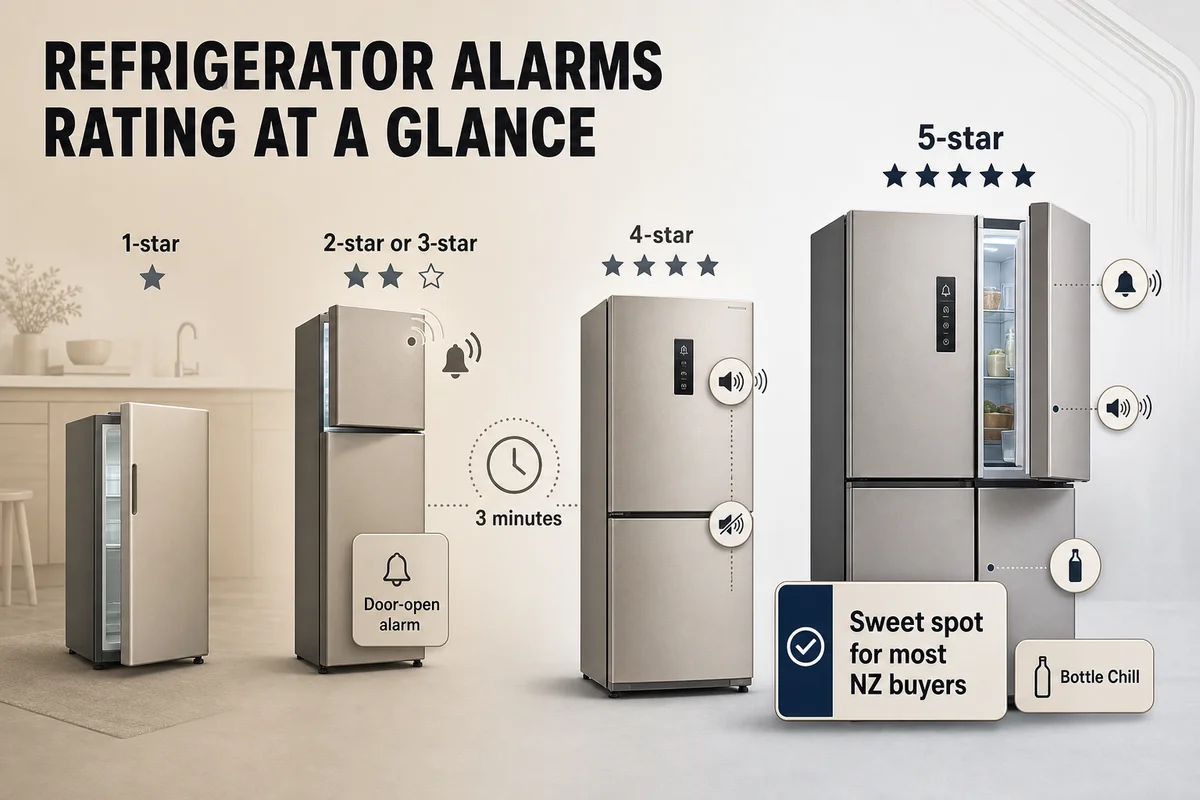

How to Judge a Fridge Alarms Rating
Learn what a fridge Alarms Rating really means for NZ buyers, from door-open alarms to smarter alerts that cut food waste and power costs.
A refrigerator’s Alarms Rating is a simple way of judging how useful its warning alerts are in day-to-day use. For New Zealand buyers, that matters because a good alarm system can help prevent spoiled food, wasted power, and the all-too-common problem of a fridge or freezer door being left slightly open.
What Goes Into the Rating
An Alarms Rating for a refrigerator usually reflects the quality and usefulness of its built-in warning system rather than one single test. At the basic end, a low-rated model may have no audible alerts at all. That means you only notice a problem once milk is warm, ice cream has softened, or condensation starts building up around the door seal.
A mid-rated refrigerator often includes a door-open alarm. This is the most common and most useful alarm feature in the NZ market. Official product pages for LG refrigerators sold in New Zealand list “Door Open Alarm” on models ranging from top-mount to French-door designs, showing how widespread this feature has become. (lg.com) Haier user documentation for a refrigerator sold in New Zealand says the alarm sounds when the refrigerator door or freezer drawer has been open for more than 3 minutes, which is a good example of how these systems work in practice. (haier.co.nz)
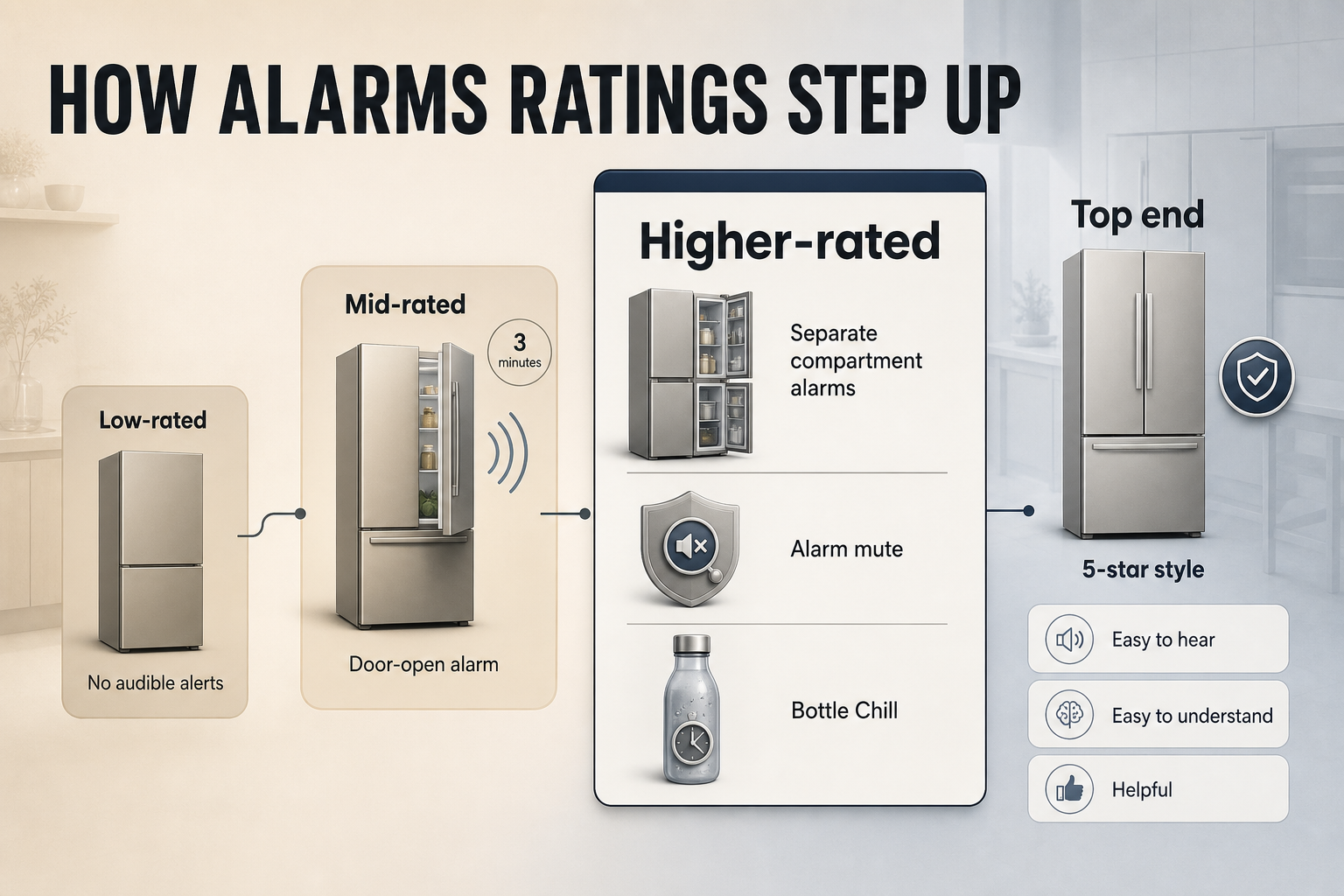
Higher-rated models tend to go beyond a simple beep. They may add separate alarms for different compartments, alarm mute controls, smarter warning patterns, or special alerts tied to cooling functions. Fisher & Paykel’s ActiveSmart refrigerator guide includes dedicated sections for door alarms, alarm mute, and Bottle Chill, which shows a broader and more developed alarm system than a fridge with one basic open-door chime. (fisherpaykel.com)
At the top end, a 5-star style alarms setup is usually one that is easy to hear, easy to understand, and genuinely helpful rather than annoying. The best systems warn you early enough to save food, distinguish between minor and serious issues, and let you silence or manage alerts without disabling protection altogether. That last point matters because some cheap implementations technically have an alarm, but it is too quiet, too vague, or too easy to ignore.
What Separates a 1-Star from a 5-Star?
A 1-star alarms rating usually means very limited protection. That could be a refrigerator with no alarm functions, or one with a token alert that covers only one situation. In practical terms, you are relying on yourself to notice an ajar freezer drawer, a child not closing the door properly, or a temperature problem after a power interruption.
A 2-star or 3-star rating often means the refrigerator covers the basics. You will usually see a door-open alarm, and sometimes a simple warning if a compartment has been open too long. This is already a worthwhile step up for busy households, especially where the fridge is opened often after school, during dinner prep, or when several people share the kitchen.
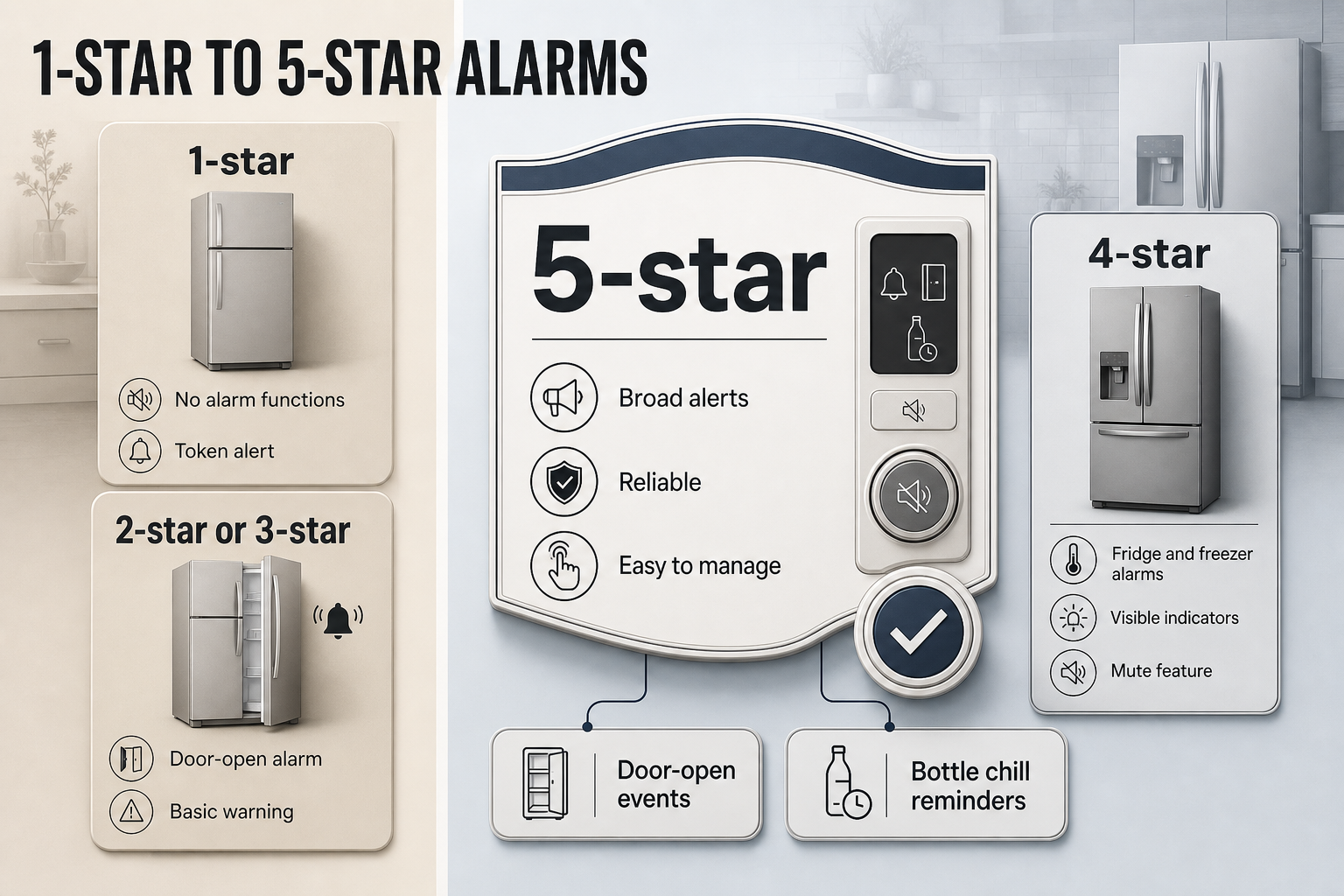
A 4-star rating suggests a more thoughtful system. That might include alarms on both fridge and freezer sections, clearer controls, visible indicators on the display, or a mute feature that does not remove protection entirely. Fisher & Paykel documentation, for example, treats alarms as part of the wider control system rather than an afterthought, which is the sort of design detail that tends to lift a rating. (fisherpaykel.com)
A 5-star alarms rating is usually reserved for refrigerators whose alerts are broad, reliable, and well executed. Think of a model that warns for door-open events, supports special timed cooling alerts such as bottle chill reminders, and makes the alarm system easy to manage from the control panel. In a real household, this means fewer ruined groceries, less frost build-up, and less energy waste from cold air leaking out overnight.
What to Look For
The first thing to check is whether the refrigerator has a door-open alarm at all. This sounds basic, but it is still one of the most useful features you can buy. French-door and side-by-side models in particular benefit from it because they have more seals, more compartments, and more chances for one section to be left not quite shut. LG’s NZ specifications show door-open alarms on both a 410 L top-mount model and a 508 L French-door model, which suggests the feature is no longer limited to premium-only designs. (lg.com)
Next, check how the alarm behaves. A good system should trigger after a sensible delay, not the second you open the door to unload groceries, but not so late that food quality is already affected. Haier’s NZ user manual gives a concrete example, with the alarm sounding after 3 minutes and interior lighting changes after 7 minutes if the door or drawer remains open. (haier.co.nz) That kind of timing is practical because it balances convenience with protection.
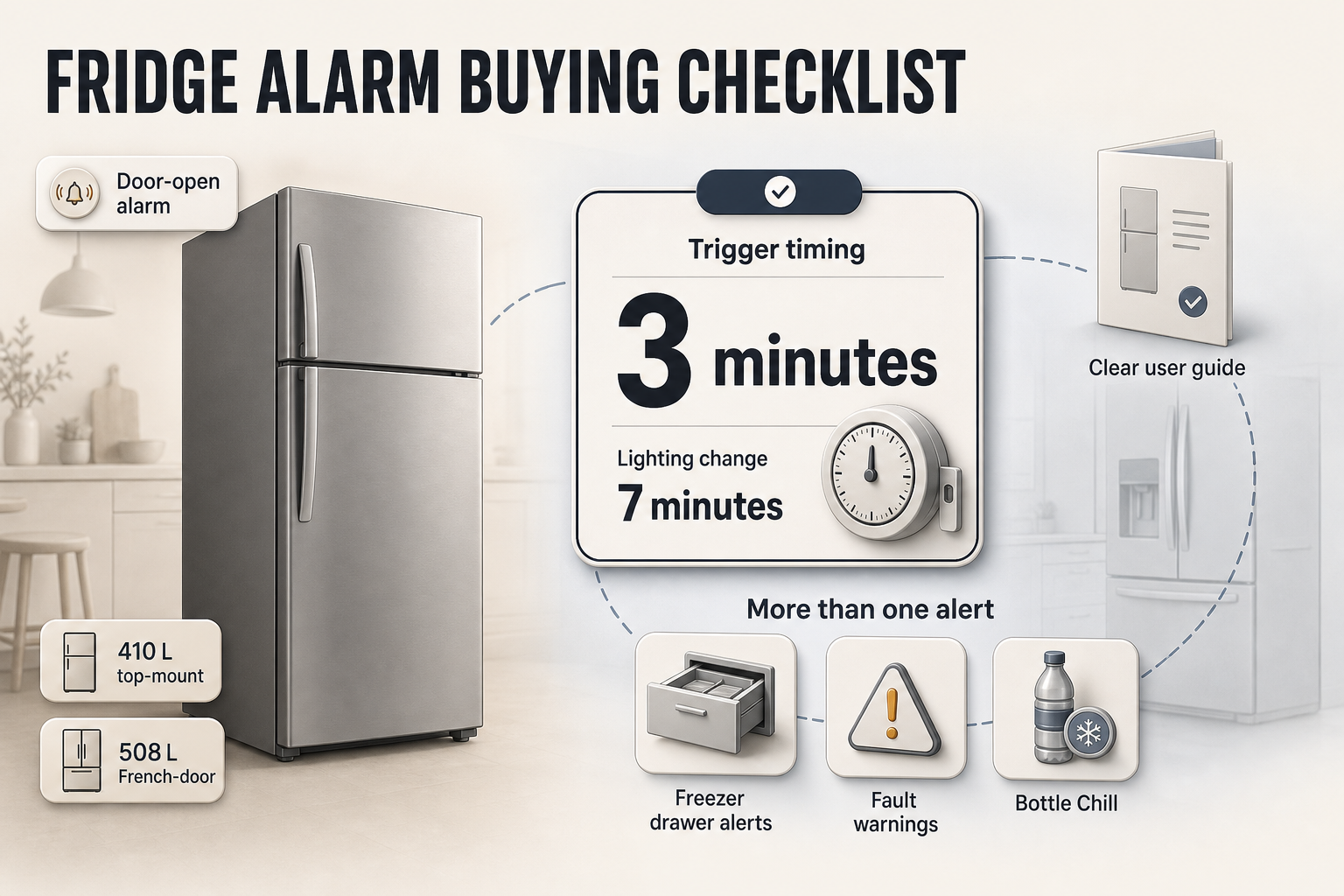
You should also look for alarms that cover more than one risk. A fridge with only a door chime is better than nothing, but a stronger alarms package may include freezer drawer alerts, fault warnings, or special function reminders. Fisher & Paykel’s inclusion of door alarms, mute controls, and Bottle Chill alerts is a good example of a more complete system. (fisherpaykel.com)
It is also smart to check whether the alarm can be heard in your actual home. In an open-plan NZ kitchen-living area, a very soft alarm may not cut through conversation, a rangehood, or a dishwasher. If you shop in store, open the door and ask staff to demonstrate the alert. If you are buying online, look for the user guide rather than relying only on the feature icons on a retailer page.
Documentation matters too. If a retailer or brand gives only a vague line like “alarm function”, that tells you less than a proper manual explaining what triggers the alert and how to mute or reset it. A refrigerator with a high alarms rating should have clear instructions and predictable behaviour.
NZ Context
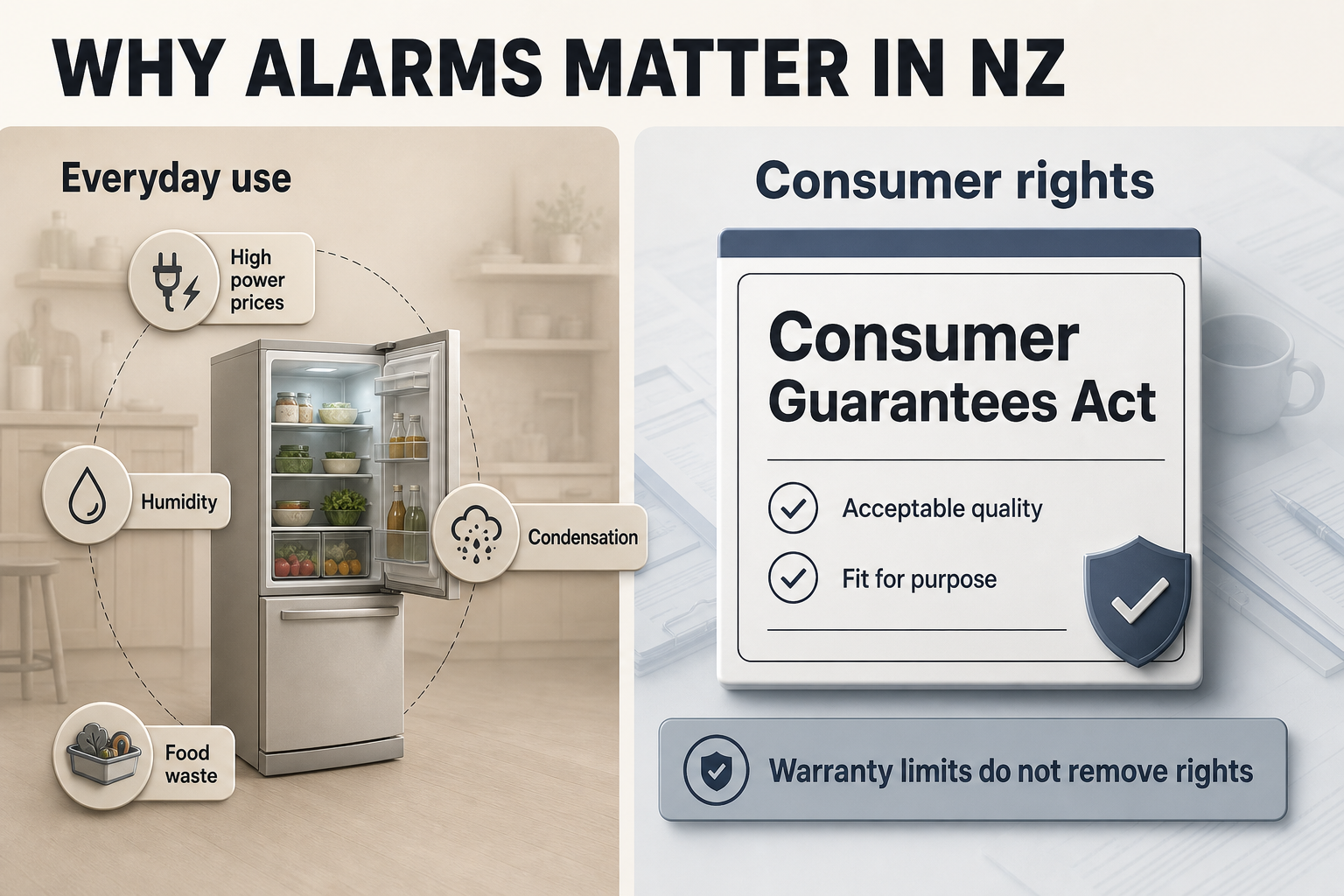
In New Zealand, alarms matter a bit more than some buyers think. Power prices are high enough that a poorly closed fridge door can quietly waste electricity over time, and warmer, humid conditions in many parts of the country can make temperature loss and condensation more noticeable. A good alarm is not just about convenience. It can also help keep running costs under control and reduce food waste.
It is also worth separating feature quality from legal protection. Under the Consumer Guarantees Act, products sold by businesses in New Zealand must be of acceptable quality, fit for purpose, and businesses cannot limit their obligations to the terms of a manufacturer’s warranty. (consumerprotection.govt.nz) So if a refrigerator is advertised with alarm functions that do not work properly, your rights do not disappear when the written warranty period ends.
That said, the CGA is not a substitute for choosing the right feature set in the first place. If your household includes children, shift workers, flatmates, or frequent entertaining, a stronger Alarms Rating is genuinely worth paying for. If you live alone and want a simple top-mount fridge, a basic but reliable door-open alarm may be enough.
For most NZ buyers, the sweet spot is a refrigerator with at least a solid mid-to-high alarms setup: door-open warning, clear controls, and ideally separate alerts for key functions or compartments. You may never think much about the feature when everything is working normally, but the first time a freezer drawer is left ajar on a warm evening, you will be glad it is there.
You may also be interested in these independent articles
Sources
© 2026 pyfoi. All rights reserved.