
What Fridge Voltage Means in New Zealand
Learn what fridge voltage means in New Zealand, from 230V home fridges to 12V and 24V portable models, and why 110V imports can cause trouble.
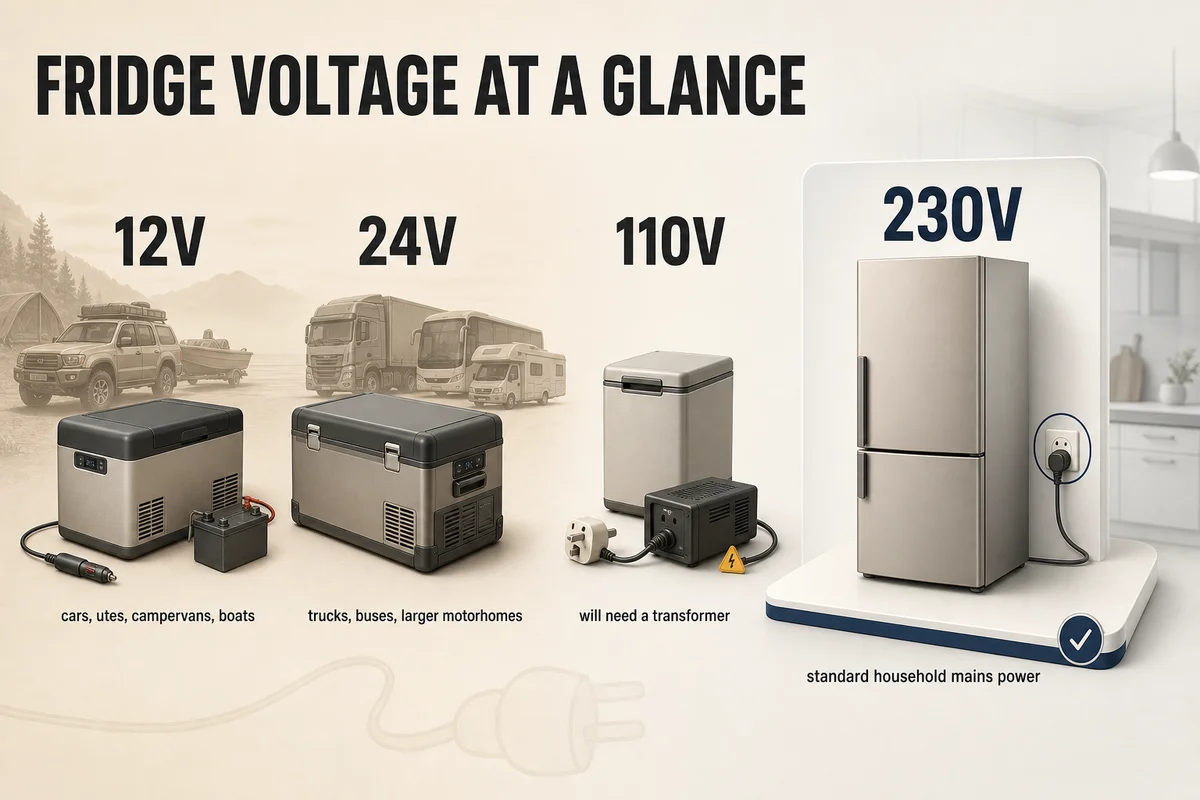
Voltage tells you what electrical supply a fridge is designed to run on. For most New Zealand buyers, that means a standard 230V household appliance, but portable, marine, caravan and truck fridges may use 12V or 24V instead. Getting it right matters because the wrong voltage can mean the fridge will not run properly, may need an expensive converter, or may not be suitable for legal sale or normal use in New Zealand.
What the Numbers Mean
A fridge’s voltage is simply the type of electrical power it expects. In New Zealand, standard household mains power is 230V at 50Hz, and domestic appliances sold for normal home use are expected to be rated and marked for that supply. WorkSafe also advises consumers to check that an appliance has the correct voltage for New Zealand. (worksafe.govt.nz)
In practical terms, 230V is what you get from a normal wall socket at home. That covers almost every full-size kitchen refrigerator, bar fridge and upright freezer sold through mainstream NZ retailers. If a refrigerator listing does not state voltage, 230V is usually the safe assumption for a standard household model in New Zealand because that is the local mains standard and products for domestic use must be suitable for it. (worksafe.govt.nz)
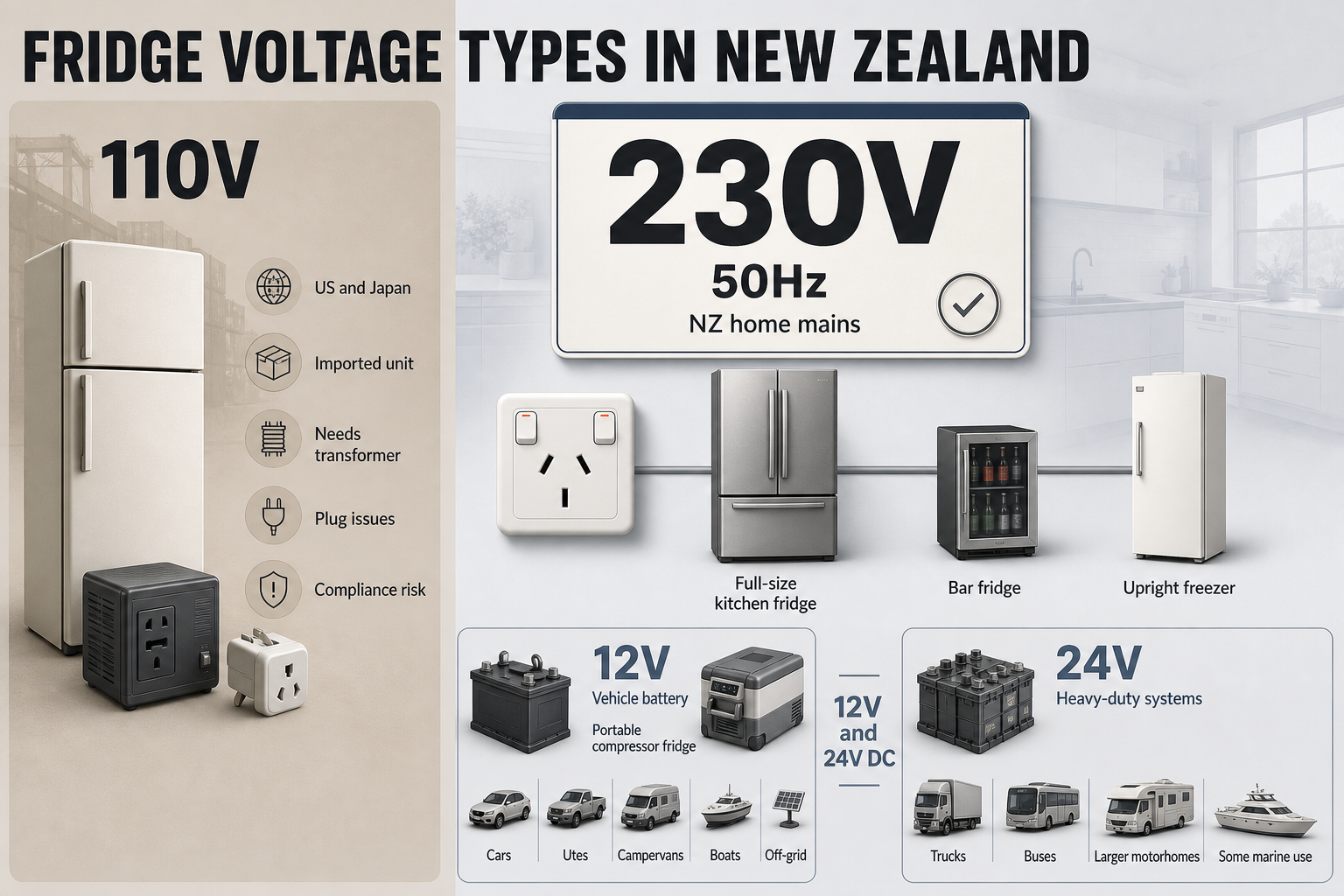
A 110V fridge is different. That voltage is common in places such as the United States and Japan, but it is not the normal household standard here. WorkSafe notes that some appliance construction types are common in countries with 110 to 120V mains supply, and domestic products sold in New Zealand must be rated for the NZ mains supply. For a New Zealand buyer, a 110V fridge usually means an imported unit that will need a transformer and may create compliance, warranty and plug issues. (worksafe.govt.nz)
A 12V fridge is usually a portable compressor fridge for cars, utes, campervans, boats or off-grid setups. It is designed to run from a vehicle-style battery system rather than a wall socket. These are common for camping trips, tradie vehicles and weekend fishing missions, where you want cold food or drinks without needing a powered campsite.
A 24V fridge is similar in concept, but aimed at heavier-duty electrical systems. You will usually see 24V in trucks, buses, larger motorhomes, some marine applications and commercial gear. Many dual-voltage portable fridges can accept both 12V and 24V DC, which makes them more flexible if you change vehicles later.
Typical Ranges
At the low end, 12V is the usual entry point for mobile refrigeration. Think portable fridge-freezers in the 15L to 75L range used in SUVs, utes, caravans and boats. For many New Zealand households, this is not a kitchen appliance at all. It is a lifestyle accessory for camping at Ōhope, heading to the Coromandel for a long weekend, or keeping bait and food cold on a boat ramp run.
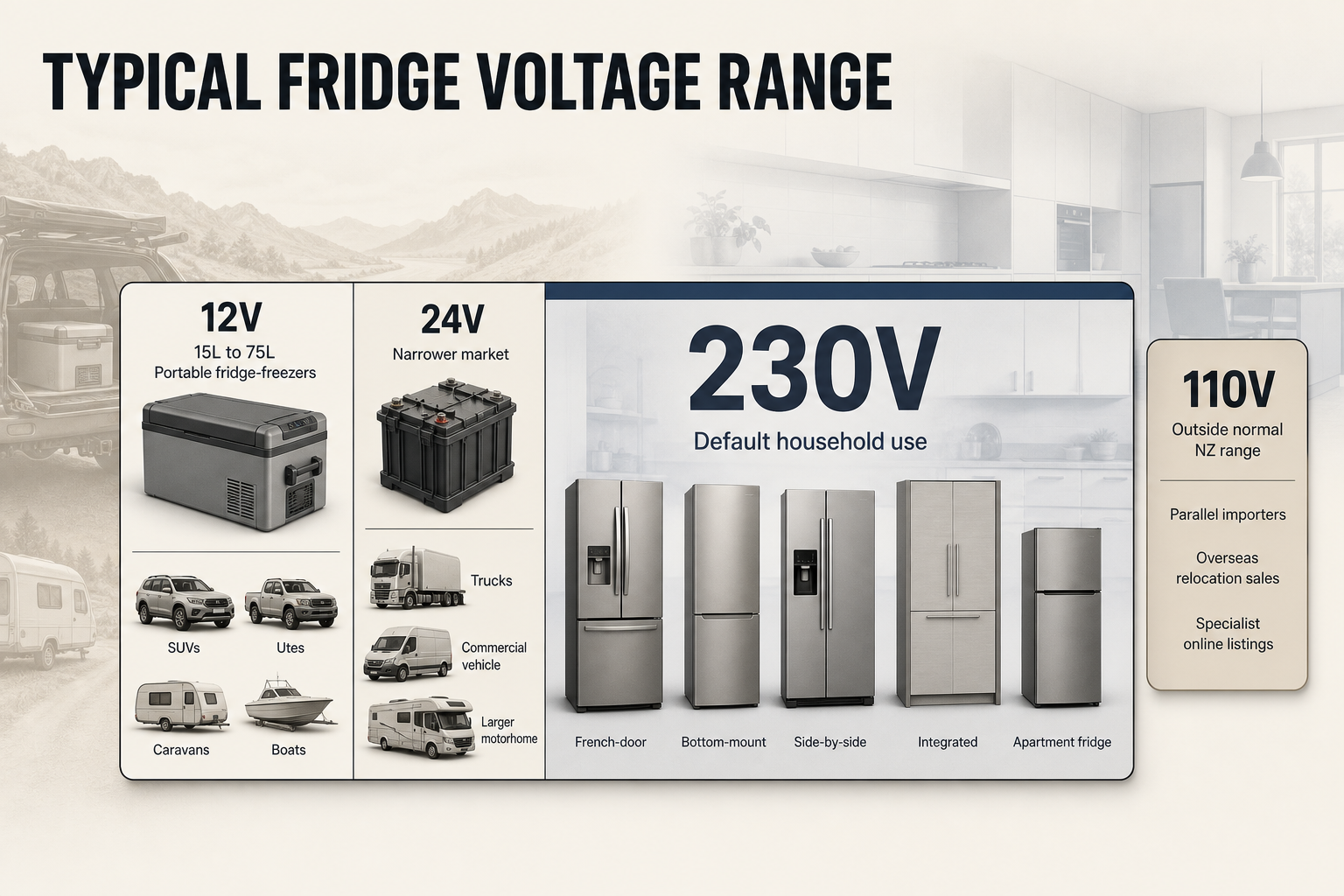
In the middle, 24V serves a narrower market. It is less common in ordinary passenger cars, but more relevant if you run a truck, commercial vehicle or a larger motorhome with a dedicated 24V electrical system. If you are buying for that sort of setup, matching the fridge to the vehicle voltage matters more than brand or features, because the wrong supply can create reliability problems.
At the high end for normal household use, 230V is the default. Full-size French-door fridges, bottom-mounts, side-by-sides, integrated models and compact apartment fridges in New Zealand are overwhelmingly 230V appliances because that matches our domestic supply standard. WorkSafe states that domestic and similar products cannot be sold unless they are rated and marked for use at New Zealand’s standard 230V mains supply, or a voltage range that includes it. (worksafe.govt.nz)
A 110V fridge sits outside the normal NZ range. You might come across one through parallel importers, overseas relocation sales or specialist online listings. Unless you have a very specific reason to buy one, it is usually the least convenient option for a New Zealand home.
Use-Case Guidance
For a normal house, flat or apartment in New Zealand, you want 230V. That is the correct choice for almost every kitchen installation, whether you are replacing an old top-mount in Hamilton or fitting a large family fridge in Christchurch. It plugs into standard NZ outlets, aligns with local appliance requirements, and avoids the hassle of external transformers or custom electrical work. (worksafe.govt.nz)
For a caravan, campervan or SUV used for road trips, 12V makes sense if the fridge is meant to run while you are driving or parked off-grid. A 12V compressor fridge is far more useful than a household bar fridge on a campsite because it can run directly from the vehicle or auxiliary battery. If you spend nights at DOC sites or freedom camping spots without mains hookup, 12V is the practical choice.
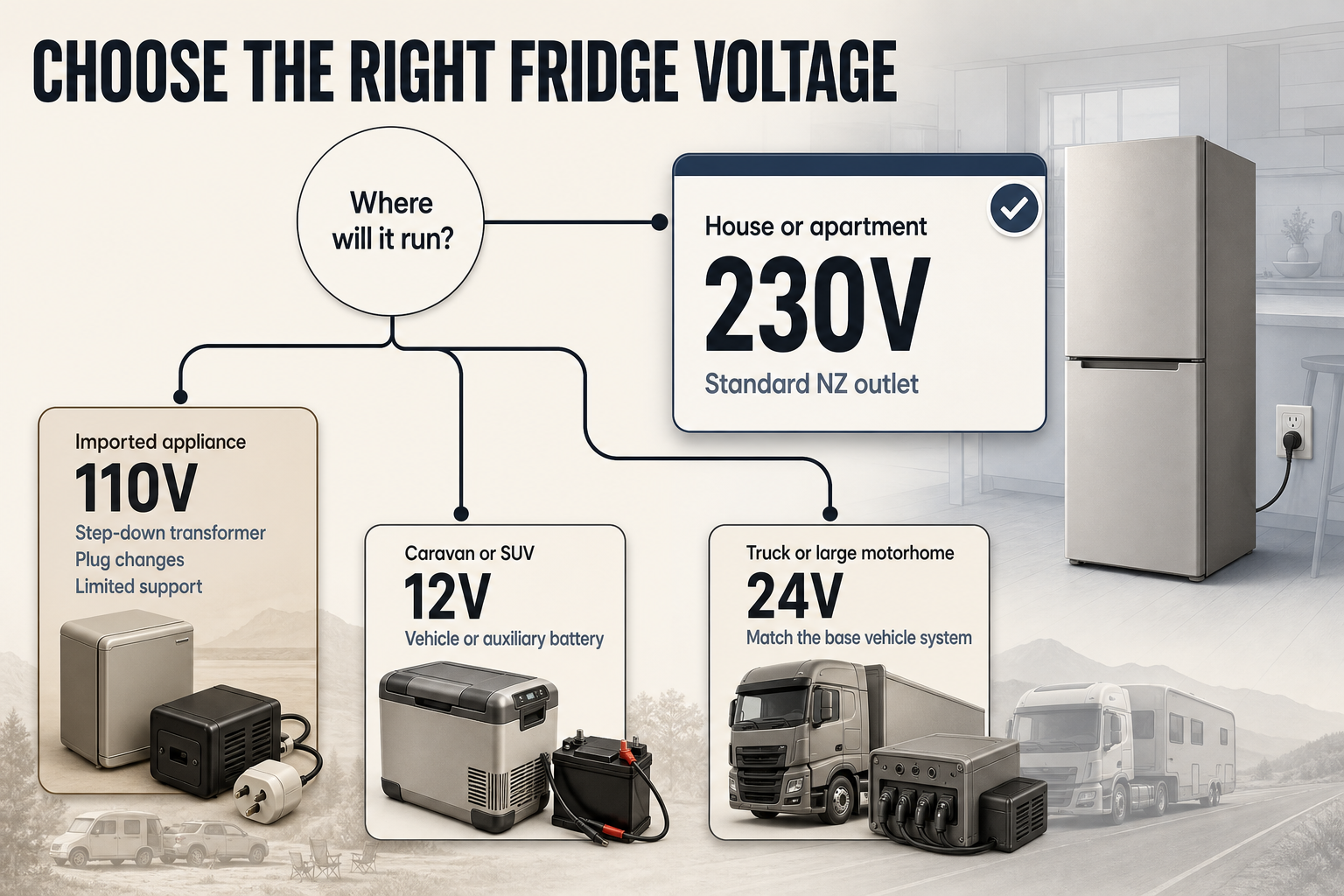
For heavy commercial use, long-haul transport or larger motorhomes, 24V may be the better fit. A truck cab fridge or a built-in unit for a 24V coach should match the system it is actually connected to. If you are unsure, check the base vehicle electrical system first. Many buyers focus on litres and miss the more basic question of whether the fridge will run properly without converters.
For imported appliances, be careful with 110V. A cheap overseas deal can become expensive once you add a step-down transformer, plug changes and the risk of limited support if something fails. In most homes, there is little reason to choose 110V when compliant 230V options are widely available.
NZ-Specific Factors
New Zealand’s mains supply is 230V, and WorkSafe says domestic appliances sold here must be rated and marked for that standard supply, with an appropriate plug for New Zealand. That makes 230V the clear default for household refrigeration, and it is why many imported 110V products are a poor fit unless professionally adapted and confirmed safe. (worksafe.govt.nz)
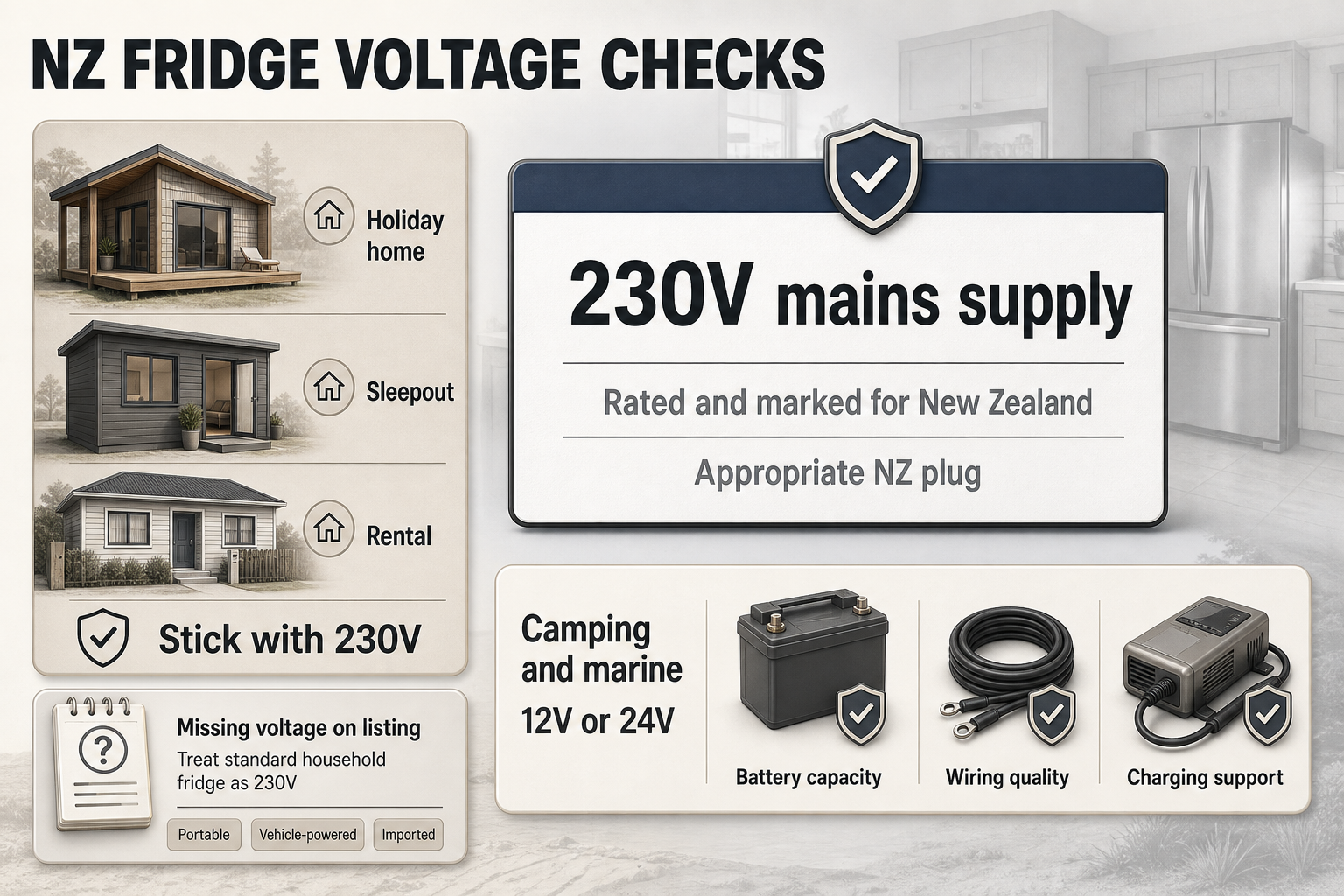
If you are buying a fridge for a holiday home, sleepout or rental, the same logic applies. Stick with 230V unless the fridge is specifically for mobile or off-grid use. It keeps installation simple and makes future replacement easier. It also avoids confusing the next owner or tenant with a non-standard setup.
For camping and marine use, 12V and 24V can be ideal, but only if the rest of your electrical system is up to the job. A portable fridge may draw modest power, but over a full day it can flatten a weak battery. In New Zealand conditions, that matters on summer camping trips, multi-day boat outings and winter ski weekends where overnight temperatures and frequent lid opening can affect power use. The voltage itself is only part of the story. Battery capacity, wiring quality and charging support matter just as much.
If you are comparing listings and the voltage is missing, a standard household fridge in New Zealand should generally be treated as 230V unless it is clearly marketed as portable, vehicle-powered or imported for another market. That is the most sensible reading of the local appliance rules and the way fridges are sold here. (worksafe.govt.nz)
You may also be interested in these independent articles
Sources
© 2026 pyfoi. All rights reserved.