
Fridge Capacity Guide NZ: What Size You Need
Choosing fridge capacity in NZ is not just about litres. Learn what size suits your household, kitchen space, shopping habits, and power costs.
Fridge capacity total is the internal volume of the appliance, measured in litres. It sounds simple, but this number has a big effect on how well a fridge fits your household, how much food you can store, and how much bench and floor space it takes up in your kitchen.
For New Zealand buyers, capacity matters because our homes vary so much. A compact apartment in Wellington, a family kitchen in Hamilton, and a rural home in Southland all need something different. The trick is not buying the biggest fridge you can fit, but the one with enough usable space for the way you actually shop, cook, and live.
What the Numbers Mean
A litre rating tells you the total internal storage volume. In practice, that is the combined space inside the fridge and freezer, or the full capacity of a single-temperature appliance if it is just a fridge or just a freezer. On modern labels in New Zealand, the total volume is shown so you can compare models more easily, and the figure is tied to recognised test standards rather than marketing claims. (eeca.govt.nz)
What matters is that this is not the same as outside size. Two fridges with similar external dimensions can have different capacities because of insulation thickness, wall design, ice makers, door bins, drawer layouts, and whether the freezer section takes up a large share of the cabinet. Consumer NZ also notes that layout matters alongside size, because shelf design and storage configuration affect how easy the space is to use day to day. (consumer.org.nz)
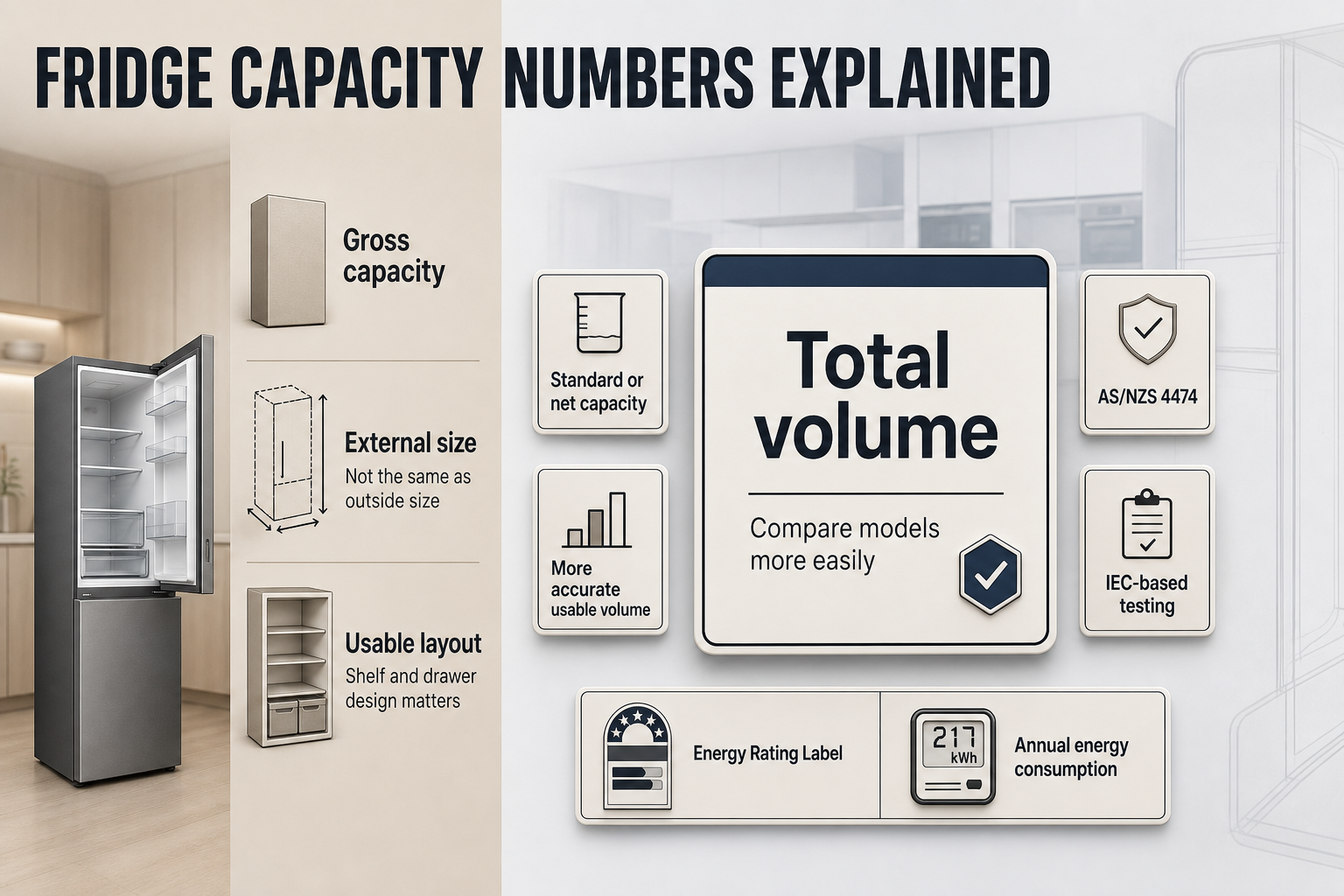
You should also be careful about which litre figure you are reading. The most useful number is the standard or net capacity, often shown under AS/NZS 4474 or IEC-based testing, because that reflects usable volume more accurately than gross capacity. EECA says fridge and freezer energy labels are based on the AS/NZS 4474 standard, and the newer label shows total volume to help direct comparison. (eeca.govt.nz)
A larger litre figure usually means more room for groceries, leftovers, meal prep containers, and bulk shopping. It can also mean higher energy use, although efficiency varies a lot between models, so you should not assume a smaller fridge is always cheaper to run. EECA recommends comparing similar appliances using the Energy Rating Label and annual energy consumption, not capacity alone. (eeca.govt.nz)
Typical Ranges
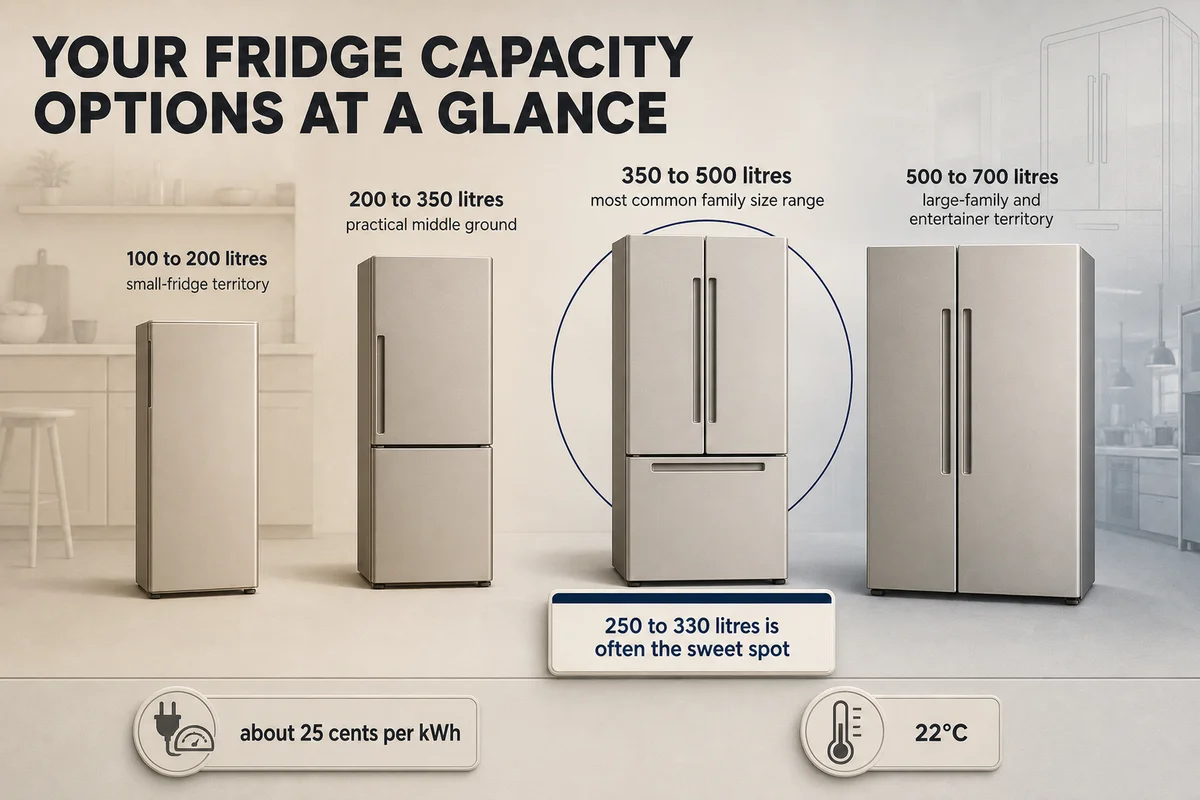
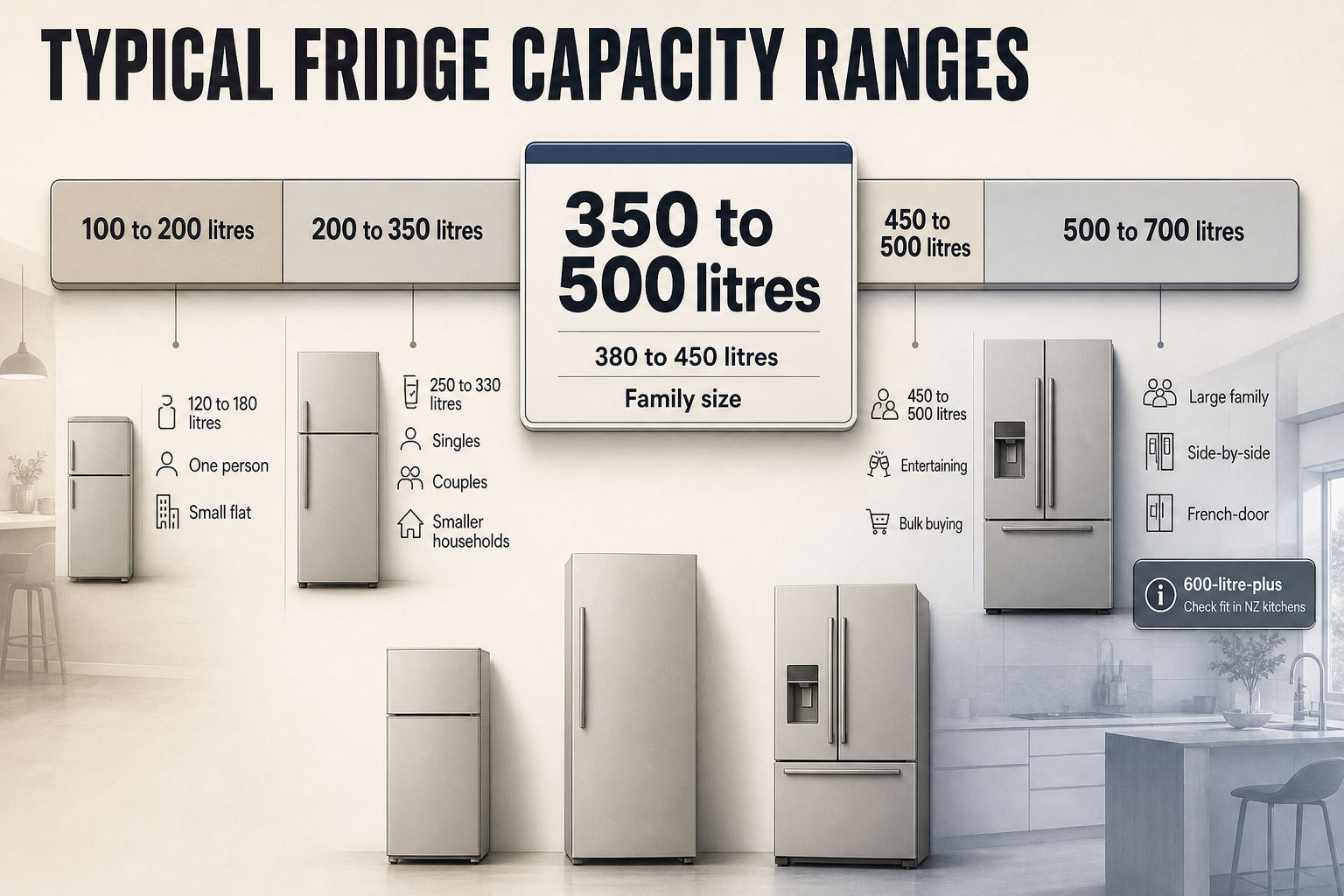
100 to 200 litres
This is small-fridge territory. Think bar fridges, compact apartment fridges, small upright freezers, or secondary units for a sleepout, office, garage, or holiday home. For one person in a small flat, around 120 to 180 litres can work if you shop often and do not need much freezer space.
In New Zealand, this size can suit inner-city living in Auckland or Wellington where kitchen space is tight. It is less suitable for a household that does a weekly supermarket run, buys in bulk from Pak'nSave, or wants room for platters, meal prep, and school lunches. Very small models can also be less flexible inside, with fewer shelf positions and tighter crisper drawers.
200 to 350 litres
This is the practical middle ground for singles, couples, and smaller households. Many slim top-freezer or bottom-freezer models sit in this range. It is enough for regular groceries, leftovers, milk, produce, and a modest freezer load without taking over the kitchen.
For a couple or a small family that shops once or twice a week, around 250 to 330 litres is often the sweet spot. If you live close to supermarkets and do top-up shops, you may not need more. If you batch cook, freeze a lot of food, or keep extra drinks chilled for visitors, you may start to feel cramped below 300 litres.
350 to 500 litres
This is the most common family size range. A lot of mainstream fridge-freezers in New Zealand sit here, including many bottom-mount and French-door models. For a household of three to five people, this range usually gives enough room for weekly shops, lunchbox supplies, fresh food, and a usable freezer section.
A capacity of about 380 to 450 litres suits many suburban homes. It gives you breathing room without becoming oversized. If your household entertains often, buys meat in bulk, or stores large trays and platters, 450 to 500 litres starts to make more sense.
500 to 700 litres
This is large-family and entertainer territory. Side-by-side and larger French-door fridges often land here, especially models with wide shelves, dual crispers, and through-door water or ice. These are useful if you have a big household, do bulk shops, or want separate zones for fresh food, drinks, and frozen goods.
The trade-off is physical size, power use, and sometimes less efficient use of space. Features like ice makers and dispensers can eat into usable storage. In many NZ kitchens, especially older homes, a 600-litre-plus fridge can be hard to fit through doorways or into cabinetry openings, so measuring matters as much as the litre figure.
Use-Case Guidance
If you live alone or as a couple and mostly buy fresh food every few days, 200 to 300 litres is often enough. This suits apartment living, smaller townhouses, and homes where kitchen space is at a premium. You will usually get enough room for basics without paying for space you rarely use.
For a couple with one child, or a small household that does one main weekly shop, 300 to 400 litres is a sensible target. This range gives better flexibility for leftovers, produce drawers, and a freezer that can hold more than a few bags of frozen food. It is a good fit for many Kiwi homes where the fridge needs to cover work lunches, breakfast supplies, and weekend meals.
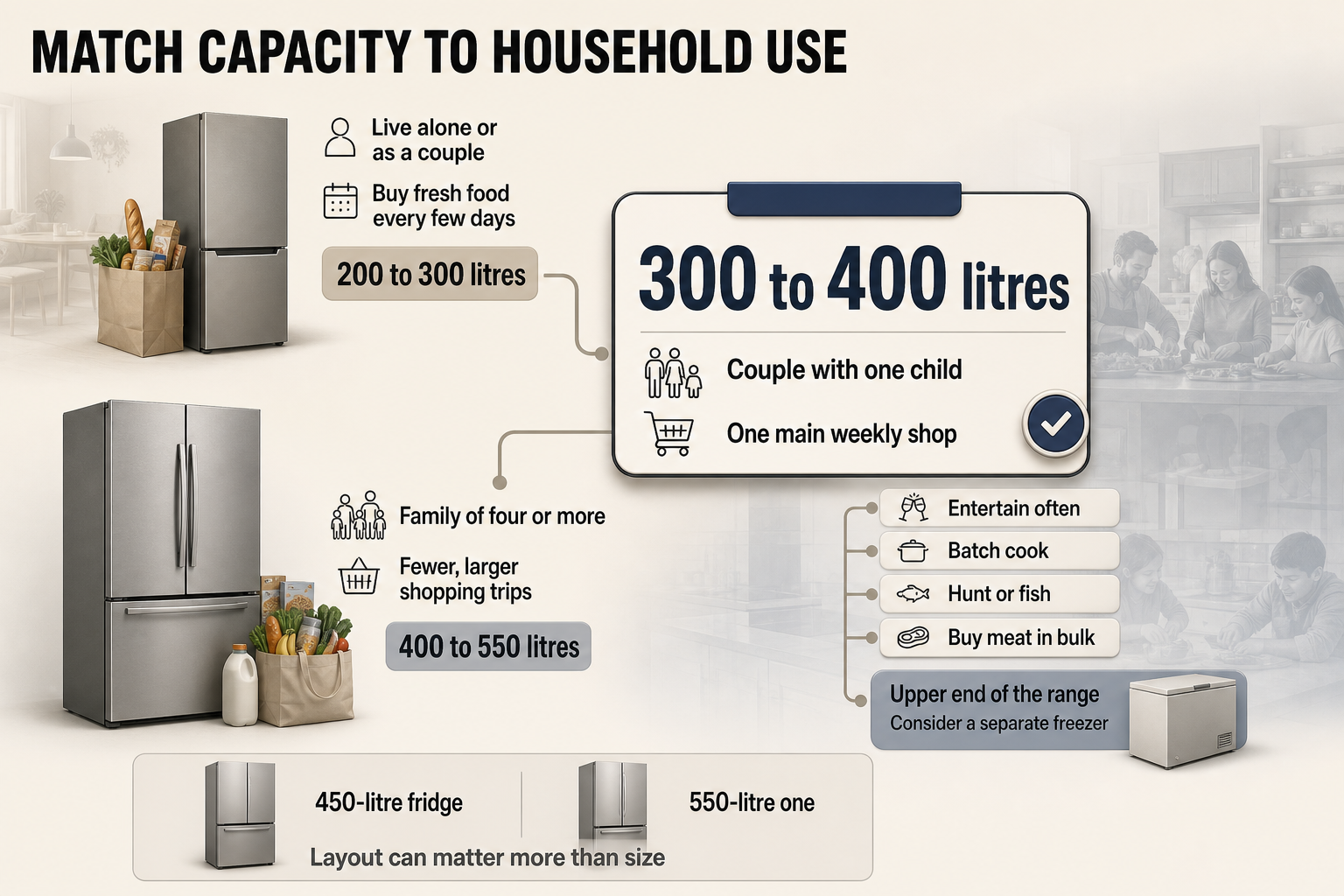
For families of four or more, 400 to 550 litres is often the safer bet. That extra volume helps if you buy larger milk bottles, keep lots of fruit and veg, or stock up on frozen food. It is also helpful if you live further from the supermarket, as many rural households do, and prefer fewer, larger shopping trips.
If you entertain often, batch cook, hunt or fish, or buy meat in bulk, look toward the upper end of the range or consider a separate freezer. A 450-litre fridge can be more useful than a 550-litre one if its shelf and drawer layout is better, so open the doors and check the internal design before you decide. Consumer NZ advises paying attention to size and space, not just the headline spec. (consumer.org.nz)
NZ-Specific Factors
The first NZ-specific factor is energy cost. EECA says the Energy Rating Label helps you compare similar appliances, and Consumer NZ notes the label includes annual energy use in kWh. Consumer also says MBIE-reported average electricity cost is about 25 cents per kWh in New Zealand, though actual prices vary by plan and region. That means capacity should always be weighed against efficiency and running cost, especially for a fridge that runs all day, every day. (eeca.govt.nz)
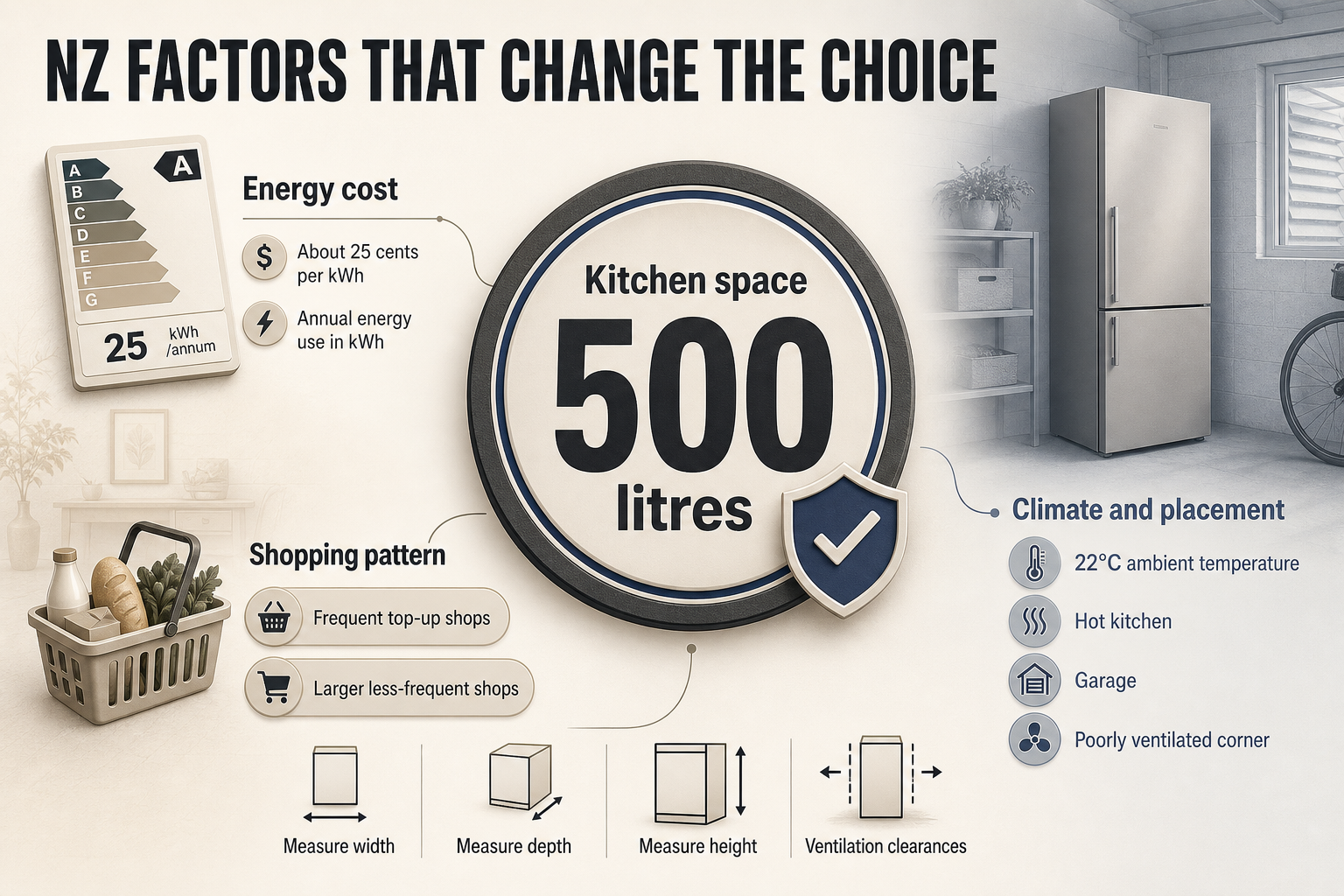
The second is kitchen space in real homes. Many older villas and bungalows were not designed around very wide modern fridges, while newer builds may have tighter cabinetry cut-outs. A fridge with 500 litres of capacity can still be a poor choice if it blocks walkways, door swings, or pantry access. Measure width, depth, height, and ventilation clearances before you shop.
The third is shopping pattern. In bigger centres such as Christchurch or Auckland, frequent top-up shopping is easy, so you may not need a huge fridge. In smaller towns or rural areas, where supermarket trips are less frequent, a larger capacity can make daily life easier. If you grow veg, freeze homekill, or store food for a busy household, more litres can be genuinely useful.
The last factor is climate and placement. EECA notes energy consumption on the label is calculated at an ambient temperature of 22°C. Real homes differ, and a fridge placed in a hot sun-facing kitchen, garage, or poorly ventilated corner may work harder than the label suggests. (eeca.govt.nz)
You may also be interested in these independent articles
Sources
© 2026 pyfoi. All rights reserved.