
What a Fridge Meat Storage Rating Really Means
Fridge meat storage ratings can help NZ buyers compare chill drawers, temperature control and food safety. Here is what the stars really mean.
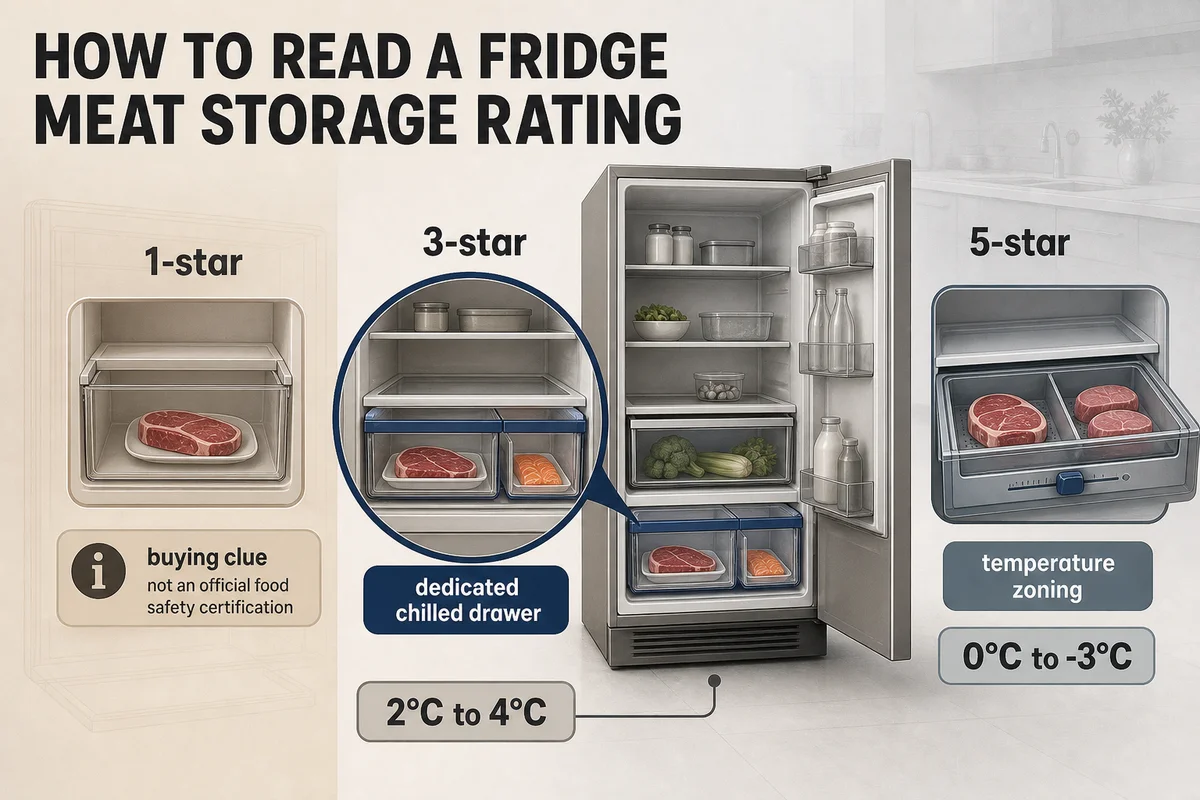
A fridge’s meat storage rating is a simple way of judging how well it handles one of the hardest foods to keep fresh safely. For New Zealand buyers, that matters because raw meat, fish and deli items need colder, more stable storage than most everyday groceries, and a poor drawer setup can shorten shelf life or raise food safety risk. (mpi.govt.nz)
What This Rating Measures
A meat or deli rating usually reflects how effective a fridge is at giving these foods their own better-controlled storage zone. In practical terms, that means a compartment or drawer that stays colder than the main fridge cavity, holds a steadier temperature when the door opens, and helps reduce odour transfer and moisture loss. Some brands call this a deli drawer, chill zone, fresh zone or meat drawer rather than using a universal industry label. (samsung.com)
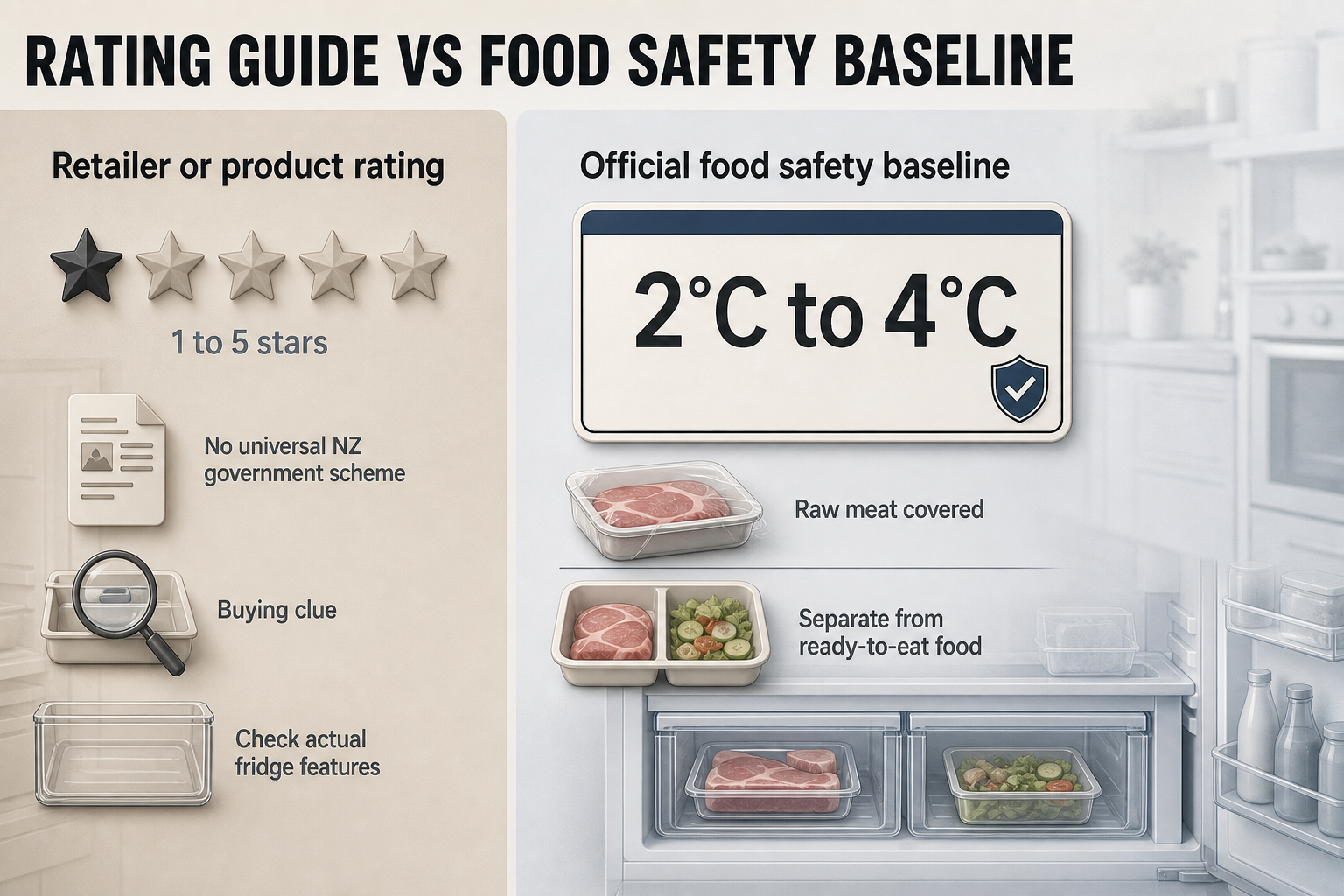
That last point is important. Unlike an energy label, there is no single New Zealand-wide government star scheme that standardises a “meat storage” score across every appliance brand and retailer. In listings, a 1 to 5 star style rating is usually a product database or retailer shorthand for how suitable the compartment setup is, not an official food safety certification. That means you should treat it as a buying clue, then check the actual fridge features behind the score. The official food safety baseline still comes from storing food in a fridge kept around 2°C to 4°C, with raw meat covered and separated from ready-to-eat food. (mpi.govt.nz)
What Goes Into the Rating
A low-rated fridge usually has no dedicated meat drawer at all, or just a basic crisper-style compartment with no separate temperature control. In that setup, your mince, sausages or sliced ham are stored at the same temperature as everything else, and performance can swing more when the fridge is full, the door is opened often, or the kitchen gets hot. That can be fine for buyers who shop every day or two, but it is less ideal if you bulk-buy meat or want better freshness between supermarket runs. (mpi.govt.nz)
A mid-rated fridge tends to have a dedicated chilled drawer, but with limited adjustability. It may sit slightly colder than the main shelves simply because of airflow design, or it may have a manual slider that shifts the compartment between general cooling and a colder meat setting. This is often enough for a household that buys fresh chicken, fish and deli food each week and wants better separation without paying for a premium model. (samsung.com)
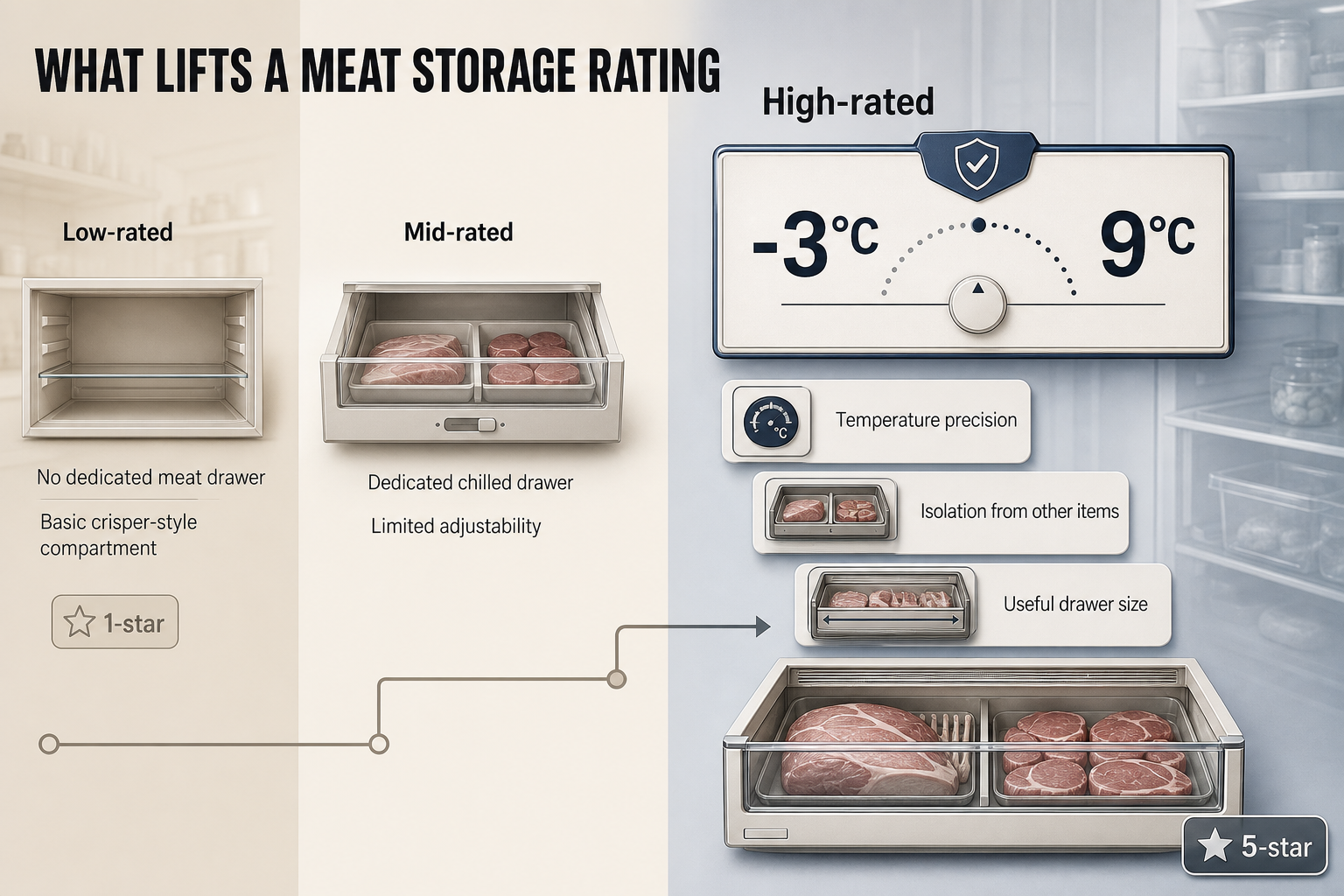
A high-rated fridge usually adds proper temperature zoning or selectable modes. Samsung’s Optimal Fresh Zone, for example, is described as adjustable from about -3°C for meat up to 9°C for fruit and vegetables on some models, while newer Optimal Fresh+ drawers can switch modes including a soft-freeze setting for meat and fish. Features like this separate top-tier storage from a simple drawer with a label on it. (samsung.com)
The difference between a 1-star and a 5-star result, then, is usually not just drawer presence. It is about temperature precision, how cold the compartment can run without fully freezing food, how well it isolates raw meat from other items, and whether the drawer is genuinely useful for real household quantities. A narrow tray that fits a few slices of salami is less useful than a full-width chill drawer that can take a family pack of chicken thighs or a whole fish fillet bought for the weekend. This is partly an inference from how manufacturers describe these compartments and how food safety guidance prioritises colder, separate storage for raw meat. (samsung.com)
What to Look For
Start by checking whether the fridge has a true dedicated compartment for meat, fish or deli foods. Product pages often use names like “chill zone”, “fresh converter”, “optimal fresh” or “soft freeze”. If the listing only says “large crisper” or “humidity drawer”, that is usually aimed at fruit and vegetables, not raw meat. (samsung.com)
Next, look for an actual temperature claim. A better drawer will state a colder range or a named mode for meat and fish. If a brand gives you a figure around 0°C to -3°C for a dedicated compartment, that is a stronger sign than vague wording such as “keeps food fresher for longer”. Around 4°C is commonly treated as an optimum general fridge temperature, but meat drawers work best when they can hold meat a little colder than the rest of the cabinet without freezing it solid. (mpi.govt.nz)
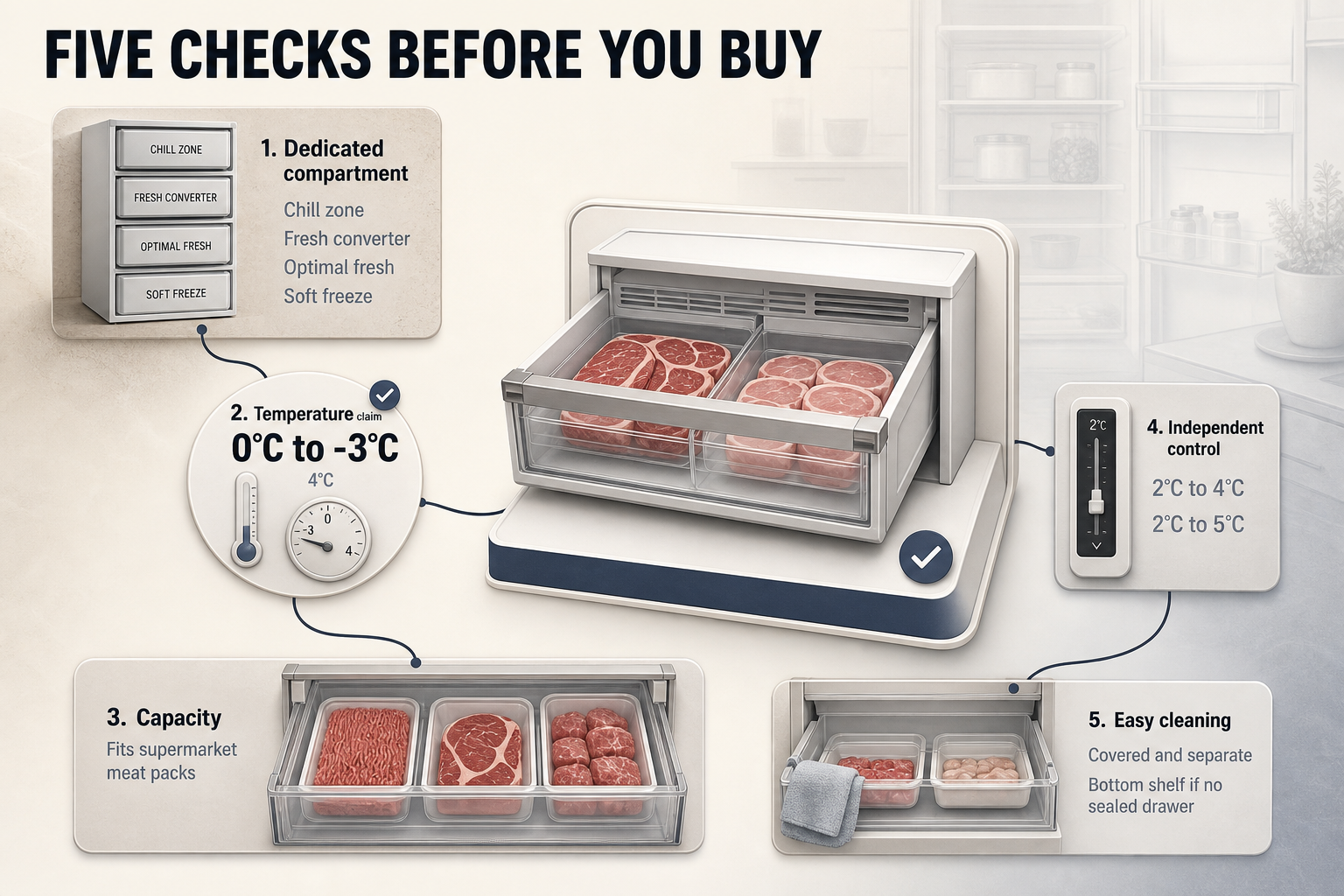
Capacity matters too. If you shop at Pak’nSave once a week for a family of four, a tiny deli tray is not much use. You want a drawer deep enough for supermarket meat packs, bacon, cheese, leftovers and maybe fresh fish for a Friday dinner. For a single person in an Auckland apartment, a compact compartment may be enough, especially if bench space matters more than maximum fridge volume.
Also check whether the drawer is independently controlled or just passively cooled. Independent control gives you more flexibility through the year. In summer, when kitchens run warmer and door openings are more frequent, stable temperature control becomes more useful. New Zealand Food Safety advises keeping the fridge between 2°C and 4°C, or at least 2°C to 5°C in some guidance, and avoiding overfilling so cold air can circulate properly. (mpi.govt.nz)
Finally, think about cleaning and cross-contamination. Raw meat should be covered and stored separately, ideally on the bottom shelf if there is no dedicated sealed drawer, so juices cannot drip onto other food. A good meat-storage setup is not just colder. It should also be easy to wipe out after a leak from chicken, mince or marinated steak. (mpi.govt.nz)
NZ Context
This rating matters a bit more in New Zealand than many buyers realise. A lot of households do one or two big weekly shops rather than daily top-ups, and summer temperatures in places like Hawke’s Bay, Canterbury and Northland can put more strain on fridge performance. If you buy meat in bulk from Costco, a local butcher, or a rural supermarket run, a better-rated meat drawer can help keep food in good condition between shopping days, provided the fridge itself is correctly set. (mpi.govt.nz)
Food safety rules for businesses sit under the Food Act 2014, but for home buyers the practical message is simpler: safe cold storage still matters, and appliance features do not replace good handling habits. Even with a top-rated meat drawer, raw meat should stay covered, separate from ready-to-eat foods, and be used within sensible timeframes. A premium compartment can improve freshness and convenience, but it is not a licence to ignore date labels or fridge temperature checks. (mpi.govt.nz)
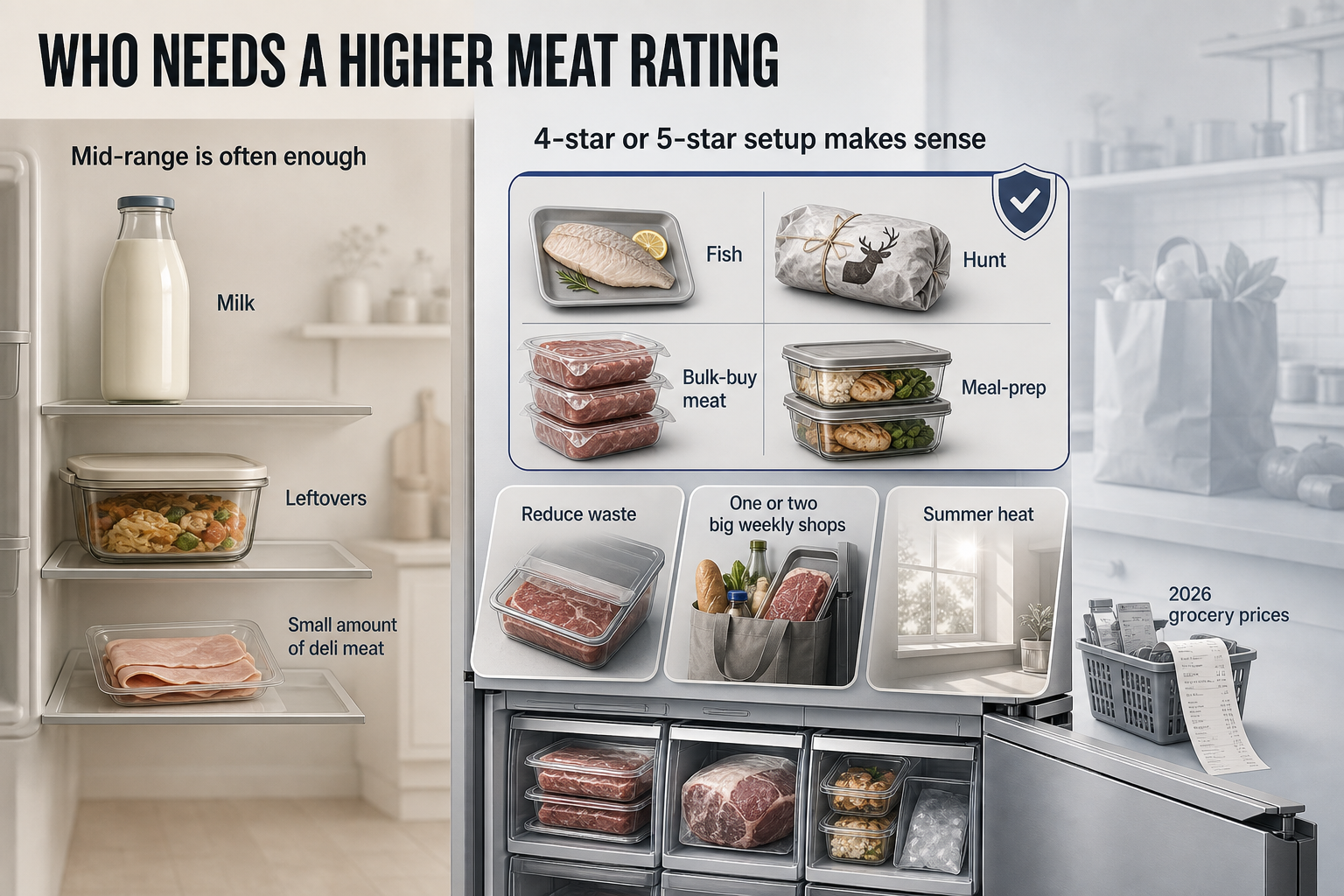
For many buyers, the sweet spot is not necessarily the highest score. If you mostly store milk, leftovers and a small amount of deli meat, a mid-range fridge with a decent chill drawer is often enough. If you fish, hunt, bulk-buy meat, meal-prep for the week, or want to reduce waste from expensive proteins, a 4-star or 5-star style meat storage setup is much easier to justify. With grocery prices where they are in 2026, wasting a tray of chicken or fresh snapper is more painful than paying a bit more upfront for a fridge that stores it properly. This last point about value is a practical buying inference, but it follows directly from official food safety guidance and the way brand-designed meat zones work. (mpi.govt.nz)
You may also be interested in these independent articles
Sources
- [1]New Zealand Food Safety: Safe food preparation, cooking, and storage at home
- [2]New Zealand Food Safety storage guidance PDF
- [3]MPI media release: Tips to safely make food last longer
- [4]Samsung NZ: Bottom Mounted Freezer Optimal Fresh Zone 310L
- [5]Samsung NZ: Top Mount Freezer Refrigerator with Optimal Fresh+ 305L
- [6]LG UK: How To Store Food in A Fridge
- [7]Introduction to the Food Act 2014
© 2026 pyfoi. All rights reserved.