
What a Drinks Storage Rating Really Means
Learn what a drinks storage rating really means for NZ buyers, from shelf design to energy use, so you avoid costly fridge mistakes.
A drinks storage rating is a simple way to judge how well an appliance is set up to store bottles and cans safely, neatly, and at the right temperature. For New Zealand buyers, that matters more than it might seem at first glance, because a drinks fridge, wine cabinet, or beverage cooler often runs all year and needs to cope with warm kitchens, garages, holiday homes, and busy family use.
What Goes Into the Rating
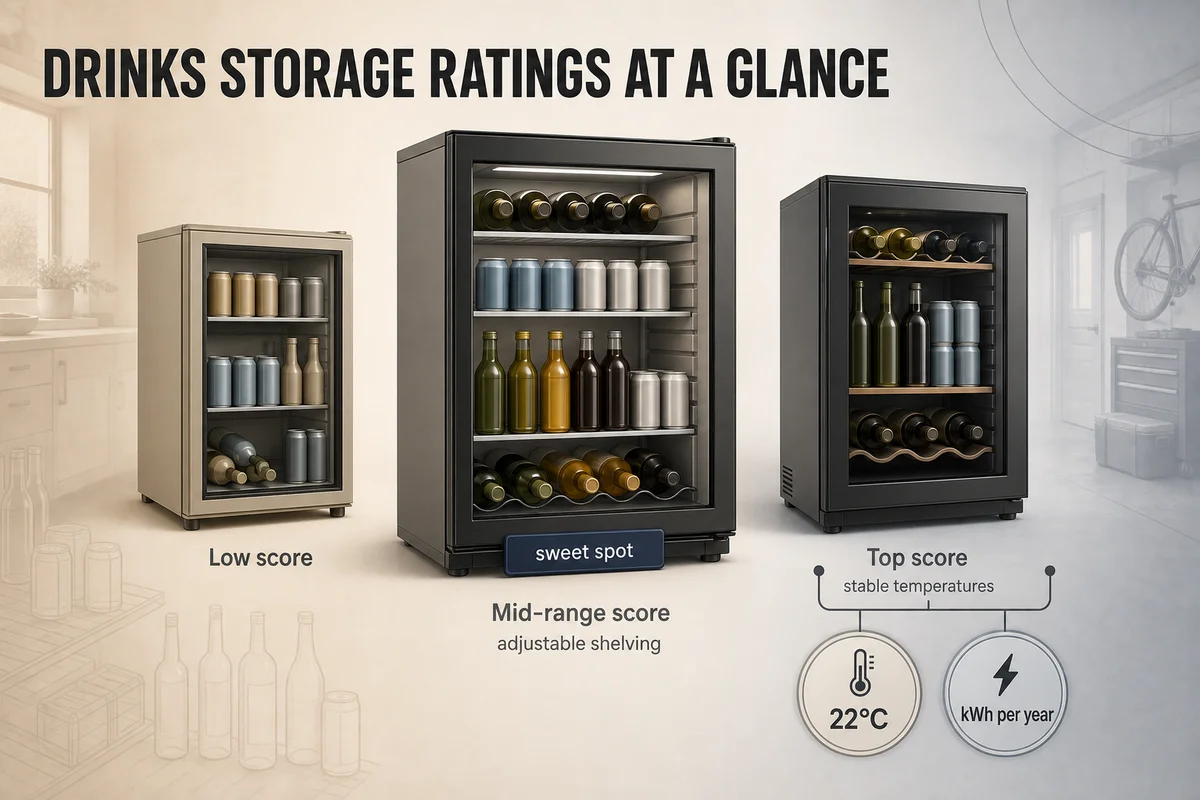
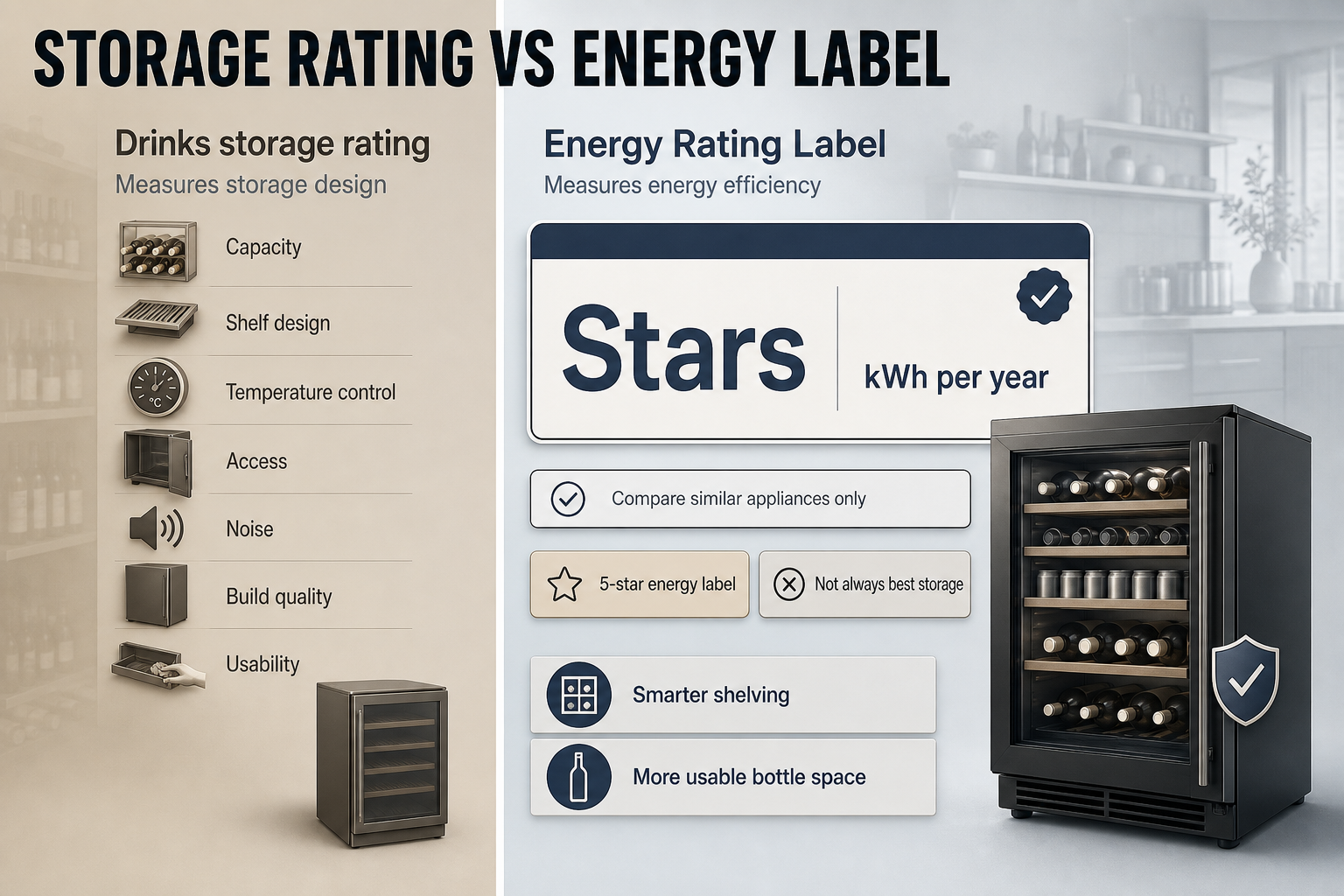
Unlike a formal safety score such as ANCAP for cars, a drinks storage rating is usually a buyer guide or retailer-style score rather than one single government-issued star system. In practice, a higher rating usually reflects a better mix of storage capacity, shelf design, temperature control, access, noise, build quality, and day-to-day usability. If you are comparing appliances, treat the stars as a summary, then check what sits behind them.
A low score usually means the appliance stores drinks, but with compromises. That might be tight shelf spacing, poor flexibility for tall bottles, uneven cooling, awkward door bins, or a layout that wastes internal space. It may still suit a flat, office lunchroom, or bach where the job is simply keeping cans cold.
A mid-range score generally means the storage is competent rather than exceptional. You would expect adjustable shelving, reasonable bottle support, enough depth for standard soft drink bottles, and a layout that works for mixed use. For many households, this is the sweet spot because it balances price with practical function.
A top score usually means the appliance is genuinely well designed for drinks rather than just a small fridge with a glass door. You would expect shelves shaped to hold bottles securely, room for different bottle heights, stable temperatures, easy visibility, and a layout that makes good use of every litre. If you collect wine, entertain often, or want a dedicated drinks fridge in a media room or outdoor covered area, this is where the extra money often pays off.
Energy efficiency should also be part of your judgement. In New Zealand, household refrigerating appliances must display an Energy Rating Label, and EECA says the stars on that label help you compare how energy efficient similar appliances are, while annual electricity use is shown in kWh per year. EECA also notes that the label is designed for comparing similar appliances, not wildly different sizes or categories. (eeca.govt.nz)
That distinction matters for drinks storage. A 5-star energy label on one beverage cooler does not automatically mean it is the best storage solution for your needs. It only means it is more energy efficient than similar models in its class and size range. A better drinks storage rating might belong to a unit with smarter shelving and more usable bottle space, even if its energy label is only average. (eeca.govt.nz)
What to Look For
Start with the actual mix of drinks you keep at home. If you mostly chill cans, almost any flat shelf will do the job. If you store 1.5-litre soft drink bottles, craft beer cans, mixers, champagne, and wine at the same time, shelf adjustability becomes far more important than the quoted bottle count.
Look closely at shelf shape and spacing. Some cabinets advertise a large capacity, but that number only works if every slot is filled with one bottle type. In real use, New Zealand households tend to mix sparkling water, beer, RTDs, juice, and wine, so flexible shelves are often more useful than the biggest claimed capacity. A good rating should reward usable storage, not just a flattering brochure number.
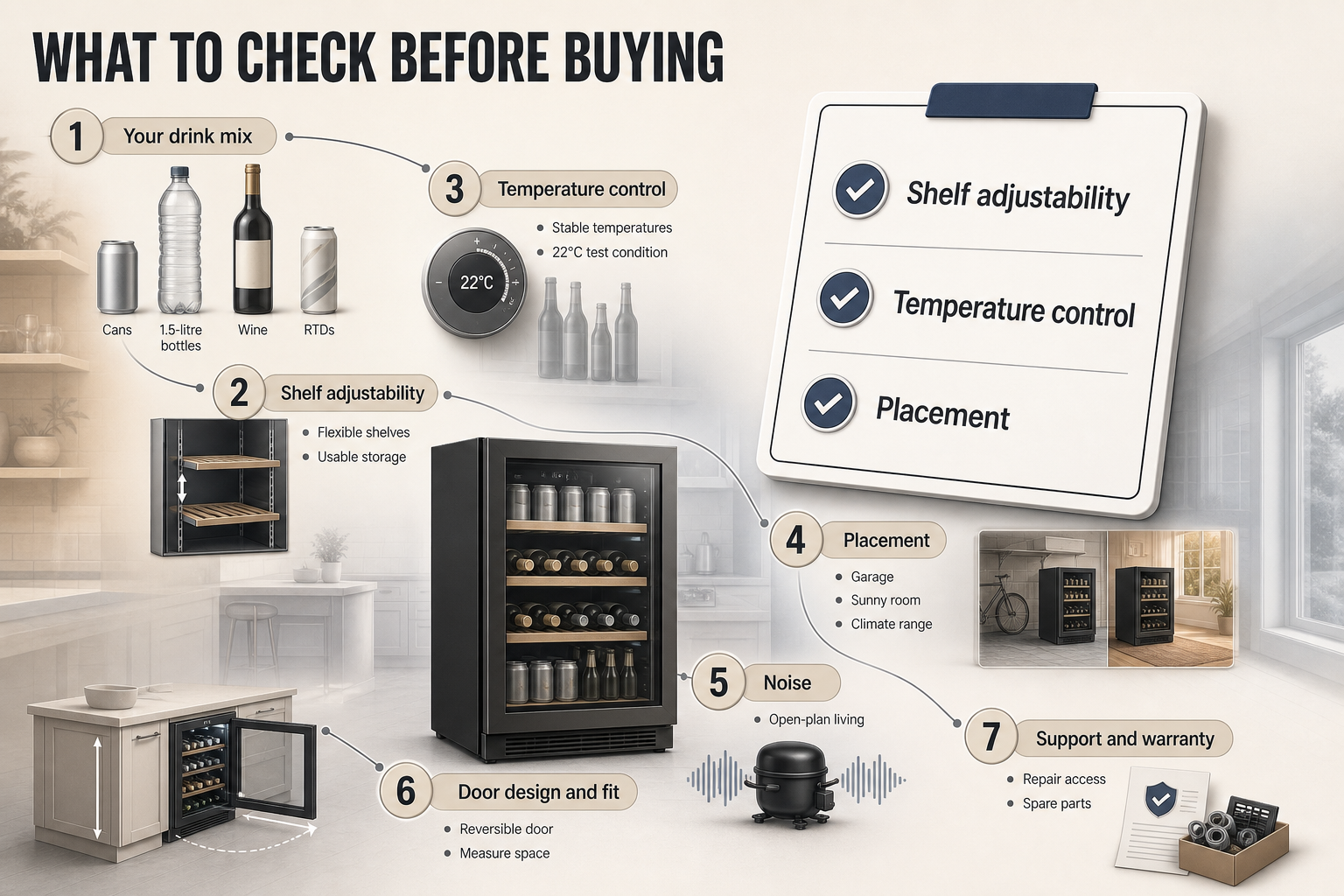
Temperature control is another big separator. For general cold drinks, consistency matters more than extreme precision. For wine, especially if you are storing bottles longer term rather than just chilling them for the weekend, stable temperatures and reduced vibration matter more. EECA’s appliance guidance notes that refrigeration energy figures are based on standardised testing conditions, including an assumed surrounding temperature of 22°C, so real-world performance can differ in a warmer garage or sunny room. (eeca.govt.nz)
That is especially relevant in New Zealand homes where the appliance may live in a scullery, internal garage, covered deck area, or holiday property. If your drinks fridge will sit somewhere that gets hot in summer or cold in winter, do not rely on stars alone. Check the operating climate range, because poor placement can affect both storage performance and running costs.
Noise is worth checking too. A drinks fridge in an open-plan Auckland apartment or a compact townhouse in Wellington can become annoying quickly if the compressor is loud or cycles often. A higher drinks storage rating should reflect not just capacity, but how pleasant the appliance is to live with.
Door design matters more than many buyers expect. Reversible doors, strong seals, UV-protective glass for wine storage, and handles that do not project too far can all make a difference. If the unit is going under a bench, in a butler’s pantry, or beside cabinetry, measure carefully before buying. The best-rated unit on paper can still be the wrong one if the door cannot open fully in your space.
You should also check after-sales support, repair access, and warranty terms. Under New Zealand’s Consumer Guarantees Act, products sold by businesses must be of acceptable quality, fit for purpose, and durable for a reasonable time. Consumer Protection also notes that if an appliance is faulty, you may be entitled to a repair, replacement, refund, or compensation, including for loss such as spoiled food due to a faulty fridge. Manufacturers are also expected to ensure repair facilities and spare parts are reasonably available for a reasonable period. (consumerprotection.govt.nz)
NZ Context
New Zealand buyers should read any drinks storage rating with local electricity costs in mind. A second fridge or beverage cooler can be convenient, but it is also another appliance running 24 hours a day. EECA advises using the Energy Rating Label to compare likely running costs between similar models, and that can make a meaningful difference over several years. (eeca.govt.nz)
Climate and placement matter here as well. A unit in Christchurch or Queenstown may face colder winter conditions, while one in Northland or a sun-exposed Hawke’s Bay home may work harder over summer. If the appliance is for a garage, sleepout, or bach, check whether the manufacturer actually approves that environment. A good drinks storage rating in a showroom can mean less if the appliance struggles outside normal indoor temperatures.
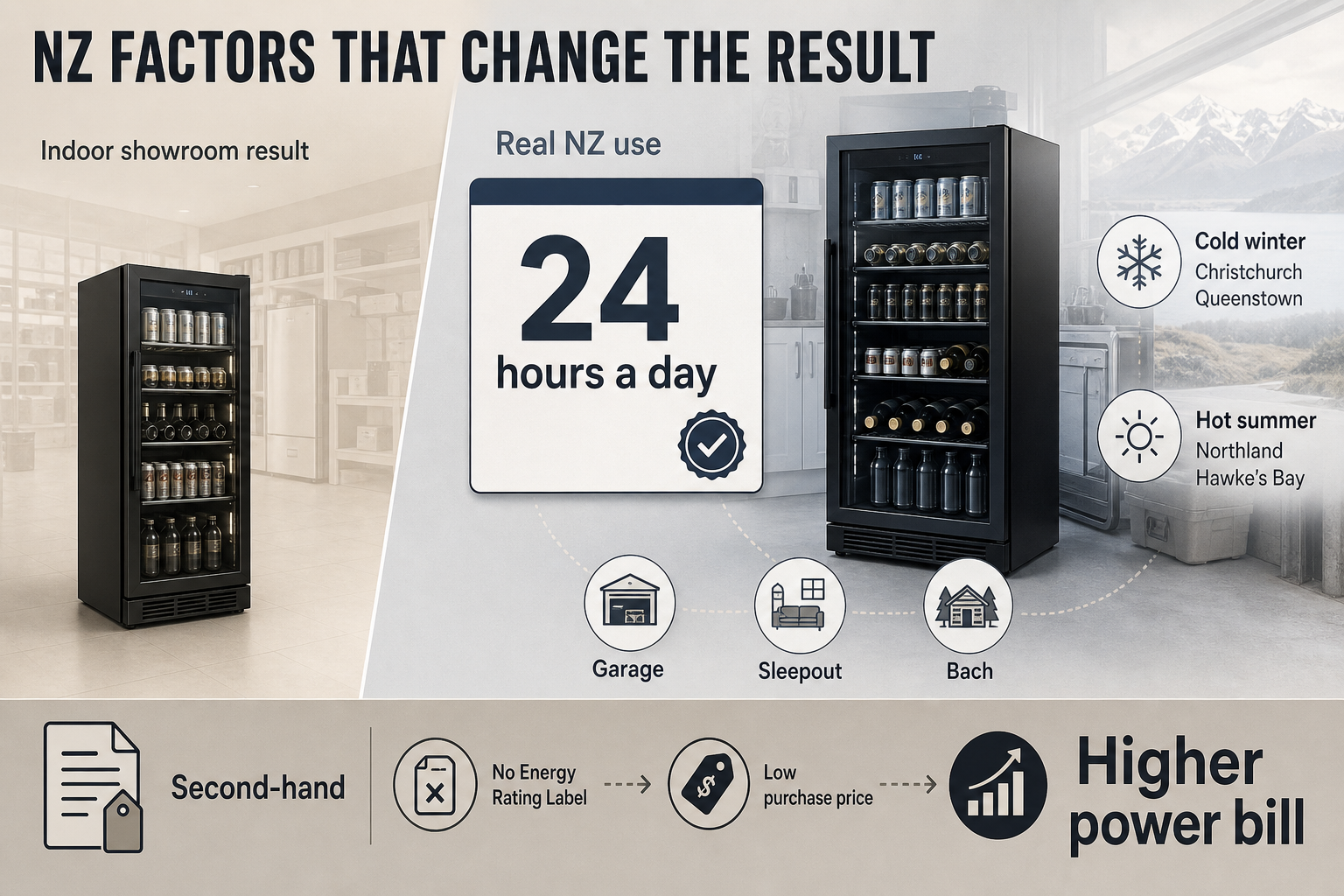
If you are buying second-hand, remember that EECA says used appliances are not required to display an Energy Rating Label. That means you may need to look up the model yourself and be more cautious about efficiency and age. For a bargain-priced drinks fridge, the purchase price can be low but the power bill may be higher than you expect. (eeca.govt.nz)
For most buyers, the best approach is simple. Treat a drinks storage rating as a practical quality score, not a guarantee. A 5-star option should store the kinds of drinks you actually buy, keep them at stable temperatures, fit your space, and do so without wasting power or becoming a noise nuisance. If a model scores well but cannot fit tall bottles, lacks adjustable shelving, or has weak local support, it is not really a 5-star choice for your home.
You may also be interested in these independent articles
Sources
- [1]EECA: How to use Energy Rating Labels and star ratings
- [2]EECA: Fridges and Freezers
- [3]EECA: Requirements under E3 - Fridges and freezers
- [4]EECA: Choose appliances that cut your energy costs
- [5]EECA: Choose an efficient fridge or freezer to cut costs
- [6]Consumer Protection NZ: Consumer Guarantees Act
- [7]Consumer Protection NZ: Faulty appliances and devices
- [8]Consumer Protection NZ: Obligations under the Consumer Guarantees Act
© 2026 pyfoi. All rights reserved.