
How to Read Appliance Energy Star Ratings
Appliance energy star ratings can cut NZ power bills, but stars alone mislead. Learn when to compare stars, when kWh matters, and what saves more.
Appliance energy star ratings tell you how efficiently a product uses electricity compared with similar models. For New Zealand buyers, that matters because the sticker on the front can affect your power bill for years after the purchase price has been forgotten.
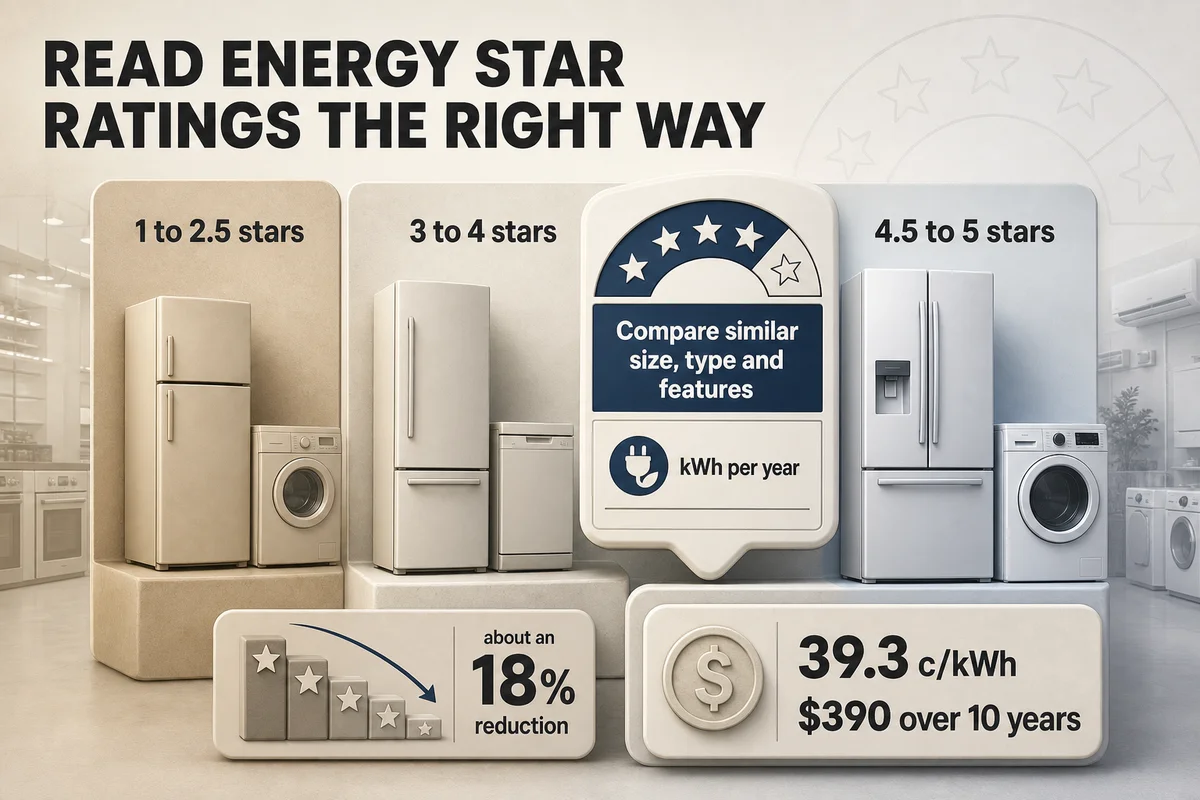
A high star rating is good, but only if you read it the right way. The most useful habit is to compare stars between appliances of similar size, type and features, then check the annual electricity use in kWh as well. EECA and Consumer Protection both make that point clearly, because stars on their own can be misleading if one appliance is much larger than another. (eeca.govt.nz)
What the Numbers Mean
The star rating on a New Zealand Energy Rating Label is a measure of efficiency, not raw power use. More stars means the appliance is more efficient than similar products in the same category. The label also shows estimated annual energy consumption in kWh per year, based on standardised testing and assumed usage patterns. (eeca.govt.nz)
That distinction matters. A large 500-litre fridge can have a better star rating than a smaller 300-litre unit, yet still use more electricity overall because it is cooling a much bigger space. That is why Consumer Protection says you should only compare stars for similar-sized products, and use the annual kWh figure when sizes differ. (consumerprotection.govt.nz)
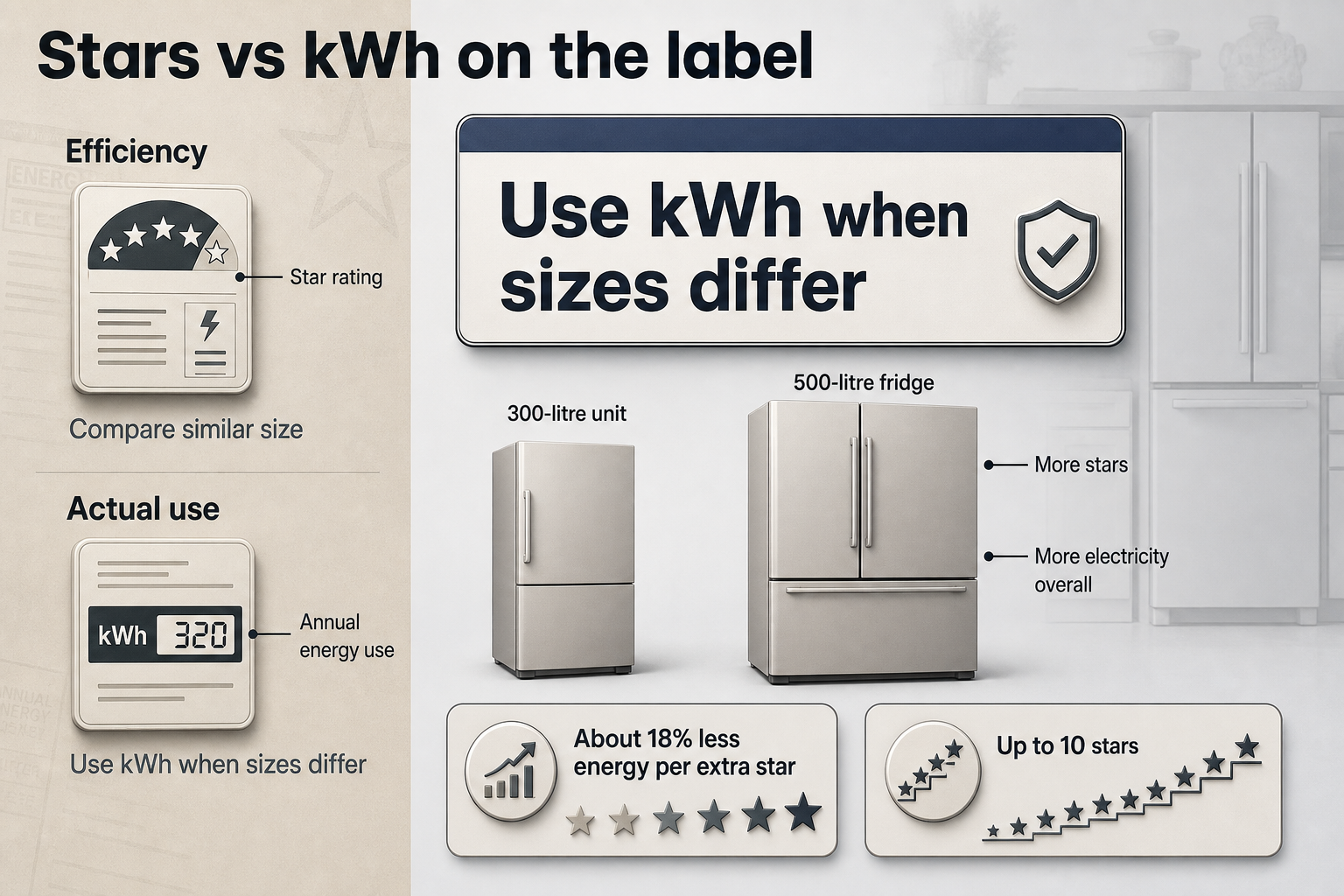
In practical terms, each extra star usually means a worthwhile drop in electricity use. For fridges and freezers on the newer label, EECA says each additional star represents about an 18% reduction in energy consumption. That does not apply to every appliance category in exactly the same way, but it shows why even a half-star difference can matter over a decade of ownership. (eeca.govt.nz)
New Zealand and Australia now use labels that can run up to 10 stars, even though many products you see in shops still sit well below that. The 10-star scale exists so newer, more efficient products can keep being separated from average ones as technology improves. (eeca.govt.nz)
Typical Ranges
For the 1 to 5-star range in your data, think of it as a simple low-to-high efficiency scale.
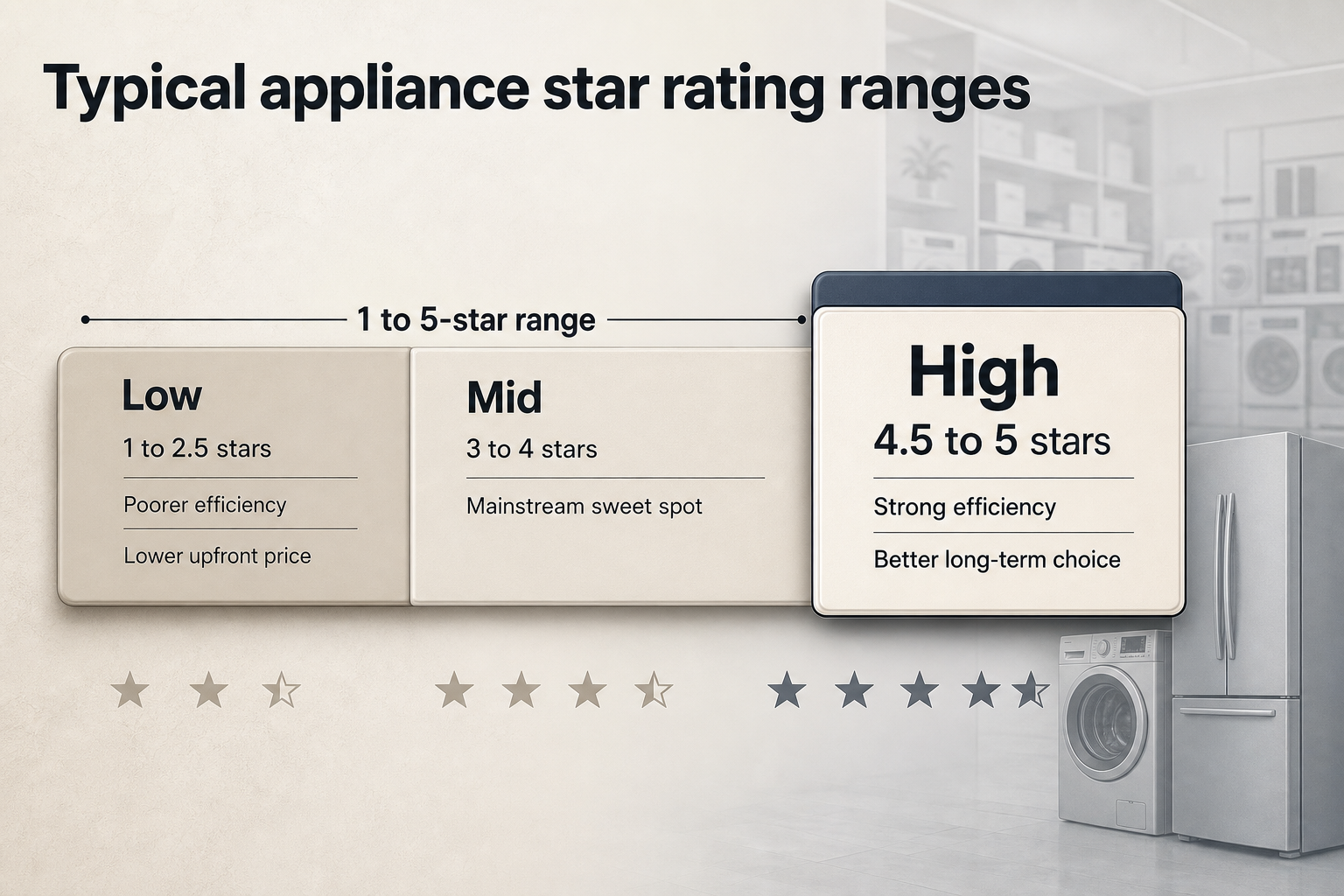
Low: 1 to 2.5 stars
This is the budget end of the efficiency spectrum. Appliances in this range are usually among the poorer performers for energy use in their class. They may have a lower sticker price, but they tend to cost more to run over time. On appliances that run all day, such as fridges and freezers, that can add up steadily in the background. EECA notes that a 1-star product is at the weak end of efficiency within its comparable class. (eeca.govt.nz)
A low-star appliance can still make sense if you use it rarely, plan to keep it only a short time, or the efficient alternative costs much more upfront. Even then, you should check the kWh figure carefully before assuming the cheap option is actually cheaper.
Mid: 3 to 4 stars
This is the mainstream sweet spot for many households. A mid-rated appliance is usually efficient enough to avoid nasty running costs, while still sitting in the middle of the price ladder. For many washing machines, dishwashers and heat pumps, this is where value often starts to look sensible.
If you are replacing an old appliance, moving from a low-star model to a mid-star one can produce a noticeable drop in electricity use. The savings are more obvious on appliances used often, such as a family dishwasher or a dryer in a wet southern winter.
High: 4.5 to 5 stars
At this level, you are looking at strong efficiency within the category. These models can cost more to buy, but they are often the better long-term choice if the appliance runs frequently or stays switched on year-round. Fridges, freezers, heat pumps and main household washers are the clearest examples.
For a family home in Auckland, Wellington, Christchurch or Dunedin, where the appliance will be used heavily for years, a 4.5 to 5-star model is often worth serious attention. The higher upfront spend can be easier to justify when power prices are considered over the life of the product.
Use-Case Guidance
If you are buying a fridge or freezer, treat energy rating as one of the most important numbers on the card. These appliances run continuously, so even modest efficiency gains matter. A 4.5 to 5-star fridge is attractive if you expect to keep it for 10 years or more, but compare the annual kWh figure as well, especially if you are choosing between different sizes. EECA says the label is designed to help compare similar appliances on efficiency and running cost before you buy. (eeca.govt.nz)
For washing machines and dishwashers, a mid-to-high star rating usually makes sense for busy households. If you have children, sports gear, muddy clothes or frequent loads, stepping up from a 2.5-star unit to a 4-star one can be more sensible than it first looks. You are spreading the extra purchase cost across hundreds of cycles each year.
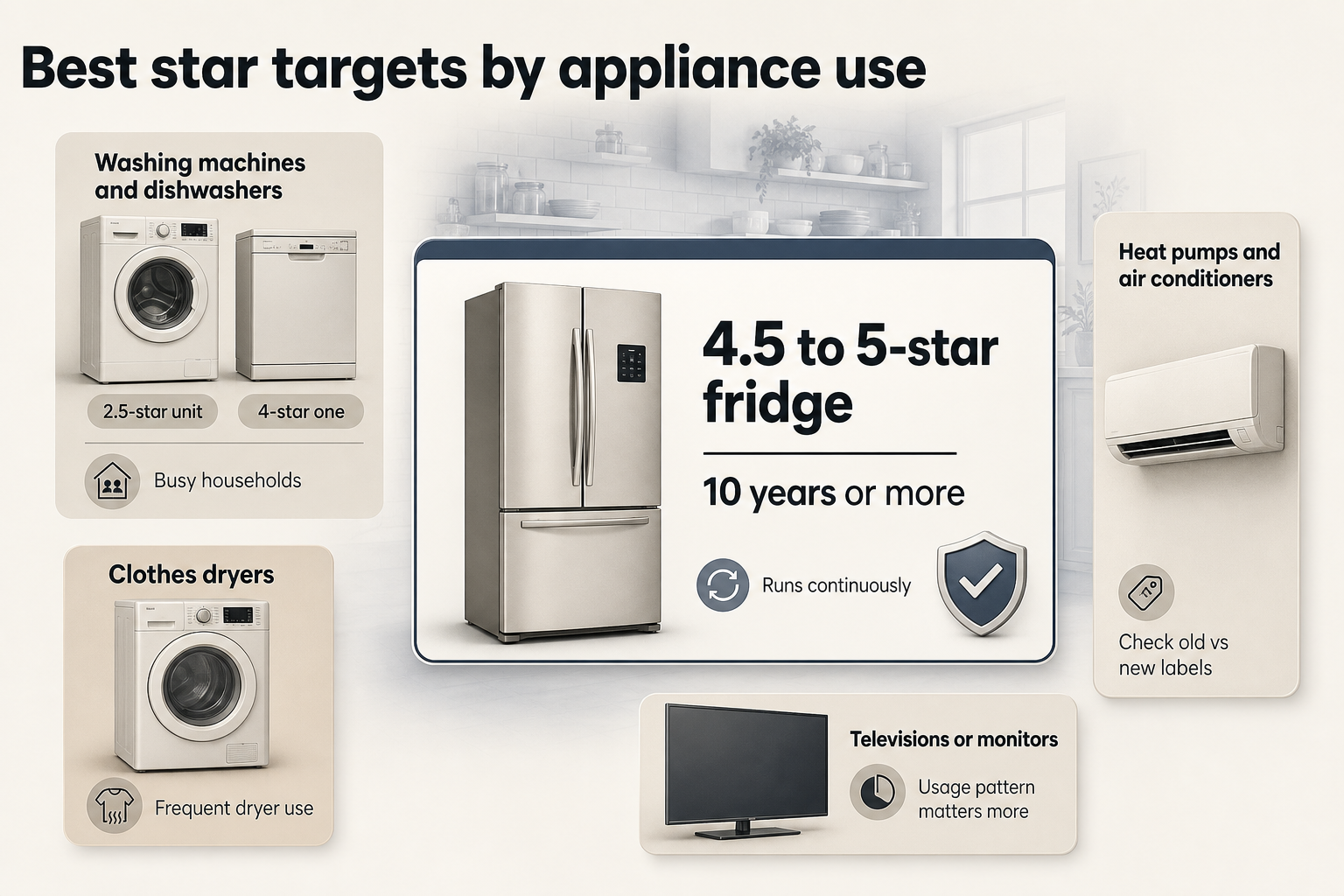
For clothes dryers, stars matter most if you use the dryer often. In Northland or Auckland, where outdoor drying is easier for more of the year, a lower-rated dryer may be acceptable if it is only for backup. In Wellington, Christchurch or the lower South Island, where winter drying can be harder, a more efficient dryer can save real money.
For heat pumps and air conditioners, look closely at the current label system because some categories have moved to newer labels and climate-based calculations. EECA says old and new labels are not directly comparable for some products, so do not assume a star number on an older unit means the same thing as the same number on a newer one. (eeca.govt.nz)
If you are comparing televisions or monitors, stars still matter, but usage pattern matters more. A highly efficient TV that runs two hours a day will save less in dollar terms than a slightly more efficient fridge that runs all year. Put your effort where your household uses the most electricity.
NZ-Specific Factors
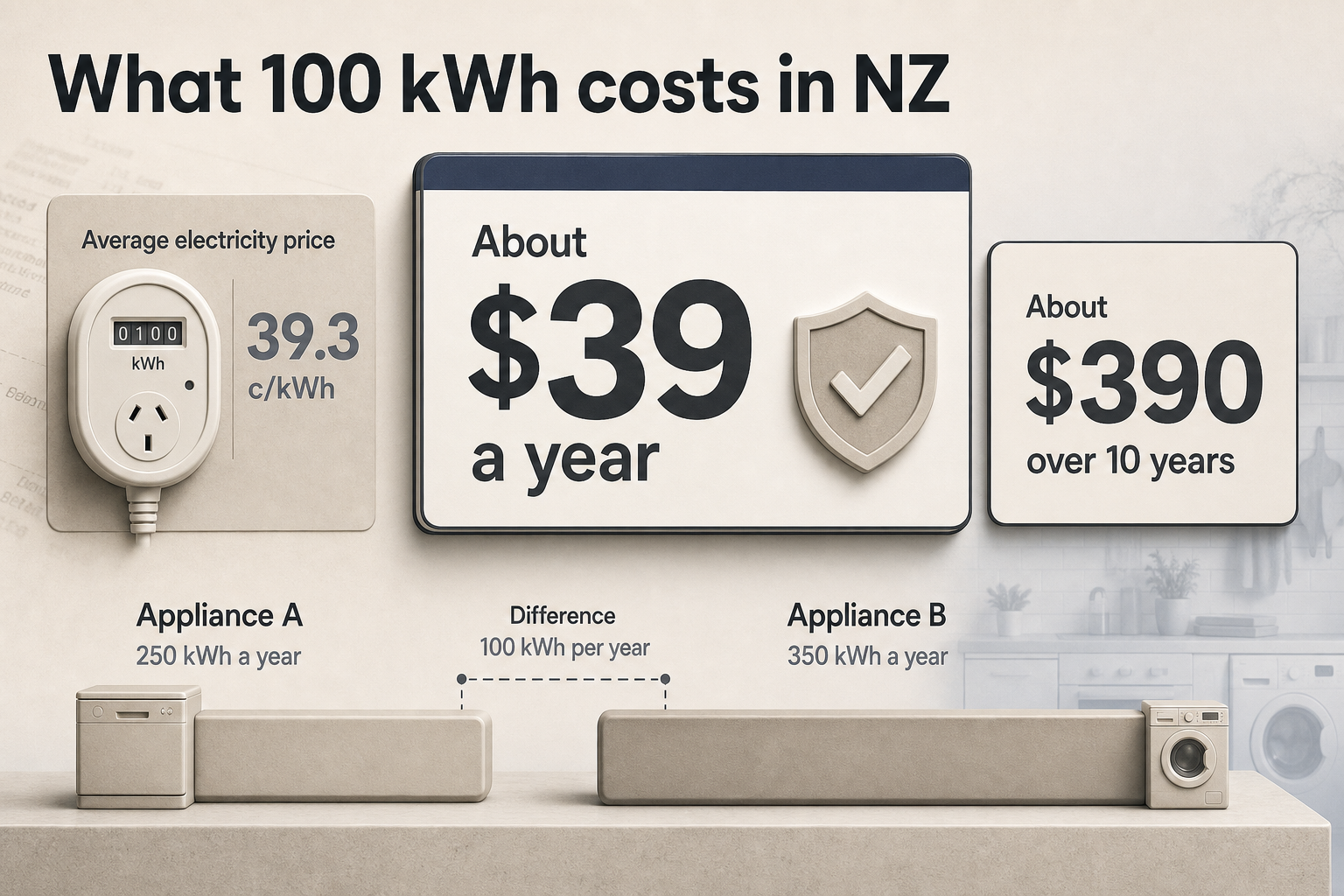
Electricity prices in New Zealand are high enough that appliance efficiency deserves attention. MBIE’s current electricity price monitoring says average prices are tracked in cents per kWh, and recent 2026 reporting based on MBIE data puts the national average around 39.3 c/kWh for a typical household model. That means every extra 100 kWh per year is roughly $39 on your bill at that average rate. (mbie.govt.nz)
That simple maths is useful in-store. If one appliance uses 250 kWh a year and another uses 350 kWh, the gap is 100 kWh. At about 39.3 c/kWh, that is roughly $39 a year, or about $390 over 10 years before any future power price increases. This is why Consumer Protection advises looking beyond the shelf price and factoring in electricity use and repair support in New Zealand. (consumerprotection.govt.nz)
There are also label changes to be aware of. EECA says some newer labels use updated test standards, and star ratings on new and old labels cannot always be compared directly. Fridges and freezers are a clear example, where the newer label includes updated calculations and added information such as total volume. If you are shopping across clearance stock and brand-new stock, compare carefully. (eeca.govt.nz)
Finally, remember that the label is based on standardised use, not your exact home. A dryer used daily in a damp Dunedin winter, or a heat pump running hard in Central Otago, may cost more than the label suggests. But the label is still one of the best tools you have for comparing one appliance against another on a fair basis. (energyrating.gov.au)
You may also be interested in these independent articles
Sources
- [1]EECA: Energy Rating Label
- [2]EECA: Fridges and Freezers Energy Rating Labels
- [3]MBIE: Electricity cost and price monitoring
- [4]Consumer Protection NZ: Before you buy
- [5]Consumer NZ: Energy Rating Labels explained
- [6]Energy Rating: Understand the Energy Rating Label
- [7]EECA PDF: The new Zoned Energy Rating Label for heat pumps and air conditioners
© 2026 pyfoi. All rights reserved.