
How to Read Appliance Brand Ratings in NZ
Appliance brand ratings can help NZ buyers compare reliability, warranty support and service, but stars alone miss key risks. Here's what to check.
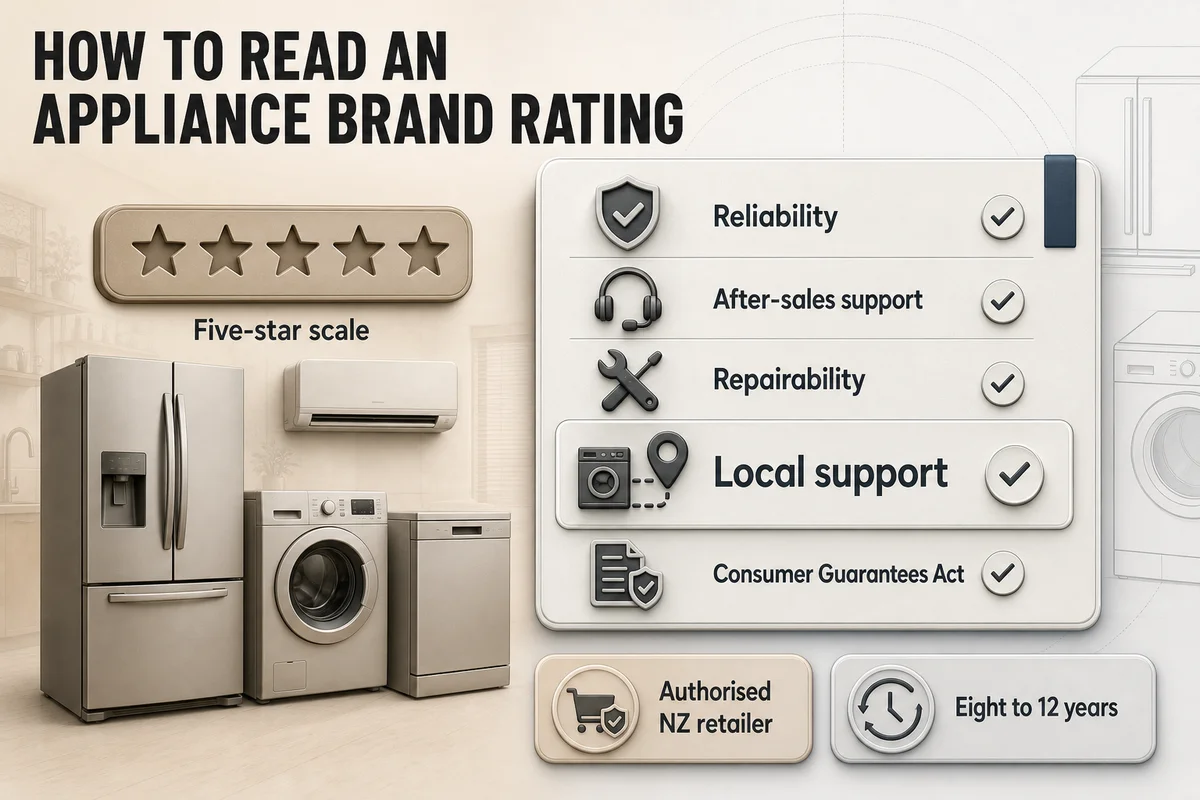
An appliance brand rating is a simple way to express how a brand stacks up overall, usually on a five-star scale. It matters because the badge on the front of a fridge, washer or heat pump can tell you something about likely quality, support and resale appeal, but it never tells the whole story.
For New Zealand buyers, brand matters a bit differently than it does in larger markets. A great reputation overseas is useful, but what really counts here is whether the brand has good local support, sensible parts availability, and a service network that can actually reach where you live.
What Goes Into the Rating
A brand star rating is usually a blended score rather than a direct measure of one thing. In practice, it tends to reflect a mix of reliability, owner satisfaction, warranty support, repairability, product range, and the strength of after-sales service. A five-star brand is generally one that buyers trust across several of those areas, while a one-star brand is more likely to have weaker support, patchier quality, or a poor track record for faults and repairs.
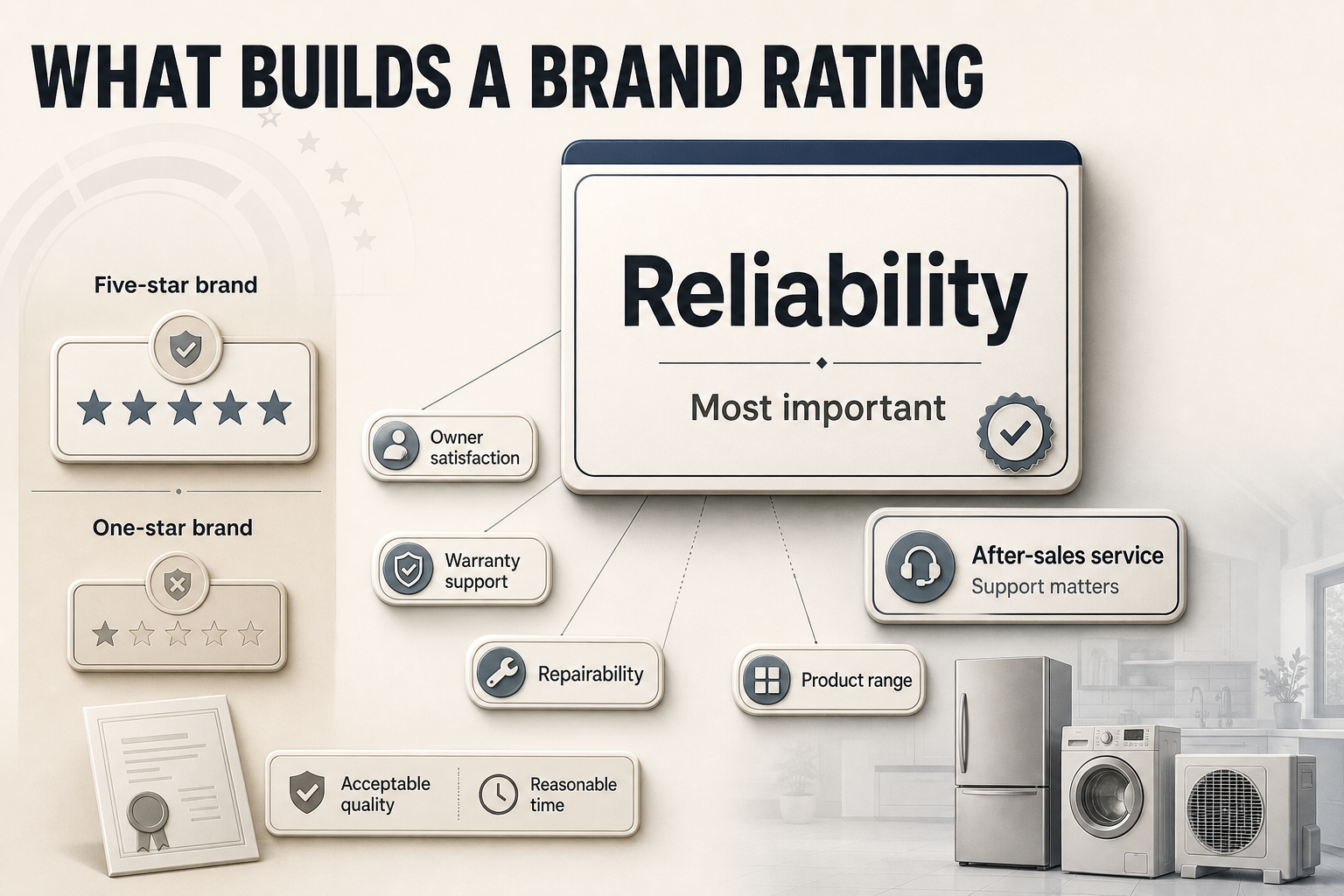
Reliability is often the biggest factor. If a brand’s appliances tend to run for years without major faults, that lifts its standing quickly. New Zealand’s Consumer Protection guidance also points out that products must be of acceptable quality and last a reasonable time under the Consumer Guarantees Act, so durability is not just a nice extra here, it is part of the legal baseline for goods sold by businesses in New Zealand. (consumerprotection.govt.nz)
After-sales support matters almost as much as reliability. A brand can build good machines, but if it takes weeks to get a technician or months to source a control board, your ownership experience drops fast. Consumer Protection notes that manufacturer warranties sit on top of your rights under the Consumer Guarantees Act, not instead of them, so a strong brand rating often reflects both decent warranty terms and a realistic ability to honour them in New Zealand. (consumerprotection.govt.nz)
Repairability is another quiet but important part of brand reputation. Consumer Protection specifically notes that well-known brands are often easier to fix, which usually means better parts supply, more technician familiarity, and a better chance of keeping an appliance going rather than replacing it early. That can make a major difference with higher-value appliances such as heat pumps, dishwashers, and large-capacity washing machines. (consumerprotection.govt.nz)
A stronger rating can also reflect consistency across the range. Some brands build one excellent premium line and one mediocre budget line. Others are more even from entry level to flagship. If a brand rating is calculated across the whole brand, not a single model, that consistency matters.
What to Look For
Start by treating the star rating as a shortcut, not a verdict. A five-star brand can still sell an average model, and a three-star brand can still make a bargain that suits your needs perfectly. The rating is most useful when you use it to narrow your shortlist, then check the specific appliance in front of you.
Look first at local backup. Ask who handles warranty claims in New Zealand, where spare parts are stocked, and whether authorised service agents operate in your area. If you live in Auckland, Christchurch or Wellington, you will usually have more options. If you are in Northland, the West Coast, Central Otago or a smaller town, brand support can vary much more, and that should influence how much trust you place in the badge.
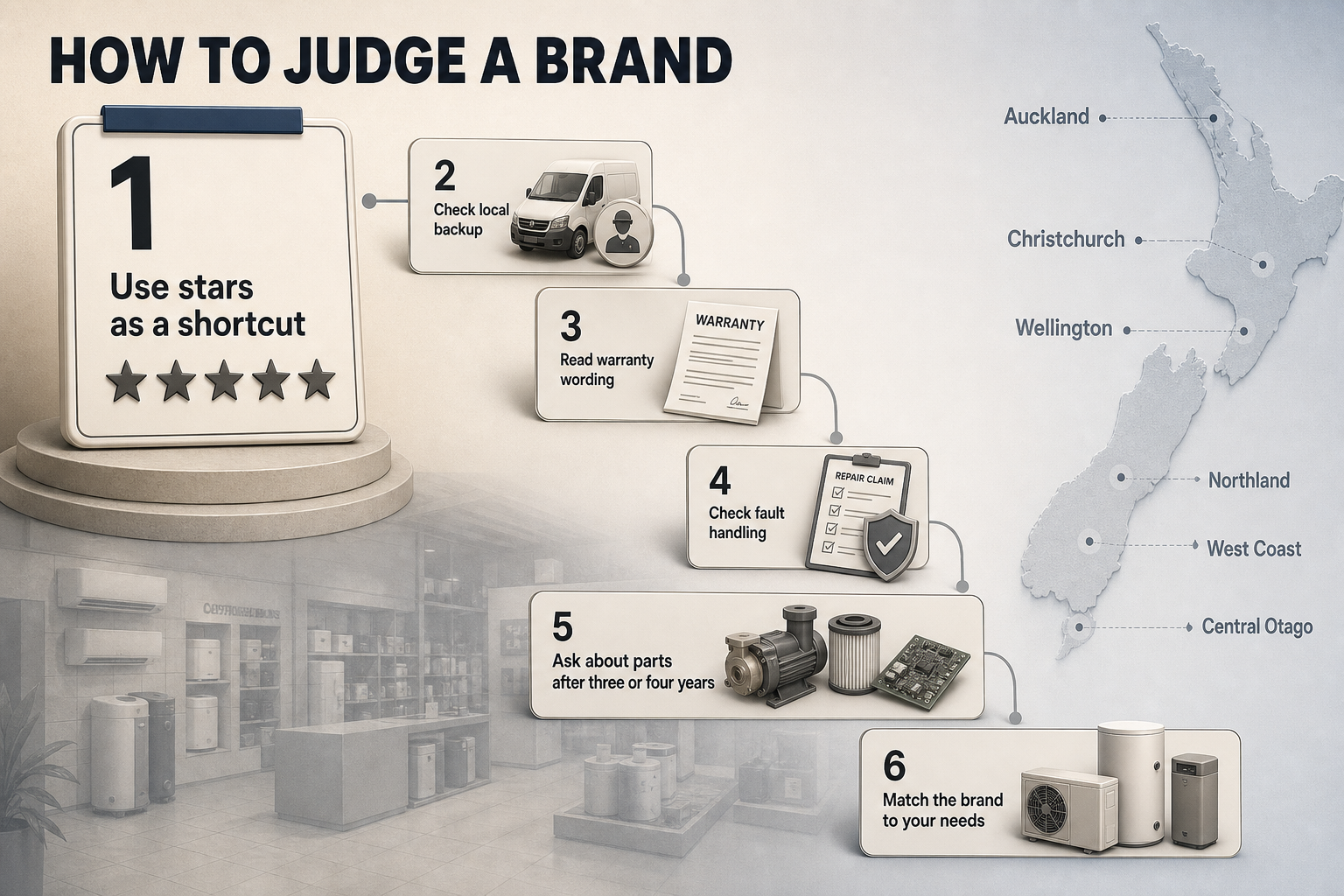
Warranty wording deserves a careful read. Consumer Protection says manufacturer and extended warranties should give you extra protection above your legal rights, and that your rights under the Consumer Guarantees Act still apply whether you buy an extra warranty or not. If a retailer pushes an extended warranty as though it is your only protection, that is a warning sign about the sales process rather than proof of a better brand. (consumerprotection.govt.nz)
You should also check how the brand handles faults in practice. Under the Consumer Guarantees Act, if a product bought from a business is faulty, you may be entitled to a repair, replacement or refund depending on the circumstances. A strong brand rating often reflects brands and retailers that resolve problems cleanly rather than arguing over every claim. (consumerprotection.govt.nz)
For expensive appliances, ask about parts availability over time. A cheap imported brand may look good on paper, but if replacement pumps, seals, filters or control boards are hard to get after three or four years, the low purchase price can stop looking like a bargain. This matters even more in New Zealand because our market is smaller and supply chains are longer than in Europe, North America or parts of Asia.
It is also smart to separate brand image from brand fit. A premium European brand may earn a high rating for engineering and finish, but if your priority is a simple, durable whiteware appliance for a rental or bach, a mainstream Japanese, Korean or Australasian-supported brand may suit you better. The best rating for you is not always the highest rating overall.
NZ Context
New Zealand consumer law gives you stronger protection than many buyers realise. The Consumer Guarantees Act requires goods bought from businesses for personal or household use to be of acceptable quality, fit for purpose, and durable for a reasonable time. That means a weak manufacturer warranty does not automatically mean weak legal protection. (consumerprotection.govt.nz)
That said, the law does not solve every practical problem. Consumer Protection notes that the CGA generally does not apply to private sales, and your rights are strongest when you buy from a business trading in New Zealand. For appliance buyers, that means a brand’s rating should be read alongside where you are buying it. A good brand bought through an authorised NZ retailer is usually a safer bet than the same badge sourced informally or through a marketplace seller. (consumerprotection.govt.nz)
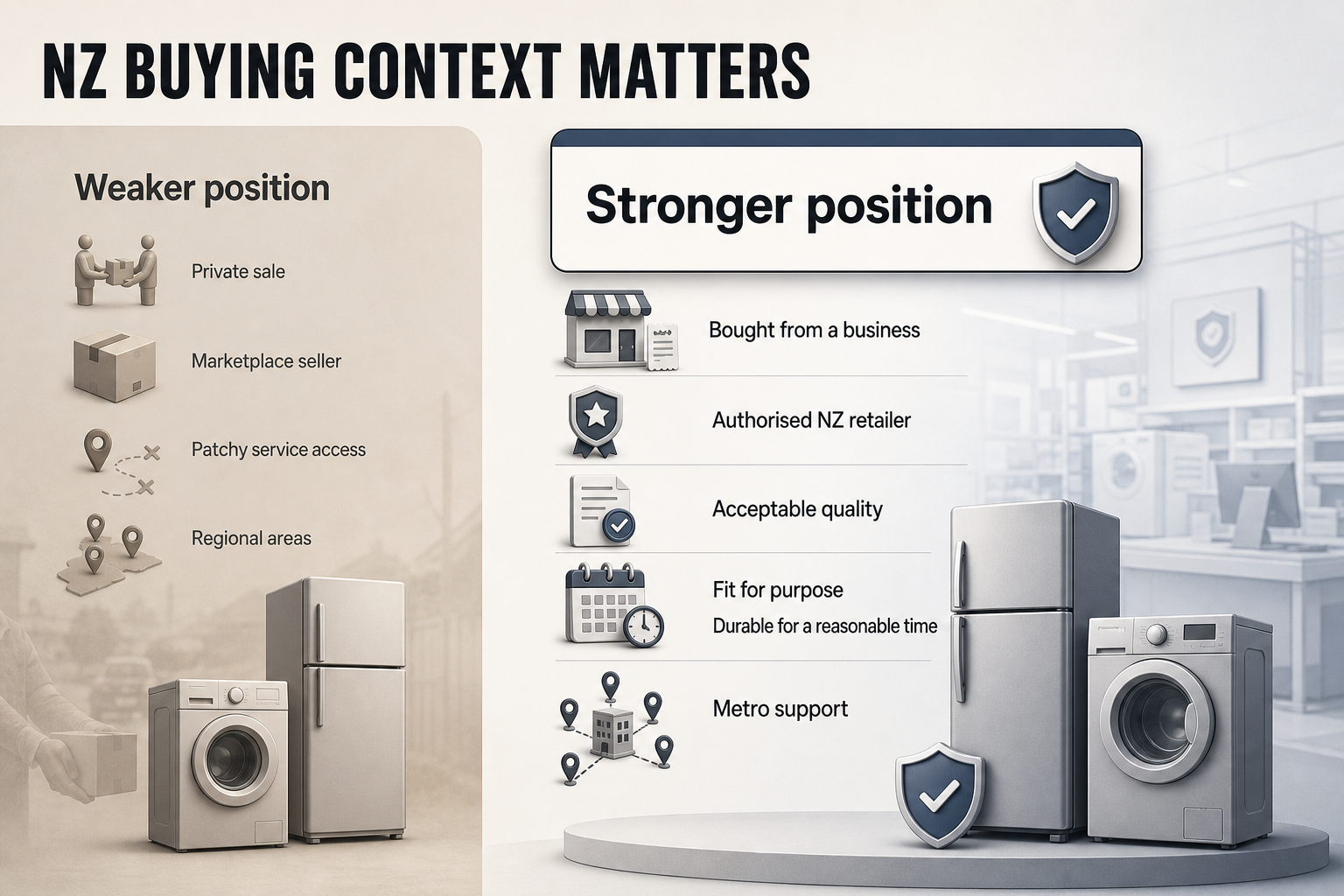
Service coverage is especially important in NZ because geography changes the ownership experience. A brand with strong metro support may still be inconvenient in regional areas if call-out times are long or subcontractors are scarce. If you are buying for a rural property, holiday home, or investment property outside the main centres, a slightly less glamorous brand with a broader service footprint can be the smarter choice.
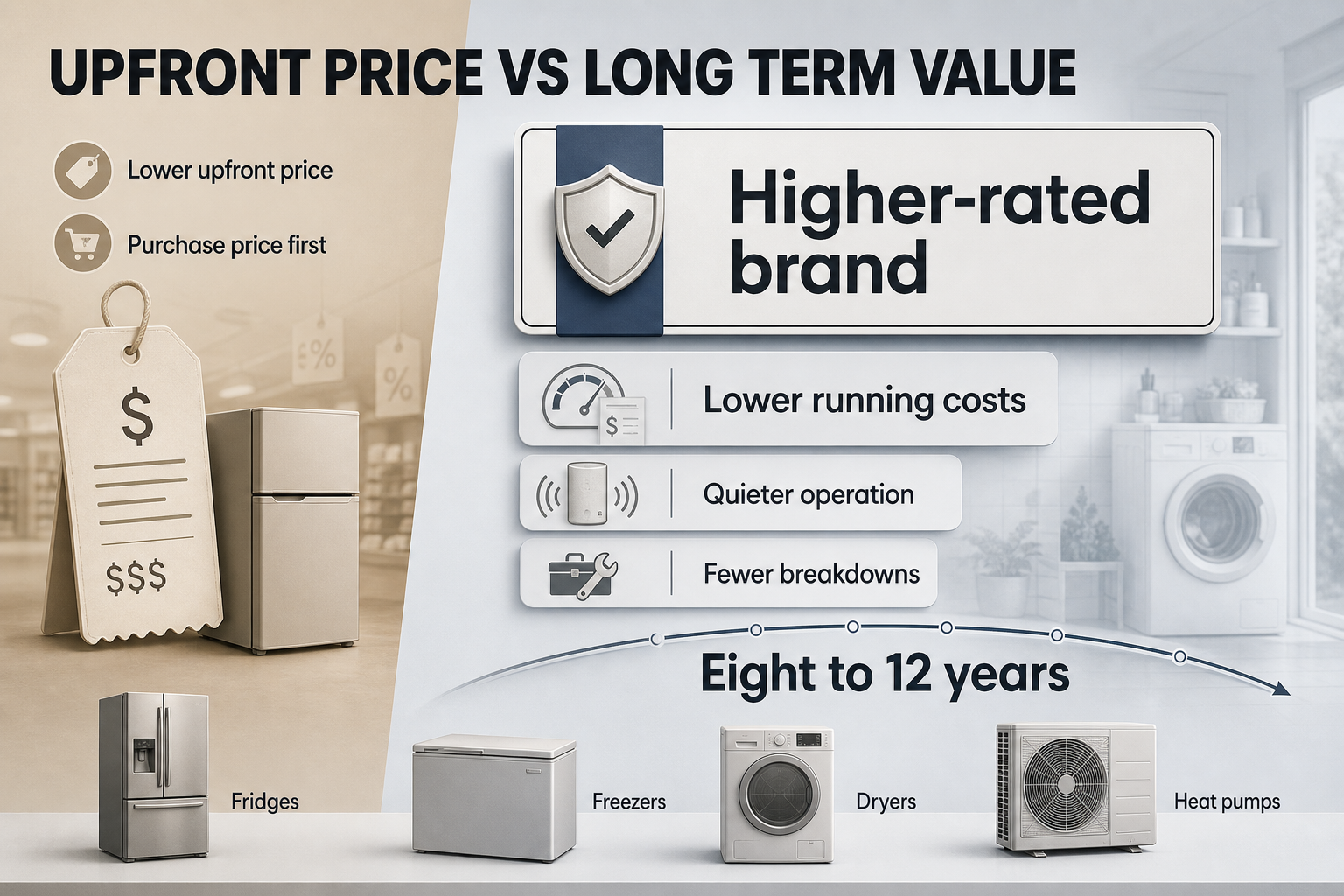
Power costs also shape brand value here. New Zealand households often focus on purchase price first, but a better-rated brand may justify itself through lower running costs, quieter operation, and fewer breakdowns over eight to 12 years. That is particularly relevant for fridges, freezers, dryers and heat pumps, where efficiency and reliability affect your power bill and comfort every week.
Finally, remember that star ratings are only as good as the method behind them. Unlike vehicle safety, where New Zealand buyers can check established systems such as Rightcar and ANCAP for structured ratings, appliance brand ratings are often retailer-created or commercially compiled rather than governed by one national standard. That means you should trust transparent ratings more than vague ones, and always check what the stars are actually measuring. (rightcar.govt.nz)
You may also be interested in these independent articles
Sources
© 2026 pyfoi. All rights reserved.