
What Multi-temperature Capacity Means in NZ
Learn what multi-temperature capacity means in NZ fridges, which litre ranges are useful, and how to compare net capacity, fit, and energy labels.
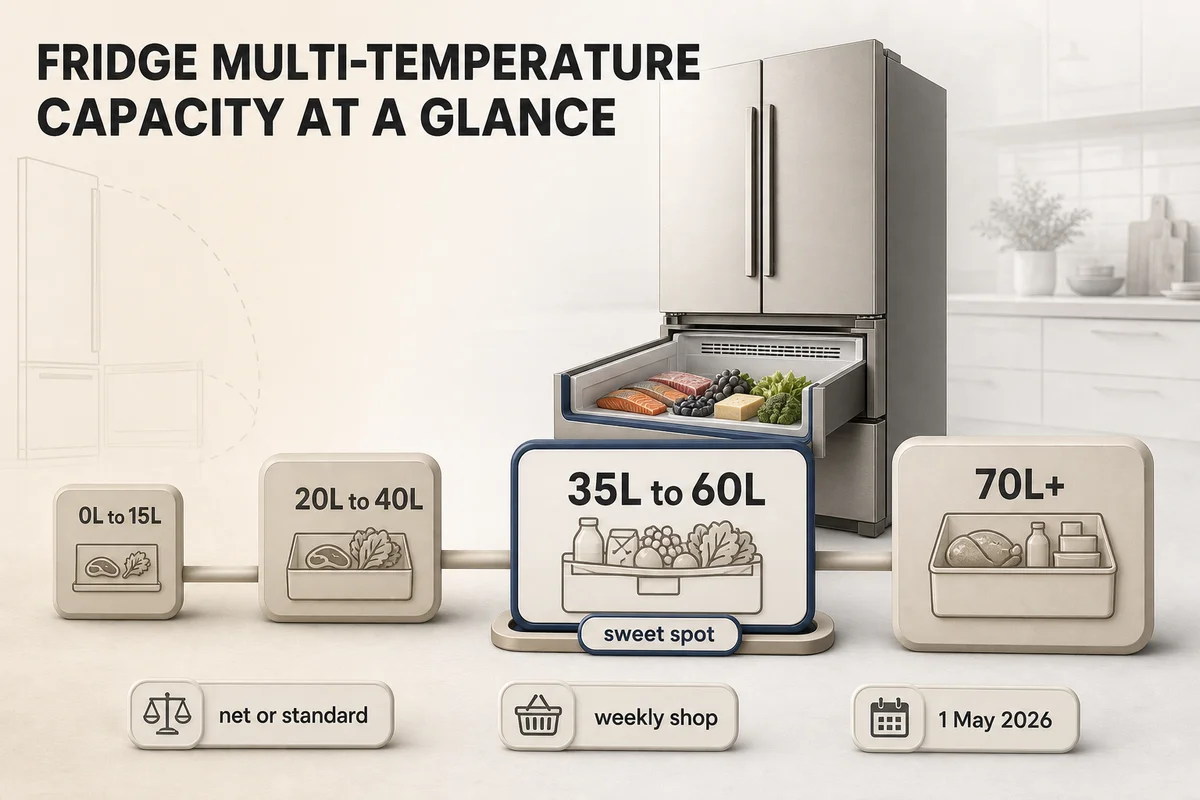
Multi-temperature capacity is the amount of fridge space, measured in litres, that can switch between different roles. Depending on the model, that zone might work as a chiller, a soft-freeze drawer, a deli compartment, a drinks section, or a vegetable drawer with adjustable temperature. For New Zealand buyers, it matters because these flexible compartments can make a fridge far more useful than the headline total capacity suggests.
What the numbers mean
A litre figure tells you the usable internal volume of that flexible zone, not the outside size of the appliance. In practical terms, 20L to 30L is a small drawer for meat, cheese, or a few days of produce, while 40L to 60L is a more meaningful compartment that can take bulk groceries or help you separate items for different temperatures. If you buy a lot of fresh food in one weekly shop, that extra dedicated space can be more useful than a slightly larger main fridge cavity.
This is one area where the test standard matters. In New Zealand, fridge and freezer energy labels and capacity figures are based on standardised testing under AS/NZS IEC 62552 and AS/NZS 4474, which are designed to reflect usable volume rather than marketing-friendly gross space. EECA notes that refrigerator labels use standardised tests and list the test standard, while brands have also pointed out that newer IEC-based methods can reduce the claimed litre figure because inaccessible ducting and unusable spaces are no longer counted. (eeca.govt.nz)
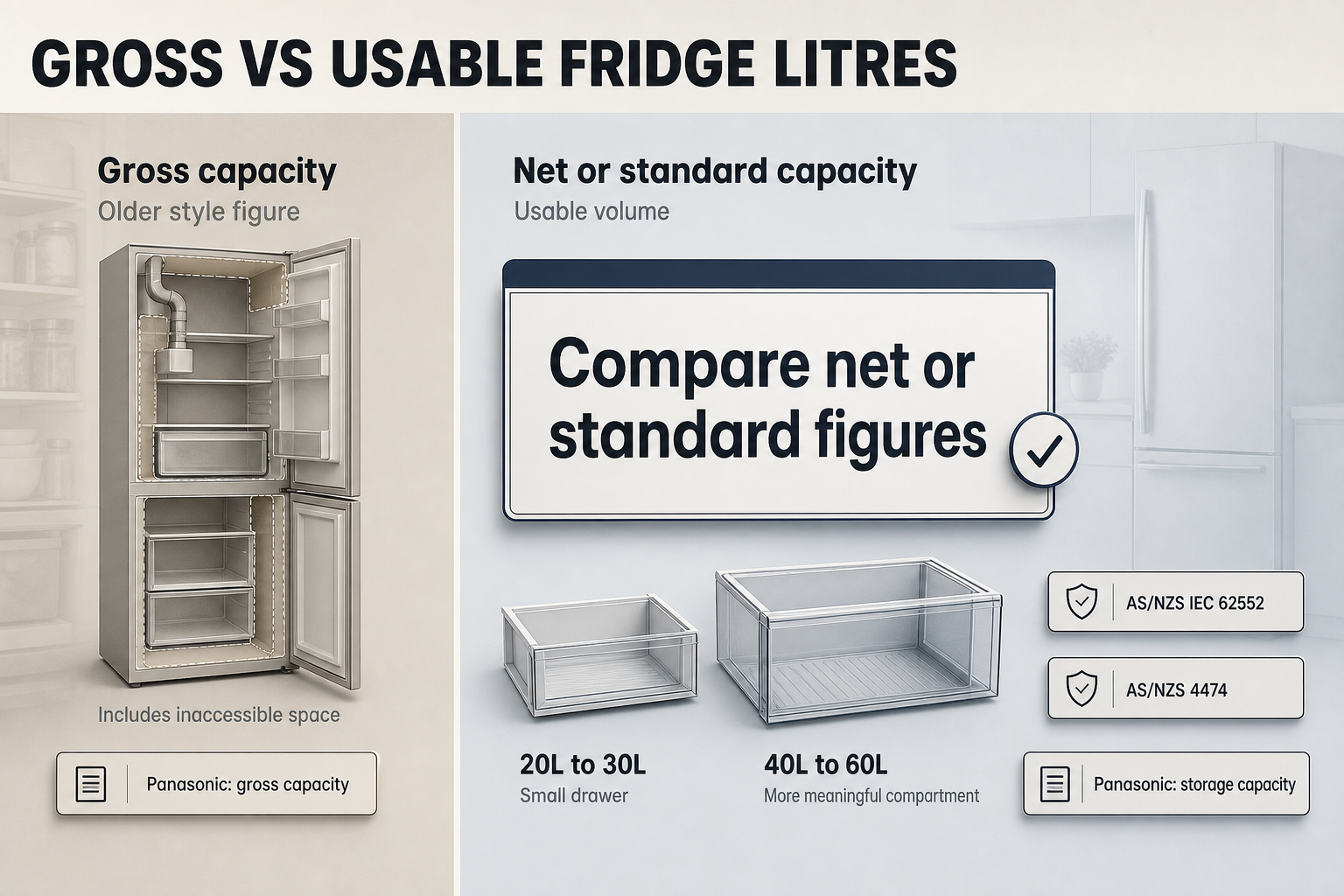
That means a “smaller” modern litre figure can still represent the same real-world storage as an older fridge with a bigger gross number. If a product page lists gross and net or standard capacity, the net or standard figure is the one you should trust for comparing models. Panasonic’s NZ specifications, for example, separate gross capacity from storage capacity, which shows why like-for-like comparison matters. (panasonic.com)
Typical ranges
At the low end, 0L to 15L usually means there is no true multi-temperature zone, or only a very small compartment with limited flexibility. This is common in compact top-mount fridges, basic bottom-mounts, and budget models where storage is split into fixed fridge and freezer sections. If a listing shows zero, it often simply means no adjustable-temperature volume has been specified.
A mid-range figure of about 20L to 40L is where a multi-temperature section starts to become genuinely useful. This size suits many mid-size family fridges and multi-door models. It is enough room for meat for a few days, lunchbox items, drinks, or produce that benefits from a slightly different setting than the main fridge.
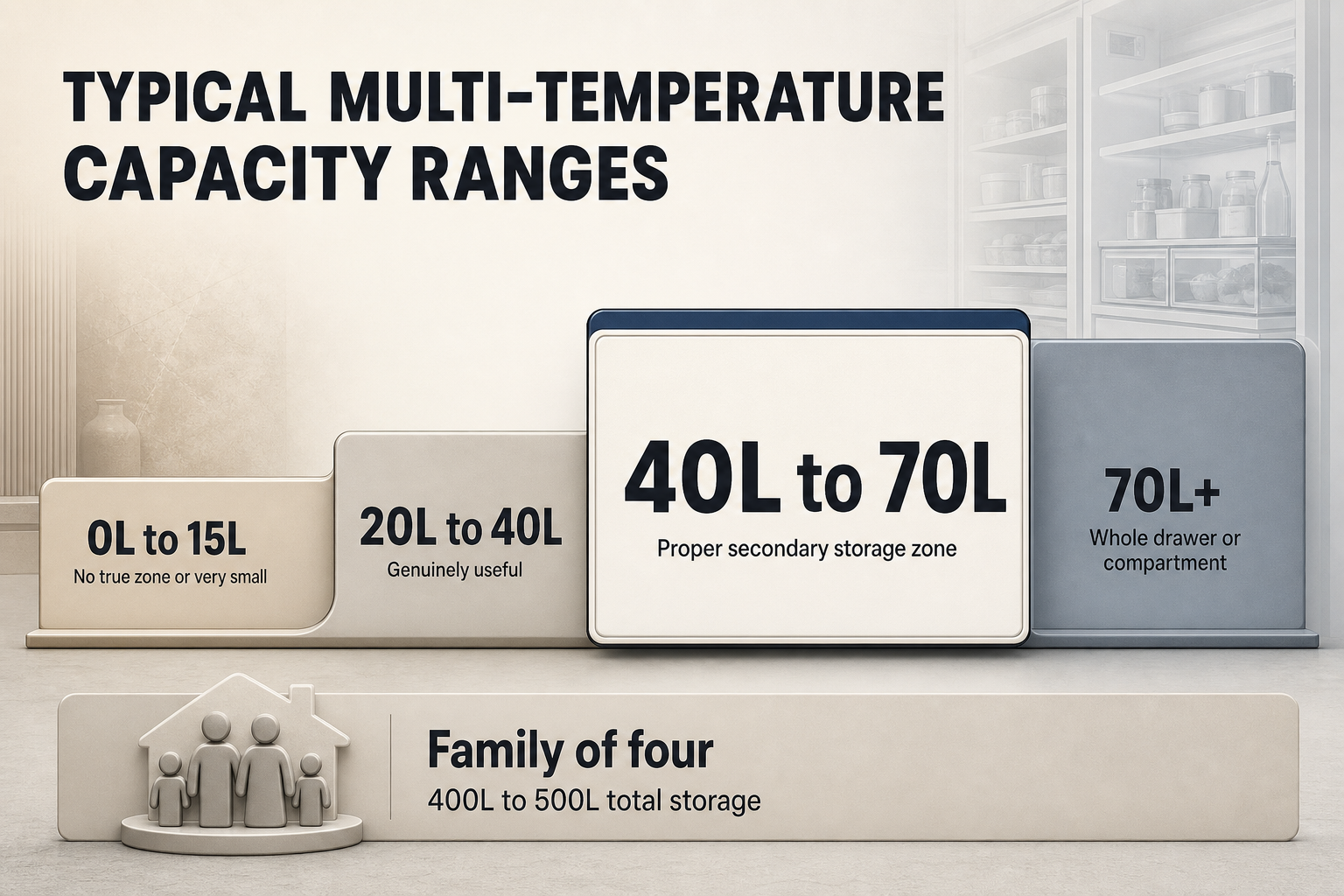
A higher figure of 40L to 70L gives you a proper secondary storage zone. This is more common in larger French-door and four-door fridges aimed at family households. For a household that shops once a week, batch cooks, or wants to keep fish, meat, vegetables, and dairy better organised, this is where flexible storage starts to change how the fridge works day to day.
Above about 70L, you are generally looking at larger premium appliances where one whole drawer or compartment can switch roles. That can be very handy, but it only pays off if you will actually use the flexibility. Consumer NZ says a family of four doing one main weekly shop will often need around 400L to 500L of total storage overall, so a very large multi-temperature zone usually makes most sense in a larger fridge rather than as a substitute for core fridge capacity. (consumer.org.nz)
Use-case guidance
If you live in a flat or a smaller Auckland or Wellington apartment and do frequent top-up shops, a multi-temperature capacity of 0L to 20L is often enough. Your bigger concern is usually the overall footprint, door swing, and whether the fridge fits a 600mm kitchen cavity. A small flexible drawer is nice to have, but it should not come at the expense of everyday shelf space.
For couples or small families, around 20L to 35L is a sensible target. That is enough to keep deli items, meat, or school lunch food separate without paying for a much larger cabinet. It also helps if your household has mixed habits, such as one person wanting colder drinks storage while another wants a produce-friendly drawer.
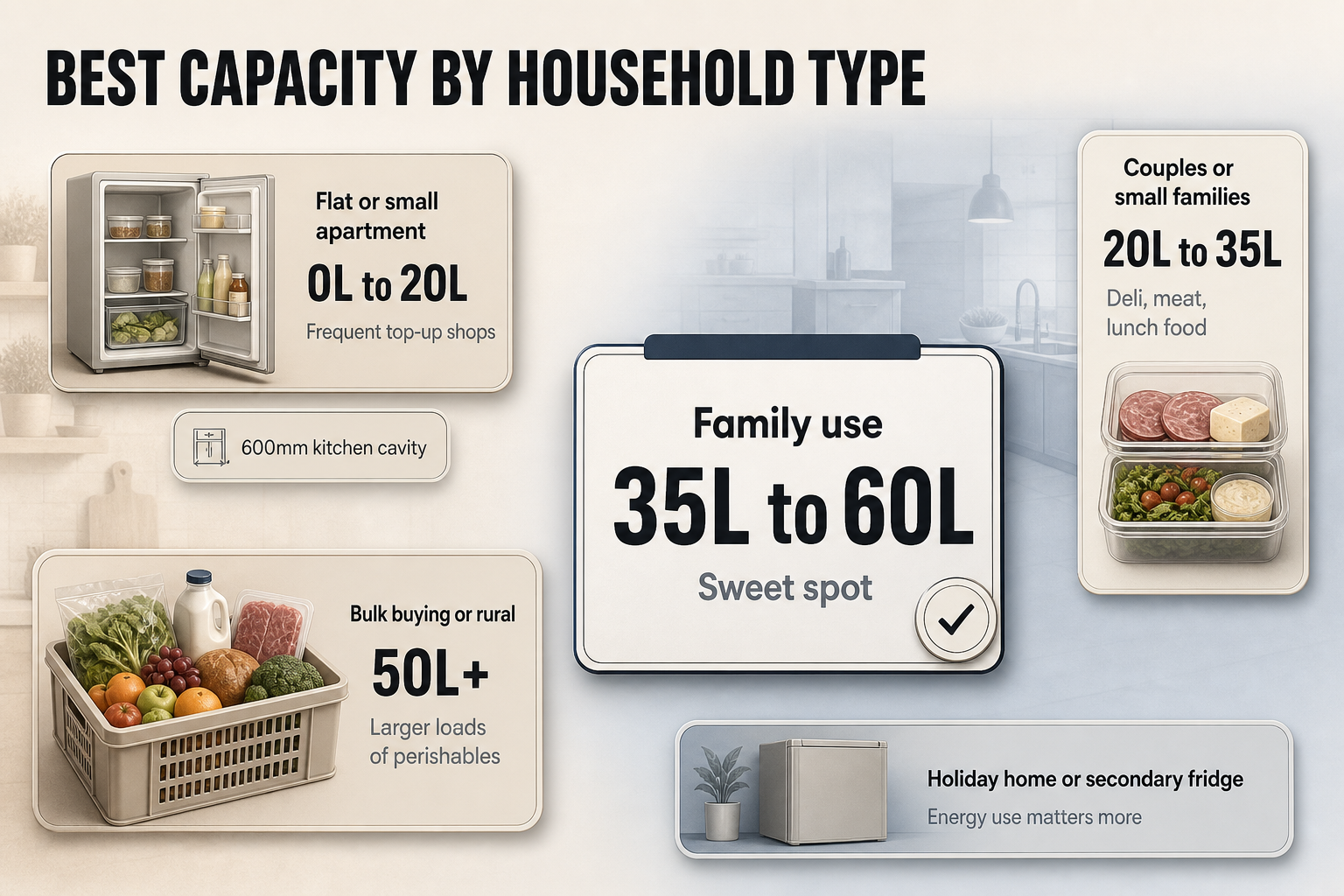
For family use, especially if you do one larger weekly supermarket run, 35L to 60L is the sweet spot. That gives you enough room to separate fresh meat from ready-to-eat food, create a colder zone for fish or meal prep, or dedicate part of the fridge to vegetables. In practice, this can reduce clutter in the main compartment and make food easier to find before it spoils.
If you entertain often, buy in bulk from Costco-style outlets, or split food storage for dietary reasons, 50L and up can be worth paying for. The same applies if you live rurally and shop less often, because a flexible compartment can help you manage larger loads of perishables between trips. On the other hand, if you mostly store frozen meals, condiments, and drinks, a large multi-temperature zone may sit half empty.
For holiday homes, rentals, or simple secondary fridges, a large adjustable-temperature volume is rarely a priority. Reliability, energy use, and a sensible total capacity matter more. Since fridges run all day, every day, EECA and Energy Rating both stress the importance of comparing energy use and star ratings alongside size. (eeca.govt.nz)
NZ-specific factors
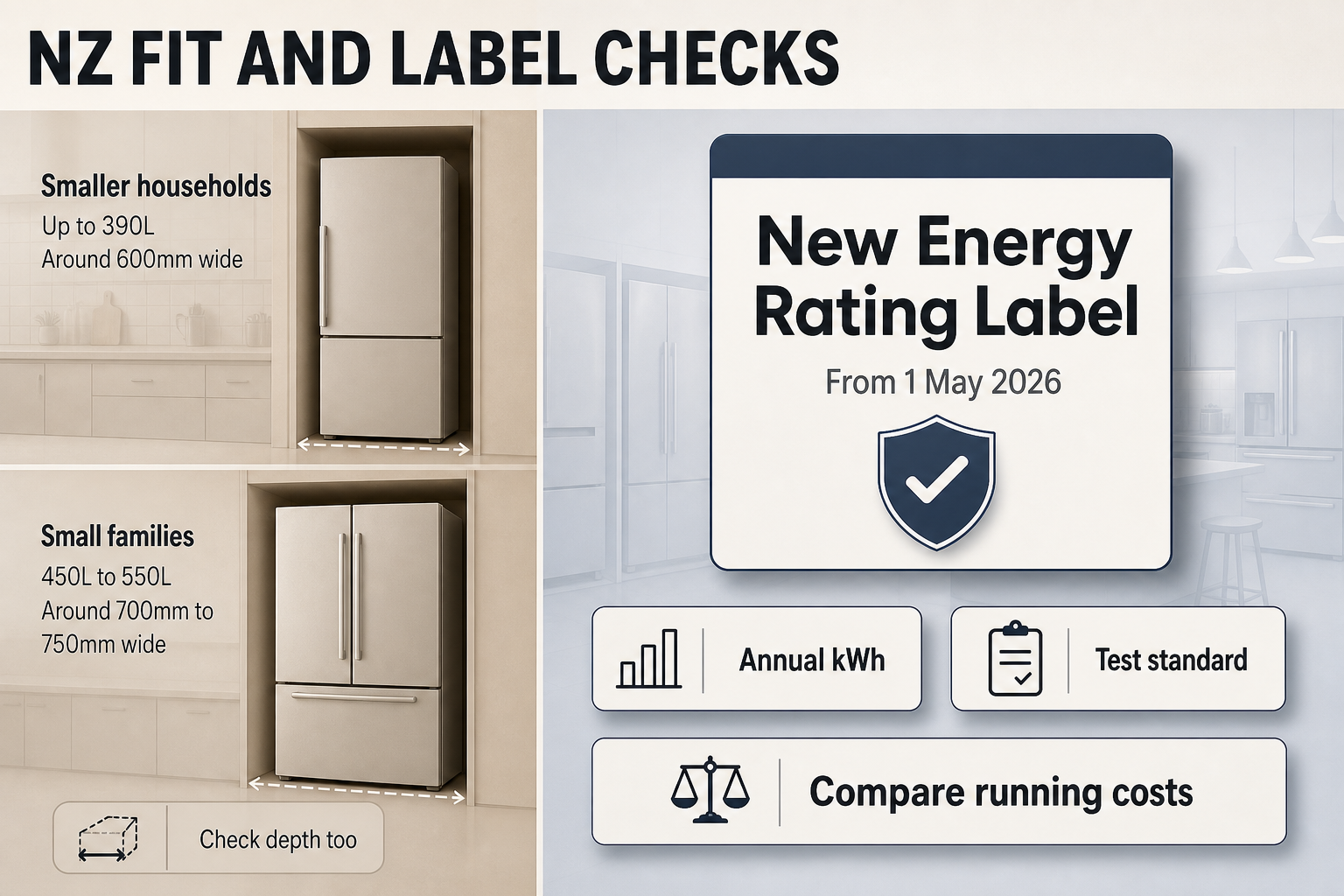
New Zealand kitchens can be tight, especially in older homes and apartments, so do not assume a higher litre figure means a better buy. Samsung’s NZ buying guide says smaller households often suit fridges up to 390L, commonly around 600mm wide, while 450L to 550L models for small families are often around 700mm to 750mm wide. If a fridge gains a big multi-temperature drawer, it may also gain depth, which can matter more than width in many NZ kitchens. (samsung.com)
The local test and labelling rules also matter more in 2026 than they used to. EECA says products imported or manufactured in New Zealand from 1 May 2026 must display the new Energy Rating Label requirements for household refrigerating appliances. That makes the label, annual kWh figure, and test standard especially useful when you are comparing two fridges with similar-looking capacities but different real running costs. (eeca.govt.nz)
Climate and shopping patterns also affect what size is useful. In warmer parts of the country, or in homes where the kitchen gets afternoon sun, a dedicated colder drawer can help with meat and dairy storage. In rural areas, where people may do fewer but larger shops, a more generous adjustable zone is often more useful than in city households that can stop by the supermarket every couple of days.
Check the wording carefully on retailer listings. “Multi”, “variable”, “adjustable temperature”, and even some “vegetable” drawers can all refer to slightly different things. A true multi-temperature capacity figure should refer to a compartment with a defined usable volume and selectable temperature behaviour, not just a standard crisper drawer with humidity control. If the listing is vague, look for the product sheet, manual, or Energy Rating information before you compare litre numbers.
You may also be interested in these independent articles
Sources
- [1]EECA: Fridges and Freezers
- [2]EECA: How to use Energy Rating Labels and star ratings
- [3]EECA: Requirements under E3 - Fridges and freezers
- [4]Consumer NZ: How to buy the best fridge
- [5]Samsung New Zealand: Refrigerator Buying Guide
- [6]Westinghouse NZ: Changes in Refrigeration Capacity and Energy ratings
- [7]Panasonic New Zealand: NR-D535XGSAU Specs
- [8]Energy Rating: Household refrigerators and freezers
© 2026 pyfoi. All rights reserved.