
Fridge Quietness Ratings Explained for NZ Buyers
Learn how fridge quietness ratings work, what dB levels mean, and why NZ buyers should check noise specs separately from energy labels.
A refrigerator’s quietness rating is a simple way to judge how noticeable it will be in your home. That matters more in New Zealand than many buyers expect, because modern kitchens are often open-plan, and your fridge runs day and night rather than only for short cycles.
A quiet fridge is not just about comfort. It can affect sleep in smaller homes, concentration if you work from the kitchen table, and how pleasant your living area feels if the fridge sits close to the lounge or dining space.
What Goes Into the Rating
A refrigerator quietness rating is usually based on measured airborne noise, expressed in decibels, written as dB or dB(A). The lower the number, the quieter the fridge. Consumer NZ says fridges are among the quietest household appliances it tests, with an average running noise of 33 dBA, but even small differences can matter depending on your room layout and sensitivity to sound. (consumer.org.nz)
The tricky part is that a star-style quietness score is often a retailer or product database simplification rather than a universal New Zealand government label. In practice, that means a 5-star quietness score usually represents a lower measured noise output than a 3-star score, but the exact cut-offs may vary by seller or platform. For refrigerators, the real figure to look for is still the decibel rating in the specifications or product sheet. That is the hard number behind the marketing. (lg.com)
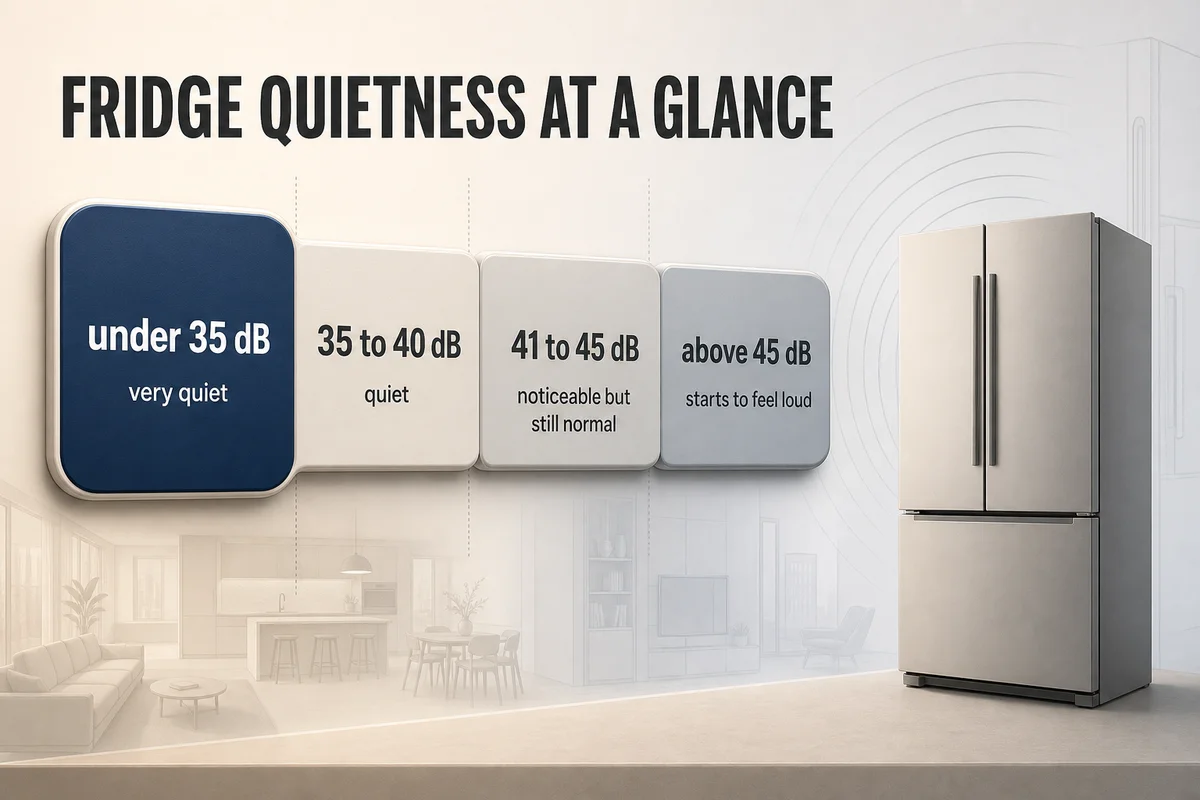
As a practical guide, under 35 dB is very quiet for a refrigerator, 35 to 40 dB is quiet, 41 to 45 dB is noticeable but still normal for many larger models, and above 45 dB starts to feel loud in a typical home kitchen. Those bands line up reasonably well with manufacturer guidance and with Consumer NZ’s explanation of how fridge noise is perceived. (consumer.org.nz)
What separates a lower-rated fridge from a higher-rated one is not just compressor volume. It is also fan noise, vibration control, cabinet insulation, defrost design, and whether the compressor can vary its speed smoothly instead of switching on and off abruptly. Inverter-style compressors are commonly promoted as quieter because they avoid the harsher start-stop pattern of older fixed-speed designs. (lg.com)
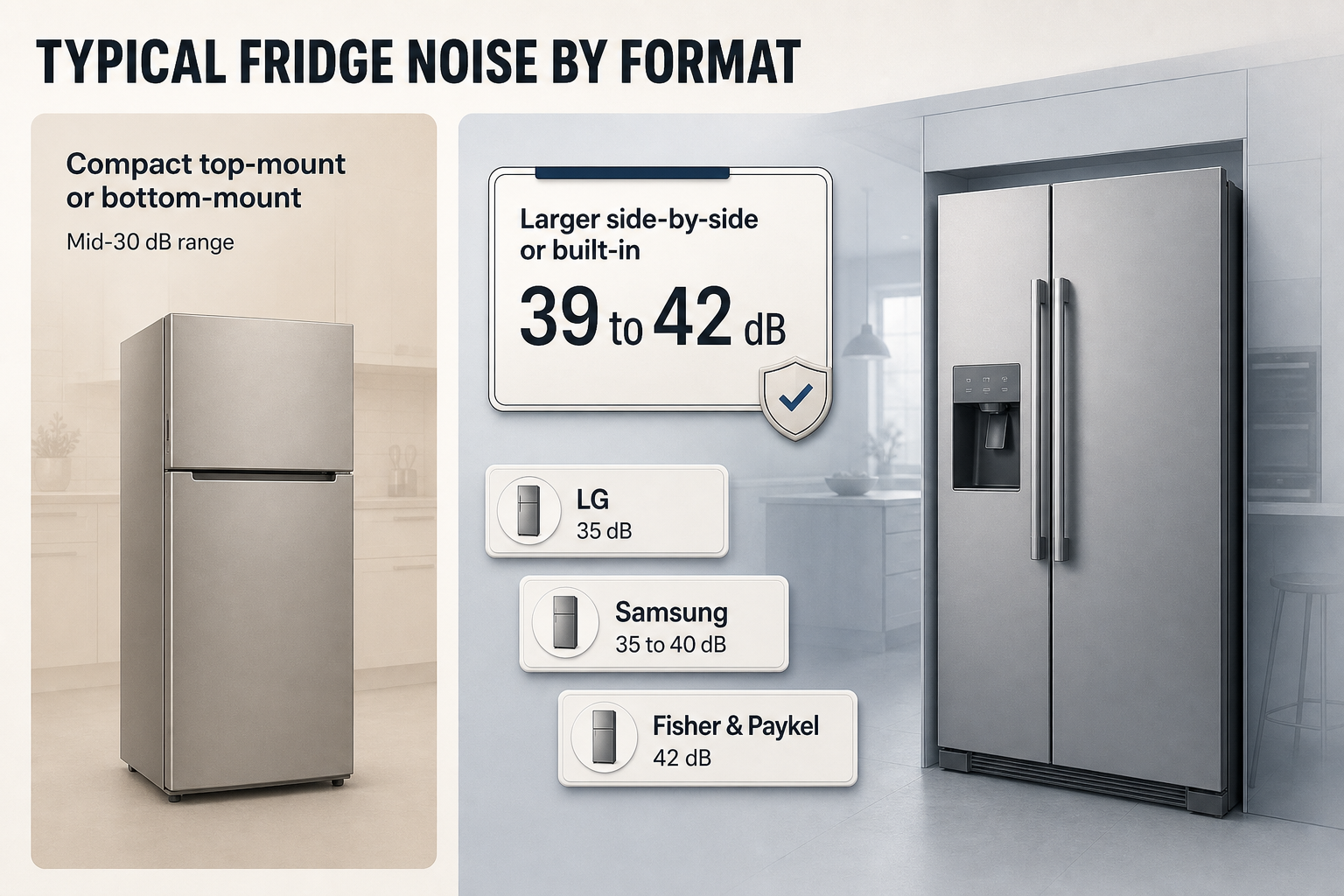
Size and format matter too. A compact top-mount or bottom-mount fridge can often sit in the mid-30 dB range, while larger side-by-side or built-in units may be closer to 39 to 42 dB. For example, official product material surfaced in search shows some LG fridge-freezers listed at 35 dB, Samsung models at 35 to 40 dB, and Fisher & Paykel models at 42 dB. That does not make one brand universally quieter than another, but it shows the spread you are likely to see in the market. (lg.com)
What to Look For
Start with the actual noise specification, not the star graphic alone. If a retailer lists only a quietness score, look for the detailed spec sheet, product information sheet, or manufacturer page that gives a dB figure. Without that number, it is hard to compare one fridge fairly with another.
Then think about where the fridge will live. Consumer NZ notes that home layout changes how loud a fridge feels. In an open-plan kitchen-living area, fridge noise carries further and is less likely to be masked. In a separate kitchen with walls and cabinetry around the appliance, the same measured noise may feel much less intrusive. (consumer.org.nz)
You should also judge the number in context of fridge type. A 42 dB side-by-side with ice-making hardware may be perfectly acceptable, while 42 dB from a smaller 300 L bottom-freezer would be less impressive. Bigger cabinets, extra fans, through-door dispensers, and automatic ice makers often add noise sources, so a slightly higher reading can be the trade-off for features and capacity.
If quietness matters a lot to you, aim for 35 dB or below. This is the sweet spot for open-plan homes, apartments, townhouses, and households with light sleepers. A fridge in the 36 to 40 dB range will suit many buyers and is still generally quiet enough for a standard family kitchen. Once you move into 41 dB and above, it becomes more important to hear the appliance in person or buy from a retailer with a straightforward returns process.
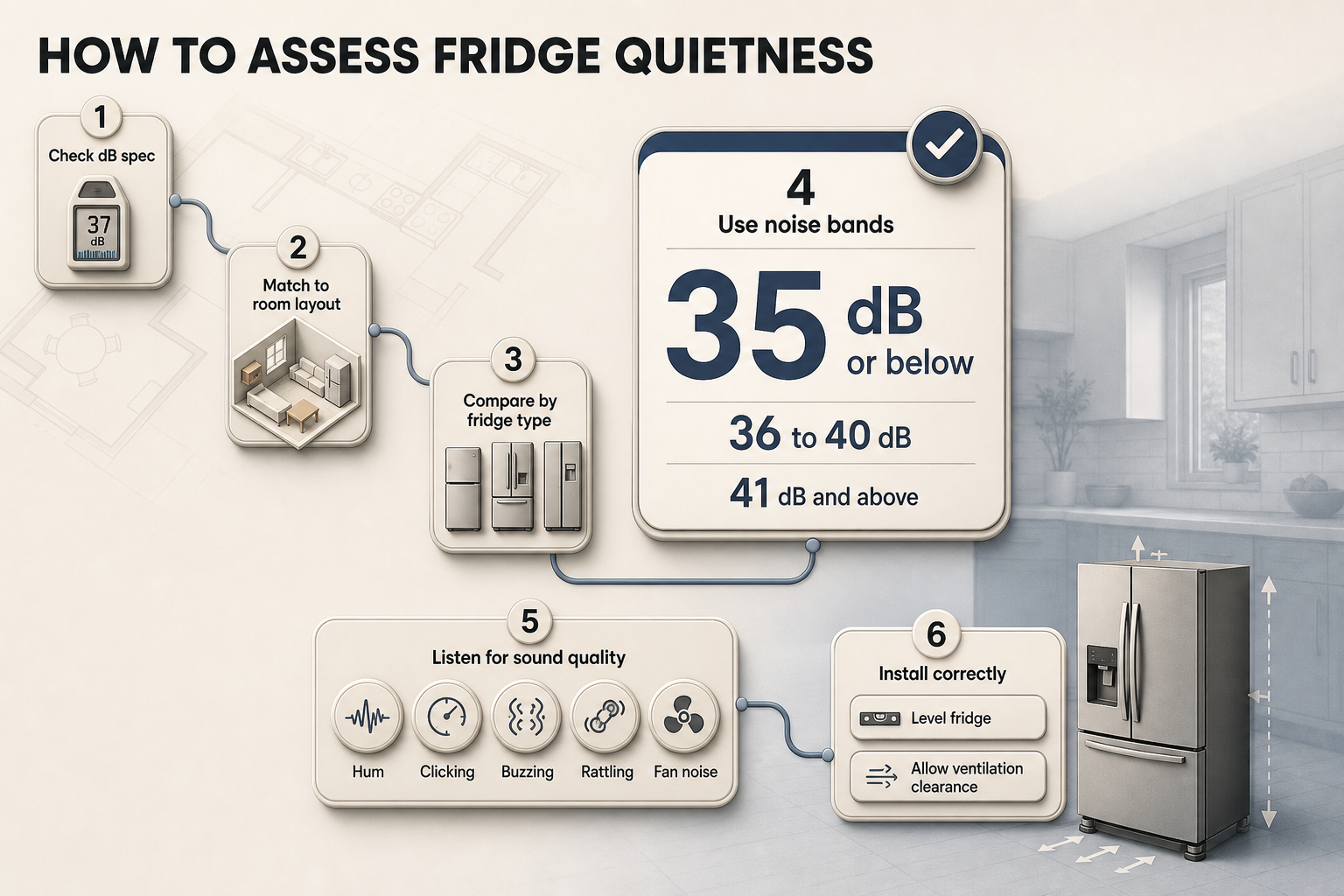
It also pays to ask what kind of noise the fridge makes, not just how much. A low hum is easier to live with than clicking, buzzing, rattling, or high-pitched fan noise. Two fridges with similar dB ratings can sound quite different in real life because pitch and vibration matter as much as raw volume. That is one reason user feedback and independent testing can be useful alongside the specification sheet.
Installation affects quietness more than many people realise. An unlevel fridge can vibrate, cabinet panels can amplify sound, and tight alcoves can create echo or rattling. Consumer NZ recommends allowing ventilation clearance around the fridge, and manufacturers usually specify minimum gaps at the sides, back, and top. If a fridge is badly installed, even a well-rated model can sound worse than it should. (consumer.org.nz)
NZ Context
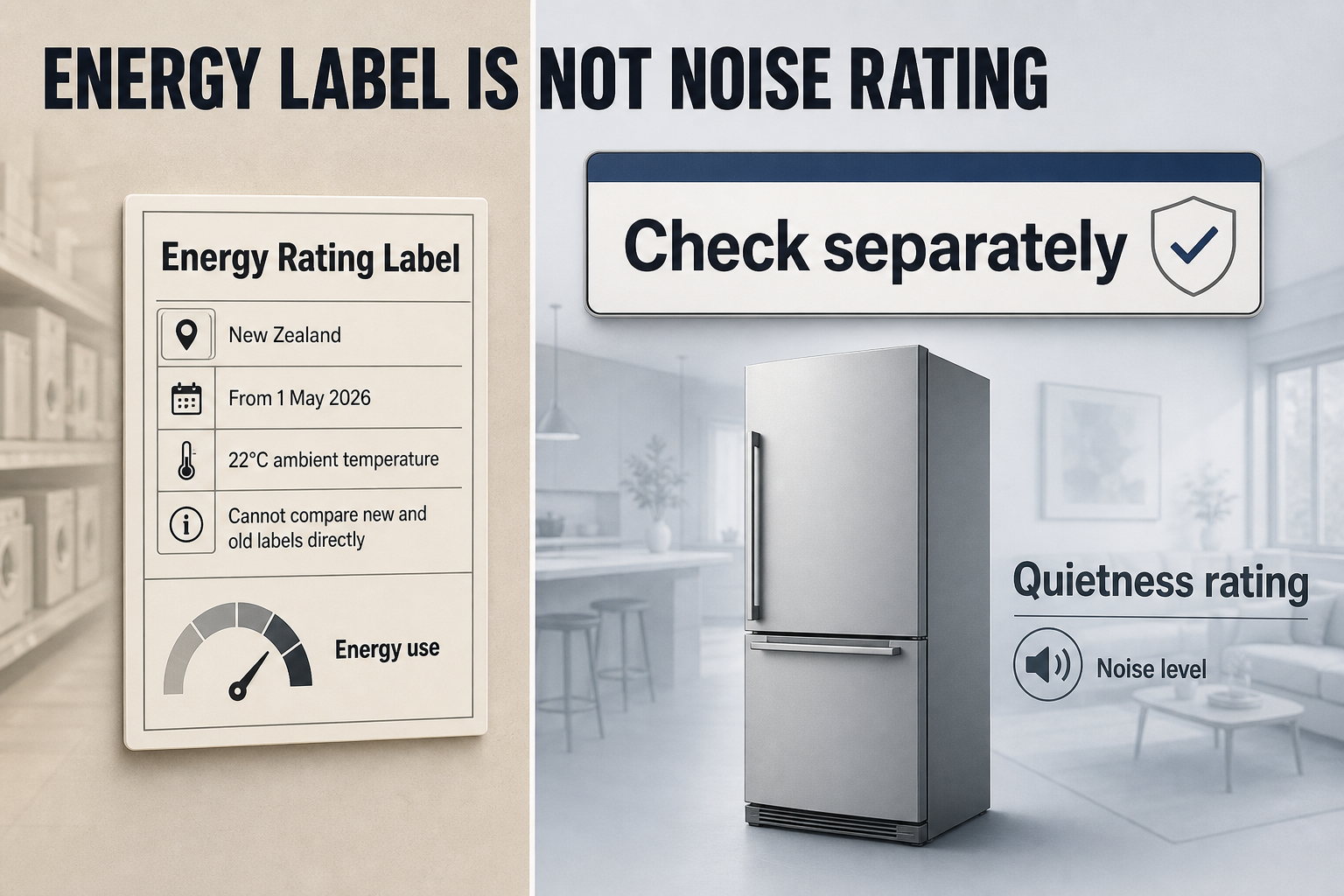
For New Zealand buyers, the first label to check in store is usually the Energy Rating Label, not a dedicated government quietness label. EECA says fridges and freezers sold here are covered by mandatory energy labelling rules, and from 1 May 2026 products imported or manufactured in New Zealand must display the new Energy Rating Label. That label helps you compare energy use, but it is not the same thing as a quietness score. (eeca.govt.nz)
EECA also explains that fridge energy ratings are calculated under a standard test at 22°C ambient temperature, and the new and old labels cannot be compared directly because the test and calculations changed. That matters because some shoppers assume a higher energy star result automatically means a quieter fridge. It does not. Energy efficiency and noise can be related through compressor design, but they are different measures and should be checked separately. (eeca.govt.nz)
New Zealand conditions can make quietness more important than the spec sheet suggests. Many homes have combined kitchen and living spaces, timber floors, and hard surfaces that reflect sound. In a compact Auckland apartment, a Christchurch townhouse, or a Wellington open-plan renovation, a fridge that is only slightly louder on paper may feel much louder in daily use.
Consumer law matters too. Under the Consumer Guarantees Act, a refrigerator should be of acceptable quality, which includes being free from faults. That does not mean you can reject every fridge that makes normal operating sounds, but obvious rattling, excessive buzzing, or abnormal compressor noise after proper installation may be a service issue rather than just a disappointing spec. If quietness is a top priority, keep records of the advertised noise figure and installation instructions.
Finally, do not overpay for a perfect quietness score if your kitchen is closed off and the fridge sits away from bedrooms. In many NZ homes, a well-installed 37 to 40 dB refrigerator will be completely fine. But if your fridge is part of the main living zone, quietness deserves the same attention you would give capacity, layout, and running cost.
You may also be interested in these independent articles
Sources
- [1]Consumer NZ: How to buy the best fridge
- [2]EECA: Energy Rating Labels for fridges and freezers
- [3]EECA: Requirements under E3 for fridges and freezers
- [4]EECA: Guide to Mandatory Energy Performance Labelling
- [5]LG: How to Lower Your Refrigerator’s Noise Level
- [6]LG UK: How to Choose the Quietest Fridge Freezer
- [7]Samsung product fiche example
- [8]Fisher & Paykel product information sheet example
© 2026 pyfoi. All rights reserved.